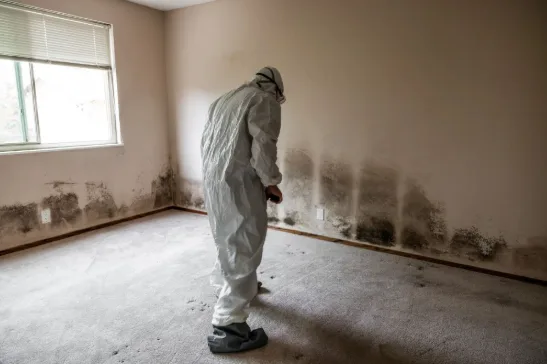
| A tenant texts on a Sunday night. “There’s a weird smell under the bathroom sink.” It is easy to file that under Monday problems.
In Colorado, that message may have already started a legal clock.
Since 2019, mold tied to dampness has been on the state’s list of conditions that can make a rental uninhabitable. In May 2024, Senate Bill 24-094 tightened the timelines and paperwork landlords are expected to follow.
The good news is that most rental mold starts small and leaves clues. Catch it early and you skip the complaint, the dispute, and the much bigger repair bill.
Why Rentals Are Easy Places for Mold to Hide
Owner-occupied homes have someone noticing the little things every day. Rentals often do not.
A unit can sit empty for weeks between leases. A tenant might ignore a slow drip because it is not their house, or because they worry about being blamed for it.
Colette Bell of RestoPros of East Denver sees the same pattern again and again.
“Most of the rental mold we get called about didn’t start as a mold problem. It started as a small leak nobody saw because the unit was empty, or the tenant didn’t think it was worth mentioning.”
That is why the real fix is less about cleaning and more about seeing problems sooner.
What Colorado Law Expects When a Tenant Reports Mold
Here is the short version, based on the Colorado General Assembly’s renters’ rights summary and the 2024 updates. It is a starting point, not legal advice.
- Mold counts. Mold associated with dampness that would affect a tenant’s health or safety is listed as a condition that can make a home uninhabitable.
- A text can be notice. Tenants can give notice in writing or electronically, so that Sunday-night message matters.
- You have 24 hours to respond. The law expects a reply within a day that explains your plan and when the work will start and finish.
- Serious problems need action fast. If the condition threatens a tenant’s health or safety, remedial work should begin within 24 hours.
- The clock keeps running. If a health or safety problem is still there 7 days after notice, the law presumes the landlord has not done enough. For other habitability problems, that window is 14 days.
- Temporary housing may be on you. For health and safety conditions, a tenant can ask for a comparable unit or a hotel room at your cost, for up to 60 days.
- Repeat problems carry weight. If the same condition comes back within six months of being fixed, the tenant can end the lease with written notice.
One more detail that catches people off guard. Leases signed after January 1, 2025, must tell tenants, in English and Spanish, where to report unsafe conditions.
A Move-Out and Move-In Mold Checklist
The gap between tenants is your best shot at finding problems before anyone is living with them. Bring a flashlight and your phone.
At move-out, check these spots:
- The floor of every sink cabinet. Press on it. Soft or swollen particleboard means a long, slow leak.
- Behind the washer, dryer, and fridge, if you can pull them out safely
- Every bathroom fan. Hold a square of tissue up to it and make sure it actually pulls air.
- Window sills and the bottom corners of exterior walls, especially behind where beds and dressers sat
- Closets and the basement. The EPA says a musty smell with no visible source is a reason to suspect hidden mold.
- Ceilings below upstairs bathrooms, plus the water heater and furnace area
At move-in, set the new tenant up well:
- Take dated photos of each spot above and share them with the tenant
- Show them exactly how and where to report leaks, and say clearly that you want to hear about small ones
- Point out the bath fan and ask them to run it during and after showers
High-Risk Spots in Denver Rentals
Some units need a closer look than others.
- Garden-level and basement units. Snowmelt and poor drainage push moisture toward the foundation. The EPA recommends keeping gutters clean and the ground sloped away from the house.
- Bathrooms with no exhaust fan. Steam has nowhere to go, so it settles on ceilings and behind toilets.
- Units that sat empty over the summer. With nobody there, a dripping supply line can run for weeks unnoticed.
- Older homes with original plumbing. Aging shutoff valves and supply lines are classic slow-leak sources.
What to Do in the First 24 Hours After a Mold Report
- Reply in writing the same day. Say what you will do and when. That reply is part of your paper trail.
- Ask for photos, then get eyes on it. Schedule entry as your lease and state law allow.
- Find and stop the water. The EPA is direct here. Clean the mold without fixing the moisture, and it will most likely come back.
- Size it up honestly. The EPA says small areas under about 10 square feet can often be handled in-house. Anything bigger, or anything after real water damage, calls for a pro.
- Do not paint over it. The EPA warns that paint on a moldy surface tends to peel, and the problem stays underneath.
Keep a Record of Everything
SB24-094 requires landlords to keep records related to a habitability claim and the work done to fix it. Good records also protect you if a dispute ever reaches court.
- Save every text and email about the issue
- Keep invoices, scopes of work, and any moisture readings
- Take before, during, and after photos
- Note the date and time of each step you took
Because a repeat problem within six months gives a tenant grounds to leave, fix the source, not just the surface.
Treat Every Small Report as an Early Warning
That Sunday-night text about a smell under the sink is not a nuisance. It is the cheapest moment you will ever get to fix a mold problem.
Answer fast, find the water, and write it all down. Your tenants stay healthy, and a small leak never gets the chance to become a legal fight. |