How Emerging Technologies Influence Global Competition
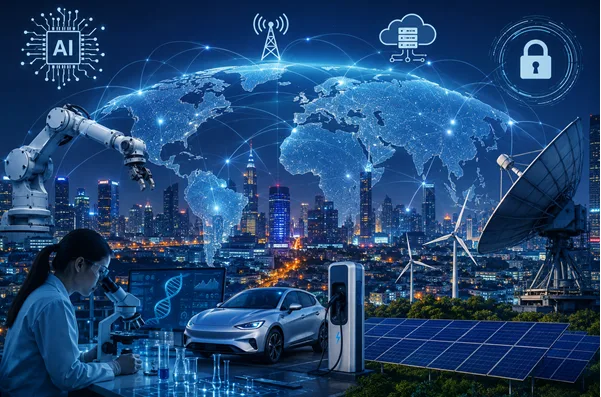
Global competition has changed rapidly during the last two decades. Countries, industries, and organizations now compete in ways that differ from earlier economic models. Digital systems, advanced manufacturing, artificial intelligence, biotechnology, quantum computing, and new communication networks influence production, research, trade, and investment. These developments affect productivity, labor markets, education, and long-term economic planning. Governments adjust national strategies, while manufacturers and research institutions increase investment in technical capabilities that support future growth.
Technology no longer supports economic activity alone. It shapes industrial policy, strengthens supply chains, and changes how organizations develop products and services. Nations that invest in research, education, and digital infrastructure often improve their ability to compete in international markets. At the same time, countries that delay investment may struggle to keep pace with changing industrial standards.
Discussions about technological progress also appear across many online communities that examine innovation, business, and digital entertainment. Some users explore platforms such as winbeatz during their free time, yet the broader discussion continues to focus on how technology affects productivity, investment, and economic performance across the global market.
Technology as a Driver of Economic Competition
Economic competition depends on the ability to create value efficiently. Emerging technologies improve production processes, reduce operating costs, and support faster product development. Manufacturers introduce advanced automation to increase precision, while software systems improve planning and inventory management.
Organizations also use digital platforms to coordinate international operations. Data analysis supports better forecasting, helping producers respond to changing market demand with greater accuracy. These improvements strengthen competitiveness because businesses make decisions based on measurable information rather than assumptions.
Several factors explain why technology now plays such a large role in economic competition:
- Faster product development
- Higher production efficiency
- Better resource management
- Improved international communication
- Greater access to research data
- Stronger cybersecurity practices
Each factor contributes to long-term economic performance instead of delivering only short-term gains.
Artificial Intelligence Changes Decision-Making
Artificial intelligence has become one of the most discussed technological developments in recent years. Instead of replacing every human task, AI supports analysis, forecasting, quality control, and customer service. Organizations process large datasets within seconds and identify patterns that traditional methods often overlook.
Manufacturing companies analyze equipment performance before mechanical failures occur. Financial institutions detect unusual transactions more quickly. Healthcare researchers examine medical information to support faster diagnosis and treatment planning. Agricultural producers monitor weather conditions and crop health through automated systems.
These improvements increase efficiency while reducing unnecessary expenses. Countries that expand AI research also strengthen scientific capabilities and create additional demand for highly skilled workers.
However, artificial intelligence also creates new challenges. Governments must establish legal standards for privacy, transparency, and accountability. Educational systems must prepare future professionals for careers that require technical knowledge alongside analytical thinking.
Semiconductor Production and Strategic Importance
Modern technology depends on semiconductor manufacturing. Microchips power computers, medical equipment, communication devices, industrial machinery, transportation systems, and defense technologies. As demand continues to increase, semiconductor production has become a strategic economic priority.
Building advanced manufacturing facilities requires significant investment, technical expertise, and years of planning. Engineers must maintain extremely precise production conditions while continuously improving manufacturing methods.
Governments support domestic production because semiconductor shortages can disrupt multiple industries at the same time. Recent supply chain disruptions demonstrated how dependent modern economies have become on these components.
The semiconductor sector also encourages investment in research partnerships between universities, laboratories, and industrial producers. These partnerships contribute to long-term scientific development while strengthening economic resilience.
Digital Infrastructure Supports Global Growth
Digital infrastructure extends far beyond internet access. Modern economies depend on secure communication networks, cloud computing, high-capacity data centers, and advanced telecommunications systems.
Businesses require dependable digital connections to coordinate international operations. Educational institutions rely on online resources for research and collaboration. Healthcare providers exchange medical information securely across different regions. Public services increasingly depend on digital systems for administration and communication.
Strong digital infrastructure also attracts investment because companies evaluate technological readiness before expanding into new markets. Countries with advanced communication systems often support innovation more effectively than those with outdated infrastructure.
Digital development also improves cooperation between research institutions located in different parts of the world. Scientists exchange information more quickly, accelerating research across multiple disciplines.
Advanced Manufacturing Increases Industrial Capacity
Manufacturing continues to evolve through automation, robotics, additive manufacturing, and intelligent production systems. Modern factories combine digital monitoring with highly precise machinery to improve consistency and reduce material waste.
Industrial robots perform repetitive tasks with high accuracy. Engineers supervise automated production lines while focusing on quality improvement rather than manual operations. Three-dimensional printing supports rapid prototype development, allowing manufacturers to test product designs before large-scale production begins.
The following table summarizes several technologies and their primary economic impact.
| Technology | Main Contribution |
| Artificial intelligence | Faster analysis and forecasting |
| Robotics | Higher manufacturing efficiency |
| Additive manufacturing | Rapid product development |
| Quantum computing | Advanced scientific calculations |
| Biotechnology | Medical and agricultural progress |
| Cloud computing | Global data management |
These technologies influence multiple sectors simultaneously, creating wider economic effects than earlier industrial innovations.
Biotechnology Expands Beyond Healthcare
Biotechnology contributes to medicine, agriculture, environmental protection, and industrial production. Researchers develop improved medical treatments while scientists also study crop resistance, food security, and sustainable production methods.
Agricultural biotechnology helps farmers improve yields under changing environmental conditions. Medical research focuses on personalized treatment methods, vaccine development, and genetic analysis. Environmental scientists investigate biological solutions that reduce pollution and improve waste management.
Growing investment in biotechnology reflects increasing demand for scientific research that addresses practical challenges affecting public health and food production.
Quantum Computing Opens New Research Possibilities
Quantum computing remains in an early stage compared with conventional computing, yet researchers expect major advances during the coming years. Unlike traditional computers, quantum systems process certain calculations far more efficiently.
Scientists study quantum computing for applications in chemistry, material science, logistics, financial modeling, and pharmaceutical research. Complex calculations that currently require extensive processing time may eventually become much faster.
Governments invest heavily in quantum research because future scientific leadership may depend partly on advances within this field. Universities also expand educational programs to prepare specialists capable of working with quantum technologies.
Cybersecurity Becomes an Economic Priority
As digital systems expand, cybersecurity grows more important for every sector of the economy. Manufacturing, finance, healthcare, transportation, and government services depend on secure networks that protect confidential information and maintain uninterrupted operations.
Cyberattacks create financial losses, interrupt production, and weaken public confidence. For this reason, organizations increase investment in security software, employee training, risk assessment, and threat detection. Technical specialists also develop stronger encryption methods and automated monitoring systems that identify suspicious activity before serious damage occurs.
Cybersecurity also affects international competition because secure digital environments encourage investment and strengthen commercial relationships. Countries that maintain strong digital security standards often attract additional research activity and technology partnerships.
Supply Chains Continue to Evolve
Global supply chains have changed significantly during recent years. Manufacturers now place greater attention on resilience, efficiency, and regional diversification instead of concentrating production within a limited number of locations.
Digital technologies improve inventory management through real-time monitoring and predictive analysis. Logistics companies track shipments more accurately while manufacturers identify potential disruptions earlier than before. These improvements reduce delays and support more stable production schedules.
Many governments also encourage domestic manufacturing for strategic industries. This approach reduces dependence on distant suppliers while increasing industrial capacity inside national economies.
Supply chain planning now includes several priorities:
- Stronger regional production networks
- Better inventory visibility
- Faster transportation management
- Increased digital monitoring
- Greater investment in domestic manufacturing
Each measure strengthens economic stability during periods of international uncertainty.
Education and Workforce Development
Technology changes labor markets as quickly as it changes industrial production. Many occupations now require advanced digital skills alongside traditional professional knowledge. Universities, technical colleges, and vocational institutions continue updating educational programs to reflect these changes.
Students study computer science, engineering, biotechnology, cybersecurity, robotics, and data analysis alongside mathematics and natural sciences. Lifelong learning also becomes increasingly important because professionals regularly update their knowledge throughout their careers.
Employers value workers who combine technical expertise with communication, critical thinking, and problem-solving skills. These abilities help organizations respond to technological change without slowing productivity.
Public investment in education supports long-term economic growth because highly skilled workers contribute to research, industrial development, and scientific progress.
Sustainability Shapes Technology Investment
Environmental concerns influence research priorities across many industries. Governments and research institutions support projects that reduce emissions, improve energy efficiency, and decrease industrial waste.
Manufacturers design production systems that consume fewer resources while maintaining output. Engineers improve battery technology, renewable energy systems, recycling methods, and energy storage solutions. Agricultural researchers also study farming practices that increase productivity while reducing environmental pressure.
Sustainability no longer represents only an environmental objective. It also affects economic planning because efficient resource management lowers operating costs and strengthens long-term industrial competitiveness.
Many investors consider environmental performance when evaluating future projects. As a result, organizations increasingly include sustainability targets within broader business strategies.
Regulation Influences Technological Progress
Technological development requires effective regulation that protects public interests without slowing scientific research. Governments must address privacy, cybersecurity, intellectual property, consumer protection, and ethical standards.
Artificial intelligence presents one clear example. Policymakers continue discussing transparency, accountability, and responsible use while researchers develop increasingly advanced systems. Similar discussions apply to biotechnology, digital currencies, autonomous vehicles, and quantum computing.
Balanced regulation encourages innovation while reducing legal uncertainty. Clear rules also increase investor confidence because organizations understand the standards that apply to future projects.
International cooperation becomes important because digital technologies operate across national borders. Many technical standards require coordination between countries to support global trade and scientific collaboration.
Competition Depends on Research Investment
Research spending remains one of the strongest indicators of future technological capacity. Countries that consistently invest in universities, laboratories, engineering programs, and scientific education often strengthen their long-term economic position.
Basic scientific research frequently produces discoveries that support commercial development years later. Governments therefore finance projects that may not deliver immediate financial returns but contribute to future industrial growth.
Private investment also supports research through partnerships with universities and independent laboratories. These collaborations accelerate scientific progress while expanding practical applications across multiple industries.
Competition increasingly depends on knowledge creation rather than access to natural resources alone.
International Cooperation Remains Essential
Although countries compete economically, they also cooperate on many scientific challenges. Climate research, medical studies, public health, and space exploration often require international partnerships that combine expertise from multiple regions.
Researchers exchange information through academic publications, conferences, and joint projects. Shared scientific knowledge accelerates progress while reducing duplication of effort.
Governments also coordinate technical standards that improve compatibility between digital systems, communication networks, transportation infrastructure, and manufacturing equipment. These agreements support international commerce while encouraging further technological development.
Healthy competition and scientific cooperation can exist at the same time. Both contribute to economic growth when policymakers balance national interests with international collaboration.
Future Trends
Several technologies will continue shaping global competition during the coming decades. Artificial intelligence will improve industrial analysis and scientific research. Quantum computing will expand computational capabilities for specialized applications. Biotechnology will continue advancing healthcare and agriculture. Robotics will increase manufacturing precision, while digital infrastructure will support expanding international connectivity.
Future progress will depend on several factors:
| Area | Expected Direction |
| Artificial intelligence | Broader industrial integration |
| Biotechnology | Faster medical and agricultural research |
| Robotics | Greater manufacturing automation |
| Quantum computing | Expanded scientific applications |
| Cybersecurity | Stronger digital protection |
| Digital infrastructure | Higher global connectivity |
Success will depend less on isolated technological breakthroughs and more on consistent investment in education, research, infrastructure, and scientific collaboration.
Conclusion
Emerging technologies continue changing global competition across nearly every sector of the economy. Artificial intelligence, biotechnology, advanced manufacturing, cybersecurity, semiconductor production, quantum computing, and digital infrastructure influence productivity, research, trade, and long-term development. These technologies shape industrial capacity while creating new demands for technical expertise, responsible regulation, and international cooperation.
Economic strength increasingly depends on scientific knowledge, skilled workers, resilient supply chains, and sustained research investment. Governments, educational institutions, and industries all contribute to this process through coordinated planning and continued innovation.
The pace of technological progress will remain strong during the coming years. Countries that support education, scientific research, secure digital systems, and responsible policy development will strengthen their ability to compete in an increasingly technology-driven global economy while contributing to broader economic stability and long-term growth.
Disclaimer:
The information in this article is provided for general informational and educational purposes only. It reflects the author’s analysis and opinions on emerging technologies and global competition and should not be considered professional, legal, financial, or strategic advice. Readers are encouraged to verify information through official sources and conduct their own research before making decisions based on the content.