Smart Rings Are Splitting Into Two Categories, and the New One Has Nothing to Do With Health
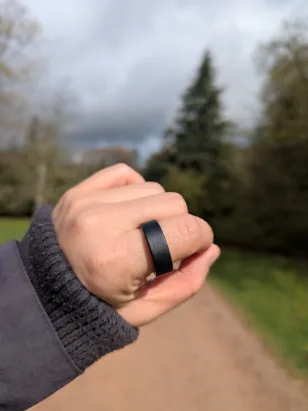
For most of the past decade, “smart ring” has meant one thing: a discreet band that tracks sleep, heart rate and recovery. That definition is now breaking in two. A second category of ring emerged at CES 2026 and is heading to market this fall, one built not to monitor the body but to capture what its wearer says, turning spoken thoughts into transcribed, organized notes, reminders and drafts.
The clearest example of the new class is Spark Ring, an AI voice-capture ring that debuted at CES 2026 and is preparing a Kickstarter campaign for early September, with shipping targeted for around October 2026. It joins a small but fast-moving field that includes Vocci, a voice ring from Gyges Labs, and Stream Ring, a crowdfunded device aimed at voice control of computers and cars, all betting that the finger is the next place AI hardware lives.
Why capture moved to the finger
The commercial groundwork for the category was laid by clip-on AI recorders. Devices such as Plaud’s Note and NotePin proved over the past two years that consumers will pay for hardware that turns speech into structured text, and earned retail shelf space at chains like Costco and Best Buy doing it. Those devices were built for a specific context: scheduled meetings.
The ring makers start from a different observation. Most of what people want to remember does not happen in meetings. It happens on a commute, in a checkout line, mid-workout, or while carrying a child in one arm and groceries in the other. A device that must be clipped on for an occasion misses most of those moments; a ring that never comes off does not.
That premise imposes hard engineering constraints, and much of what distinguishes the new devices comes from how they answer them. Spark Ring’s version is a screenless band under 3 grams, less than 8 millimeters wide and roughly 2.5 millimeters thick, built from ceramic and resin with an IP68 rating, in four finishes including Graphite Black and Frost White. A double tap of the thumb wakes it in under 100 milliseconds. The wearer speaks; the ring transcribes.
From transcription to sorting
What happens after transcription is where the category is trying to differentiate itself from the voice memo apps everyone already owns. Raw recordings pile up unlabeled and unreplayed, which is why most voice-note habits die within weeks.
Spark Ring’s approach is to have an AI model read the intent of each capture and route it automatically: a task becomes a reminder with a due date, an idea becomes a note filed to the right project, and a spoken message becomes a draft ready to send. When a reminder comes due, the ring vibrates on the finger, so the nudge arrives without a screen lighting up. The device also buffers up to 45 minutes of capture offline, syncing when a phone returns to range, which keeps it working on flights and anywhere else connectivity drops.
Vocci is pushing on a different axis, with far-field microphone pickup and highlight marking for long recordings, while Stream Ring is less a capture device than a voice interface for controlling other machines. The established health-ring players, led by Oura, have so far stayed on their side of the split, focused on sensors rather than speech.
The microphone privacy question
A body-worn microphone raises an immediate question about where audio goes, and the productivity-ring makers appear to have concluded that the answer decides whether the category survives its first privacy news cycle.
Spark Ring runs speech-to-text on the device itself rather than in the cloud, does not upload raw audio, and encrypts the pipeline end to end, an architecture the company says was designed against GDPR and the EU AI Act from the start. That mirrors a broader shift in AI wearables toward on-device processing, driven as much by regulation in the European market as by consumer sentiment.
A crowdfunding fall
The near-term test for the category arrives with the fall crowdfunding season. Spark Ring’s September Kickstarter will be watched as a signal of whether mainstream buyers see voice capture as a reason to wear a ring, the way sleep tracking became one a decade ago. The company is positioning the device for professionals, freelancers, parents and people with ADHD, groups for whom the gap between having a thought and getting it saved is where ideas are most often lost.
Whatever the campaign results show, the split in the smart ring market itself looks durable. One branch of the category watches the body. The new one listens to the mind, and 2026 is the year it arrives on shelves, or at least on fingers.
Product and campaign details are available at sparkring.ai.