How to Check a Dating Match’s Phone Number: Safety Guide Before Meeting Someone
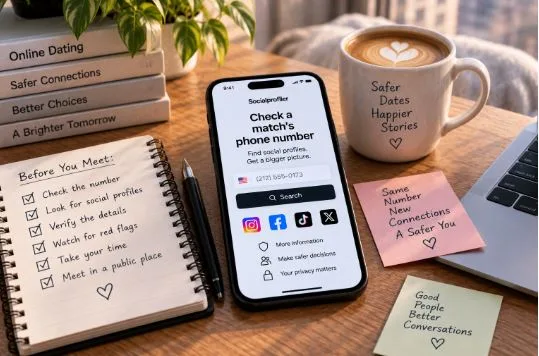
Meeting someone through a dating app or social platform can be exciting, but it is also important to take reasonable steps before moving from online conversations to an in-person meeting. A phone number can sometimes provide useful clues about whether the person you are talking to has a consistent online presence, especially when combined with information they have voluntarily shared.
If you are wondering how to check a match’s phone number, the goal should not be to uncover private information or invade someone’s privacy. Instead, responsible phone-based research can help you verify publicly available details, identify inconsistencies, and make more informed decisions about meeting someone you have only known online.
Why Verify a Match Before Meeting?
Online profiles do not always tell the complete story. People may use nicknames, shortened names, old photographs, or limited profile information. In some cases, a person may also provide a phone number before you know much about them.
That does not automatically mean there is a problem. However, checking whether publicly available information is consistent can be a sensible part of basic online safety.
For example, you might compare information such as a person’s name, approximate location, social profiles, and other details they have already shared with you. If those details generally line up, you may feel more comfortable continuing the conversation. If they contradict each other significantly, it may be worth asking questions before arranging a meeting.
How to check a match’s phone number Responsibly
The safest approach is to focus on information that is publicly available or information you have permission to use. A phone number can act as a starting point rather than proof of someone’s identity.
Begin by considering what the person has already told you. If they have shared their full name, social profile, workplace, city, or other public information, you can look for consistency between those details and the phone number.
You should also avoid treating a search result as definitive evidence. Phone numbers can change owners, be recycled by carriers, belong to businesses, or be associated with multiple public records. A matching name alone does not necessarily establish that the person behind an online dating profile owns the number.
What Information Can a Phone Number Reveal?
Depending on the number and the information that is publicly indexed, a phone number may be connected to different types of online information.
Possible results can include:
- Publicly listed names
- Public social media profiles
- General location information
- Business listings
- Publicly available profile information
- Usernames or accounts associated with the number
- Reports from people who previously received calls from the number
The amount of information available varies considerably. Some numbers have almost no public footprint, while others may appear across several websites.
This is one reason it is better to treat reverse phone research as a verification tool rather than a complete identity check.
Using Socialprofiler for Phone-Based Research
If you are wondering how to check a match’s phone number, Socialprofiler provides a number-first way to begin. You can start with a complete 10-digit U.S. phone number without needing your match’s name, email address, social-media username, profile URL, password, or contact upload.
After signing up, Socialprofiler can provide a Free Preview when a potential match is available. The profile photo remains visible, while identifying details such as the account name and direct profile link are blurred. This gives you an opportunity to assess whether the result appears relevant before accessing the full information.
With the full result, you can review the matched account details and separately check for possible associated profiles on Facebook, Instagram, TikTok, and X.
A potential match should still be treated as a lead rather than proof of identity. Compare the result with information your match has already shared, such as their name, photos, location, usernames, or other details.
What Else Can Socialprofiler Show?
Depending on the information available for a potential match, Socialprofiler reports may also include Top Interests, followed accounts, connections, possible Red Flags, Unusual Aspects, an Executive Summary, and AI-assisted analysis.
These details can provide additional context, but they should not be treated as an automatic judgment about whether someone is trustworthy or safe to meet.
Look for Consistency Instead of One “Perfect” Result
A common mistake when researching someone online is expecting one search to provide a definitive answer.
In reality, responsible verification is usually about patterns.
Suppose a match tells you that they live in a particular city and uses the same name across several public profiles. A phone lookup may provide another piece of information that appears consistent with those details. That does not prove everything about the person, but it can provide additional context.
On the other hand, major inconsistencies can justify slowing down. For example, if a person repeatedly provides conflicting names, refuses reasonable questions about basic information, or pressures you to meet immediately, those behaviors deserve more attention than any individual search result.
Be Careful With False Matches
Reverse phone lookup services can sometimes produce incomplete or incorrect information. A number may have previously belonged to another person, or a database may contain outdated records.
Social media accounts can also change usernames, privacy settings, or associated contact information. A result that appears to match someone should therefore be considered a lead to investigate, not automatic confirmation.
Understanding how to check a match’s phone number also means recognizing that a possible match can be outdated, incomplete, or connected to a previous owner of the number.
Avoid contacting unrelated people simply because their information appears connected to a number. Likewise, do not publish or share someone’s personal information because a search produced it.
Responsible research means using information for your own safety and verification while respecting the other person’s privacy.
What to Do Before an In-Person Meeting
Phone-number research is only one part of online dating safety. There are several other practical steps that can reduce unnecessary risk.
Consider having a video call before meeting if you have only communicated through text. A short conversation can help confirm that the person matches the identity they have presented online.
It can also help to arrange the first meeting in a busy public location. Tell a trusted friend or family member where you are going, who you are meeting, and when you expect to return.
Keep your own transportation or another reliable way to leave the meeting. You should never feel pressured to stay if the situation becomes uncomfortable.
The U.S. Federal Trade Commission also provides consumer guidance about romance scams and recommends being cautious when an online romantic contact asks for money or presents stories that create pressure or urgency. FTC Consumer Advice: What To Know About Romance Scams
Red Flags Worth Paying Attention To
A phone lookup may provide useful information, but behavior is often more important.
Some warning signs include:
- The person refuses basic questions while demanding personal information from you.
- Their stories repeatedly change.
- They pressure you to move unusually quickly.
- They avoid video calls without a reasonable explanation.
- They ask for money, gift cards, financial information, or other sensitive details.
- They pressure you to meet somewhere private immediately.
- Their online identity appears inconsistent across multiple public profiles.
None of these signs alone proves that someone is dishonest. However, several unexplained inconsistencies together may be a reason to slow down and gather more information.
Protect Your Own Phone Number Too
Online safety should work both ways. If you are checking someone else’s number, remember that your own phone number can potentially reveal information as well.
Depending on your privacy settings and what you have publicly connected to your number, people may be able to discover social profiles or other information associated with it.
Review the privacy settings of your social accounts and consider what information is publicly visible. Avoid posting your phone number openly unless there is a genuine reason to do so.
If you use your number for multiple services, consider whether each account needs to be publicly searchable. Reducing unnecessary exposure can make it harder for strangers to connect different parts of your online identity.
Use Phone Lookup as One Part of Verification
Knowing how to check a match’s phone number can be useful when you are trying to verify information before meeting someone, but it should never be treated as a substitute for communication and common sense.
A phone number can provide another piece of the puzzle, particularly when publicly available social profiles or other information are connected to it. Tools such as Social Profiler can help organize that research and identify potentially relevant public information.
However, the most reliable approach combines several reasonable steps: compare publicly available information, ask questions, watch for inconsistencies, protect your own privacy, and arrange first meetings in safe public environments.
Online connections can develop quickly, but there is no need to rush the verification process. Taking a little extra time before meeting someone in person can help you make decisions based on a broader picture rather than a single profile or search result.