How to Choose Materials for CNC Machined Wear Parts
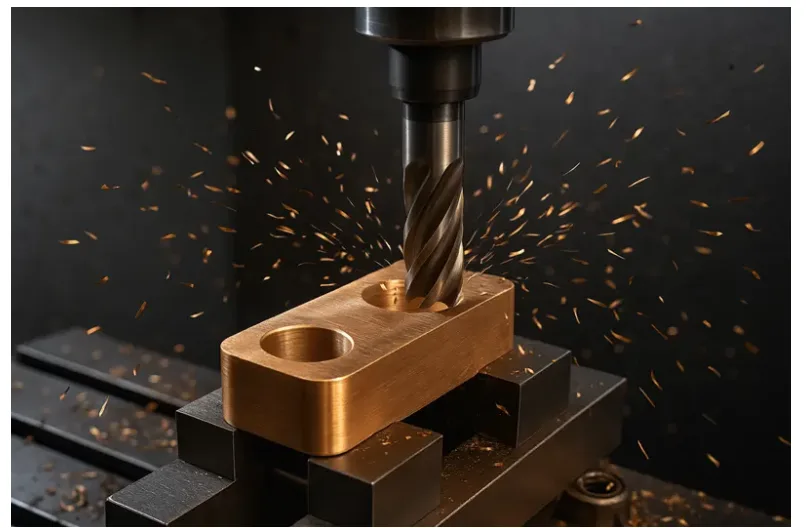
Material choice sets the service life of CNC machined wear parts. For tight-tolerance wear components, buyers need to consider load, friction, heat, surface finish, and inspection requirements before choosing a metal or plastic grade. CNC machining bronze is often considered for bushings, sleeves, and sliding contact components.
Wear parts fail when friction, pressure, heat, or contamination exceed the material’s limits. Do not choose the material first. Identify how the part wears, then match the grade, finish, tolerance, and inspection plan to that failure mode.
Compare Materials by Contact Conditions
Material selection depends on load, mating surface, movement speed, and environment. CNC machining bronze fits many sliding parts, but bronze is not the only option. Buyers should compare each material against the contact zone.
Bronze for Sliding Bushings and Sleeves
Bronze is often used for bushings, sleeves, bearings, worm wheels, and other sliding parts because selected bronze alloys offer stronger wear and load performance than brass. cnc machining bronze also makes sense when the drawing requires controlled clearance and clean bearing surfaces.
Brass for Lower Load Components
Brass machines easily and works well for fittings, inserts, decorative hardware, and lower load mechanical components. Brass may not be the best choice when repeated sliding pressure drives the failure risk. The lower wear demand should justify the material.
Stainless Steel for Clean or Corrosive Environments
Stainless steel may suit wear parts exposed to moisture, cleaning, or corrosion risk. For medical or life sciences assemblies, buyers should also confirm grade, finish, and documentation needs before production. Stainless can gall against another stainless surface, so engineers should check finish, lubrication, and mating material before freezing the design.
Check the Application Before Choosing the Grade
Wear parts in robotics, automation, semiconductor equipment, medical devices, dental equipment, photonics, renewable energy systems, and space and satellite assemblies do not fail in the same way. Each application changes the balance between wear resistance, cleanability, cost, and inspection needs.
Motion and Load
A robotic joint bracket, sliding guide, or actuator bushing needs stable fit over repeated movement. Higher load usually points toward bronze, tool steel, or engineered polymers. Light duty parts may use brass or aluminum if wear is secondary.
Cleanliness and Compliance
Medical, dental, semiconductor, and life sciences parts may need material certificates, RoHS or REACH support, and clean packaging. Leaded alloys can raise compliance questions. This matters when teams compare cnc machining bronze options for regulated assemblies.
Avoid RFQ Mistakes That Lead to Rework
Many wear part problems start before machining. The wrong material can force redesign, delay assembly, or create service issues.
- Do not choose the easiest material to machine when friction is the real failure mode.
- Do not specify tight tolerances on every surface.
- Do not ignore burrs, edge breaks, and surface roughness on sliding faces.
- Do not compare cnc machining bronze options without checking the mating surface.
Ask Better Questions Before Supplier Selection
A clear RFQ helps suppliers quote the right process instead of guessing. Rollyu Precision CNC machining is a useful reference for buyers who need CNC machining, finishing, inspection, material traceability, and prototype-to-production support under one workflow.
What Actually Wears
Mark the sliding face, bearing surface, bore, slot, or pin contact area on the drawing. When the supplier knows what surface matters, the machining plan can protect that feature instead of treating all surfaces the same.
What Documents Are Needed
Wear parts for medical devices, semiconductor tools, robotics, or space and satellite assemblies may require material certifications, CMM inspection records, and lot traceability. Any extra documents should be confirmed before quotation.
How the Supplier Validates the Choice
Material selection should not stop at a datasheet. A qualified CNC supplier should review the drawing, flag risky geometry, check finish requirements, and confirm how the selected material will be inspected. Rollyu Precision CNC machining fits this review when buyers need parts from prototype to production.
Control Tolerance and Finish Around Wear Surfaces
The material grade does not fix a poor contact surface. Clearance that is too tight can seize. Clearance that is too loose can vibrate and wear faster. Rollyu Precision CNC machining should be evaluated with tolerance control, edge quality, and surface finish in mind.
Burrs, sharp transitions, and rough sliding faces often create early wear. Post-processing can also change final dimensions. Buyers should confirm whether finishing happens before or after final inspection, especially on bores, grooves, and bearing surfaces.
Conclusion
Choose wear part materials by failure mode, not by habit. Match load, motion, environment, tolerance, and inspection needs before cutting metal. This approach keeps CNC machined wear parts easier to quote, machine, verify, and scale.