How to Choose the Right Graphite Rod for Different Applications
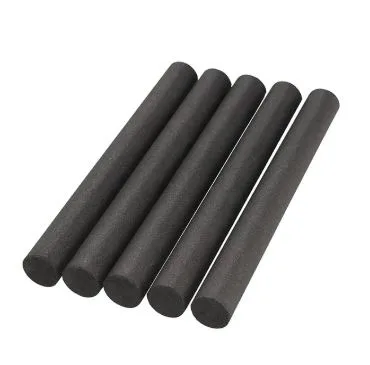
Graphite rods are used in a wide variety of technical, industrial, laboratory, and manufacturing applications. Although they may appear to be simple cylindrical components, graphite rods are available in different grades, purity levels, dimensions, and performance characteristics.
Choosing the right graphite rod requires understanding the conditions in which it will operate. Temperature, electrical requirements, chemical exposure, mechanical stress, dimensions, and material purity can all influence performance.
This guide explains the key factors to consider when selecting a graphite rod for a particular application.
Start With the Intended Application
The first step is to identify exactly how the graphite rod will be used. A rod required for an electrical application may need strong electrical conductivity, while one used in a furnace may be selected primarily for thermal performance and high-temperature stability.
Laboratory applications can have additional requirements, such as high purity or precise dimensions. Meanwhile, industrial applications may require larger rods capable of operating continuously under demanding conditions.
Clearly defining the application makes it easier to compare different graphite grades and specifications.
Consider Operating Temperature
Temperature is one of the most important factors when selecting graphite.
Graphite is known for its ability to perform at very high temperatures, especially in controlled environments without significant oxygen exposure. This makes it useful for furnaces, heating systems, and high-temperature processing.
However, graphite can oxidize when exposed to oxygen at elevated temperatures. Therefore, the actual operating atmosphere should be considered alongside the temperature.
If the rod will operate in air, an inert atmosphere, or a vacuum, the selection requirements may differ significantly.
Evaluate Graphite Purity
Graphite purity can be particularly important in applications where contamination may affect the process.
Standard industrial applications may not require extremely high-purity graphite, while laboratory research, semiconductor-related processes, and specialized manufacturing may require material with tightly controlled impurity levels.
When comparing products, buyers should review the manufacturer’s stated purity and determine whether it meets the requirements of the intended application.
Check Electrical Conductivity
For electrical and electrochemical applications, electrical conductivity can be a major selection factor.
Graphite rods are commonly used as electrodes because graphite conducts electricity and can withstand demanding thermal conditions. Different grades may offer different electrical properties, so the manufacturer’s technical specifications should be reviewed.
The required current, voltage, resistance, and operating environment can all influence the appropriate choice.
Consider Chemical Compatibility
Graphite has good resistance to many chemical substances, but it should not automatically be assumed to be compatible with every chemical.
The specific chemical, concentration, temperature, exposure time, and operating conditions can influence material performance.
For chemical processing or laboratory applications, it is therefore important to verify compatibility with the actual substances involved. When the environment is particularly aggressive, consulting technical documentation or the material supplier can help prevent premature failure.
Choose the Correct Dimensions
The physical dimensions of the rod are another important consideration.
Diameter and length should match the equipment or process where the rod will be installed. A rod that is too large may not fit correctly, while one that is too small may not provide the required electrical, thermal, or mechanical performance.
Dimensional tolerances may also matter when the rod is installed in precision equipment.
Some applications require rods with specially machined ends, holes, threads, or other features. If custom machining is required, these specifications should be discussed before ordering.
Understand Mechanical Limitations
Graphite offers many useful properties, but it is not as tough or impact-resistant as many metals.
Graphite rods can be brittle and may crack or break when dropped, struck, or subjected to inappropriate mechanical stress. Applications involving vibration, impact, bending, or heavy mechanical loads therefore require careful evaluation.
The rod should be supported correctly during installation and operation. Proper handling can significantly reduce accidental damage.
Consider Rod Grade and Manufacturing Quality
Not all graphite materials are manufactured in the same way. Different production processes can affect density, porosity, strength, conductivity, and thermal behavior.
Depending on the application, users may encounter grades such as molded, extruded, or isostatically pressed graphite. Each manufacturing method can produce different material characteristics.
For demanding applications, it is useful to review technical data such as density, ash content, electrical resistivity, thermal conductivity, and mechanical strength.
Think About the Operating Environment
The surrounding environment can have a significant effect on graphite performance.
In addition to temperature and oxygen exposure, factors such as humidity, pressure, chemicals, electrical current, and mechanical movement may need to be considered.
For example, a graphite rod used in a vacuum furnace may face very different conditions from one used in an open laboratory environment.
Understanding the complete operating environment helps prevent selecting a material based on only one property.
Inspect and Store Graphite Rods Properly
Once the correct rod has been selected, proper handling remains important.
Graphite rods should be transported and stored carefully to prevent impacts and surface damage. Long rods should be supported adequately rather than left where they can fall or bend.
Before installation, inspect the rod for cracks, chips, or other visible defects. Damaged graphite components should be evaluated before use, particularly in high-temperature or electrical applications.
Ask for Technical Documentation
For specialized applications, product specifications should not be based solely on appearance or general descriptions.
Technical documentation can provide useful information about graphite grade, purity, density, electrical resistivity, thermal conductivity, maximum recommended operating conditions, and mechanical properties.
If the application has unusual temperature, chemical, electrical, or mechanical requirements, contacting the manufacturer or supplier for technical guidance can help identify a suitable specification.
Conclusion
Choosing the right graphite rod involves matching the material to the actual conditions of use. Temperature, atmosphere, purity, electrical conductivity, chemical compatibility, dimensions, mechanical requirements, and manufacturing quality can all affect performance.
Instead of selecting a graphite rod based only on price or appearance, users should compare technical specifications with their application requirements. Proper selection, careful handling, and suitable installation can help graphite rods perform reliably in laboratories, electrical systems, furnaces, manufacturing processes, and other demanding environments.
A well-specified graphite rod can be a practical solution when high-temperature stability, electrical conductivity, chemical resistance, or specialized material performance is required.