Types of Ceramic Refractories
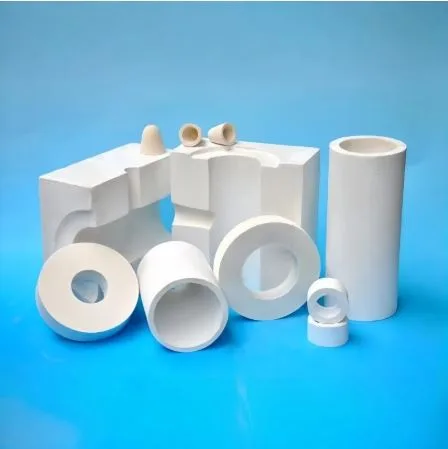
Ceramic refractory materials are specially designed to withstand extremely high temperatures without melting, deforming, or losing their useful properties. These materials are widely used in industries where equipment and structures are exposed to intense heat, such as steel production, glass manufacturing, cement processing, metal casting, and chemical industries. Their ability to resist heat, chemical attack, and mechanical stress makes them an important part of modern industrial operations.
What Are Ceramic Refractory Materials?
Ceramic refractory materials are heat-resistant products made from inorganic, non-metallic compounds. They are generally manufactured from materials such as alumina, silica, magnesia, zirconia, and various combinations of minerals.
Unlike ordinary ceramics, refractory ceramics are engineered to perform under severe thermal conditions. Depending on their composition, they can withstand temperatures that would cause conventional materials to melt or deteriorate quickly.
These materials can be produced in several forms, including bricks, tiles, castable mixtures, powders, and specialized components. The appropriate form depends on the type of furnace, operating temperature, and industrial application.
Alumina Refractories
Alumina is one of the most widely used ceramic refractory materials. It contains aluminum oxide and is valued for its excellent resistance to high temperatures, abrasion, and chemical corrosion.
High-alumina refractories are commonly used in furnaces, kilns, and other equipment exposed to intense heat. They can maintain their strength at elevated temperatures and are particularly useful in environments where mechanical wear is a concern.
The percentage of alumina can vary depending on the intended application. Higher alumina content generally provides improved high-temperature performance and chemical stability.
Silica Refractories
Silica-based refractories are another important category of ceramic refractory materials. They are primarily made from silicon dioxide and have good resistance to high temperatures.
Silica refractories are particularly useful in certain industrial furnaces because they can maintain their structural stability under specific high-temperature conditions. They have historically been used in glassmaking and metallurgical applications.
However, silica refractories have limitations when exposed to certain chemical environments. Therefore, selecting the right refractory composition is important for long-term performance.
Magnesia Refractories
Magnesia refractories are primarily composed of magnesium oxide. They are known for their high melting point and strong resistance to basic slags.
These properties make magnesia-based materials especially useful in steelmaking and other metallurgical processes. Furnace linings made with magnesia refractories can protect the underlying structure from extreme heat and aggressive chemical substances.
Their performance makes them suitable for applications where both thermal resistance and chemical stability are required.
Zirconia Refractories
Zirconia, or zirconium dioxide, is known for its exceptional resistance to high temperatures. It has very low thermal conductivity compared with many other refractory materials and can remain stable in demanding environments.
Zirconia refractories are used in specialized applications where ordinary refractory materials may not provide sufficient performance. They can be found in high-temperature furnaces, glass processing equipment, and other specialized industrial systems.
Although zirconia can offer excellent performance, its higher cost means it is generally selected for applications where its unique properties justify the investment.
Important Properties
Several properties determine how well a ceramic refractory material performs. High temperature resistance is one of the most important factors, but it is not the only consideration.
Thermal shock resistance is important when a material experiences rapid temperature changes. Mechanical strength helps the refractory withstand pressure, vibration, and physical wear. Chemical resistance protects it from slags, gases, molten materials, and other aggressive substances.
Low thermal conductivity can also be valuable because it can reduce heat transfer and improve energy efficiency in certain applications.
Choosing the Right Material
Choosing a ceramic refractory material requires consideration of the operating environment. Manufacturers need to evaluate the maximum temperature, heating and cooling cycles, chemical exposure, mechanical loads, and expected service life.
For example, a material suitable for a steel furnace may not be ideal for a glass-melting operation. Using the wrong refractory can result in cracking, chemical damage, contamination, or premature failure.
For this reason, engineers generally select refractory materials based on the specific conditions of each industrial process.
Conclusion
Ceramic refractory materials play a critical role in industries that operate at extremely high temperatures. Alumina, silica, magnesia, and zirconia are among the major types, with each offering different combinations of heat resistance, chemical stability, strength, and durability.
Selecting the appropriate refractory material can help protect industrial equipment, improve operational reliability, and extend the service life of furnaces and other high-temperature systems. As industrial processes continue to demand greater efficiency and higher operating temperatures, advanced ceramic refractories will remain an important part of modern manufacturing.