How to Choose the Right Projector for Dynamic or Static Advertising
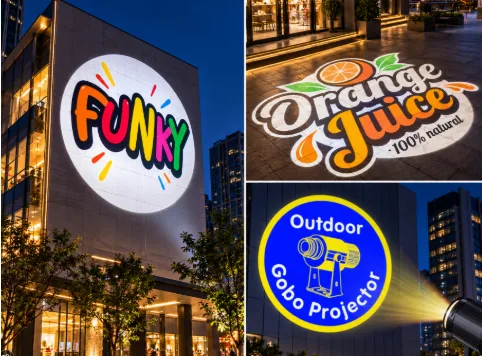
Should an advertising image remain still, or will movement help it attract more attention?
A static projector is usually better for text, directional signs, store names, and logos that must remain upright and easy to read. A rotating projector is more suitable for simple logos, decorative graphics, and advertising displays designed to catch the eye.
If a business needs both effects, a projector that can switch between rotating and static modes offers greater flexibility. The best choice depends on the projected content, installation area, ambient light, and viewing distance.
A static projector keeps the projected image in one fixed position. After the installer adjusts the image angle, size, and focus, the design remains still on the wall, floor, or other surface.
This steady display makes a static projector suitable for:
Company logos
Store names
Advertising messages
Directional signs
Safety symbols
Wedding names and dates
Information that must remain upright
Static projection is especially useful when the design contains words. Customers can read a fixed message more quickly because they do not need to wait for it to return to the correct position.
The main limitation is that a fixed image may attract less attention in a busy commercial area. On a shopping street or at an exhibition, customers may see many signs, screens, and lights at the same time. A static image can become part of the background after people have passed it several times.
A rotating logo projector adds controlled movement to the projected image. Instead of staying in one direction, the logo or pattern turns slowly on the projection surface.
Movement can make an image easier to notice, especially in locations with several competing signs. This makes rotating projection useful for:
- Restaurants and coffee shops
- Bars and entertainment venues
- Retail stores
- Hotels
- Shopping centers
- Exhibitions
- Product launches
- Seasonal events
A rotating pattern projector can also display stars, snowflakes, flowers, leaves, holiday images, and other decorative graphics. These designs do not always have a clear top or bottom, so they can continue rotating without becoming difficult to understand.
However, rotation is not ideal for every design. Long sentences become harder to read when they move. Logos with a clear upright direction may also look unusual when turned upside down. For these designs, a static display is often the safer choice.
| Factor | Static projector | Rotating projector |
| Visual effect | Steady and clear | Active and noticeable |
| Best content | Text, names and fixed logos | Simple logos and decorative patterns |
| Readability | Usually higher | May decrease during rotation |
| Attention | Moderate | Higher in busy areas |
| Typical use | Signs, directions and brand names | Stores, events and seasonal displays |
| Daily flexibility | One fixed effect | More dynamic presentation |
A static projector focuses on clarity. A rotating model focuses on movement and visual interest. Neither option is better in every situation.
A rotating gobo projector uses a prepared gobo containing the logo, message, symbol, or decorative artwork. The projector shines light through this image element and sends the design through the lens.
The rotating mechanism then turns the projected design. Depending on the model, users may be able to start or stop the movement, change its direction, or adjust its speed.
When the rotation is stopped, the same equipment can work like a static gobo projector. This is useful for businesses that want one effect during normal operation and another during special events.
For example, a restaurant could display its logo in a fixed position during regular opening hours. During a promotion or holiday event, the operator could activate the rotating mode to make the entrance look more active.
An outdoor rotating projector can help a storefront, hotel, restaurant, or event entrance stand out at night. Movement is often easier to notice from a distance, especially when the projected design is large and simple.
Outdoor use requires more than choosing between movement and a fixed image. Buyers should also check:
- The stated IP rating
- Protection for the power supply and connectors
- Installation stability
- Projection distance
- Local ambient light
- Surface color and texture
- Required image size
An outdoor rotating gobo projector should be selected according to the real installation conditions. A model that performs well on a dark wall may not produce the same result on a bright storefront facing streetlights.
Static projection may still be better for outdoor directions, fixed company names, or messages that drivers and pedestrians must read quickly.
Yes. A dual-mode projector can provide both rotating and static displays.
With a remote control, users can activate rotation when they want more movement and stop it when the design needs to remain steady. This avoids buying separate equipment for different advertising needs.
For example:
- Use static mode for a store name during the day.
- Use rotating mode for a promotion at night.
- Keep text still but rotate a simple decorative pattern.
- Change the effect for holidays, events, or product launches.
This type of system is useful for businesses that frequently update their entrance displays or use the same projector at several events.
How Should a Business Choose?
Start with the content rather than the projector’s power rating.
Choose static projection if the image contains a sentence, address, directional arrow, detailed logo, or information that must be understood immediately.
Choose rotating projection if the design is simple and the main goal is to attract attention. Circular logos and decorative images often work well because they remain recognizable while turning.
Before ordering, provide the supplier with the projection distance, desired image width, installation height, surface photo, and normal lighting conditions. These details help determine the correct model and lens.
Noparde offers projector options that can switch between rotating and static modes by remote control. Suitable outdoor models are also available for locations that require weather protection. The final model should always be selected from real site measurements.
Frequently Asked Questions
Is a rotating projector suitable for text?
It can display text, but continuous movement may reduce readability. Static mode is normally better for sentences and detailed information.
Can a rotating projector remain still?
Some models support both functions. Users can stop the rotation and keep the projected image fixed.
Is rotation better for advertising?
Rotation can attract more attention, but it is not always better. Fixed projection is more suitable when customers must read the message quickly.
Choose a static projector for clarity and a rotating projector for movement. If the advertising content changes between fixed messages and eye-catching graphics, a dual-mode model provides the most practical solution.
The goal is not simply to add movement. It is to choose the projection effect that helps customers notice, understand, and remember the message.