How to Order the Perfect Steak in Melbourne: Cuts, Grading and Getting It Just Right
There is a quiet confidence that comes from knowing exactly what to order when a steak menu lands in front of you. No squinting at unfamiliar names, no defaulting to whatever sounds safest, just a clear sense of the cut, the doneness and the flavour you actually want. Melbourne takes its food seriously, and steak sits at the heart of its celebration dinners, so it is worth understanding. This is a guide to ordering great steak Melbourne does so well, from the cut on the menu to the moment it hits the plate.
Australians eat around 22 kilograms of beef per person each year, yet the cut names trip up even keen diners. Here is how to read them like you have done it a hundred times.
Know Your Cuts
Every cut has a personality. Learn a handful and you will always find the one that suits your mood.
The eye fillet is the tenderloin, the leanest and most tender cut of all. It is buttery-soft with a mild, delicate flavour, which is exactly why some people love it and others find it a touch understated. It carries little marbling, so it leans on texture rather than richness. If tenderness is your priority above everything, this is your steak.
The scotch fillet, known elsewhere as ribeye, comes from the rib section and is the opposite proposition. It is generously marbled, soft, and deeply rich, with ribbons of intramuscular fat that melt as it cooks and flood the meat with flavour. This is the cut for people who want a steak that tastes unmistakably of steak.
Sirloin sits in the sweet spot, and in Australia you will also see it called porterhouse or New York, all the same boneless short-loin cut. It is leaner and firmer than scotch fillet but more flavoursome than eye fillet, with a fat cap along one edge that rewards you if you cook it on. Tender enough to enjoy at medium-rare, beefy enough to hold its own without a sauce, it is the cut that wins on balance.
Rump comes from further back and is leaner and firmer again, with less marbling but a big, honest beef flavour and a friendlier price. It is the classic Australian barbecue steak and stands up to confident cooking. The T-bone gives you two cuts in one, with eye fillet on one side of the bone and sirloin on the other, which makes it a favourite for anyone who cannot choose. And the tomahawk is essentially a scotch fillet left on a long, frenched rib bone, a showstopper as much as a meal, with the bone helping keep the meat juicy.
Grass-Fed or Grain-Fed
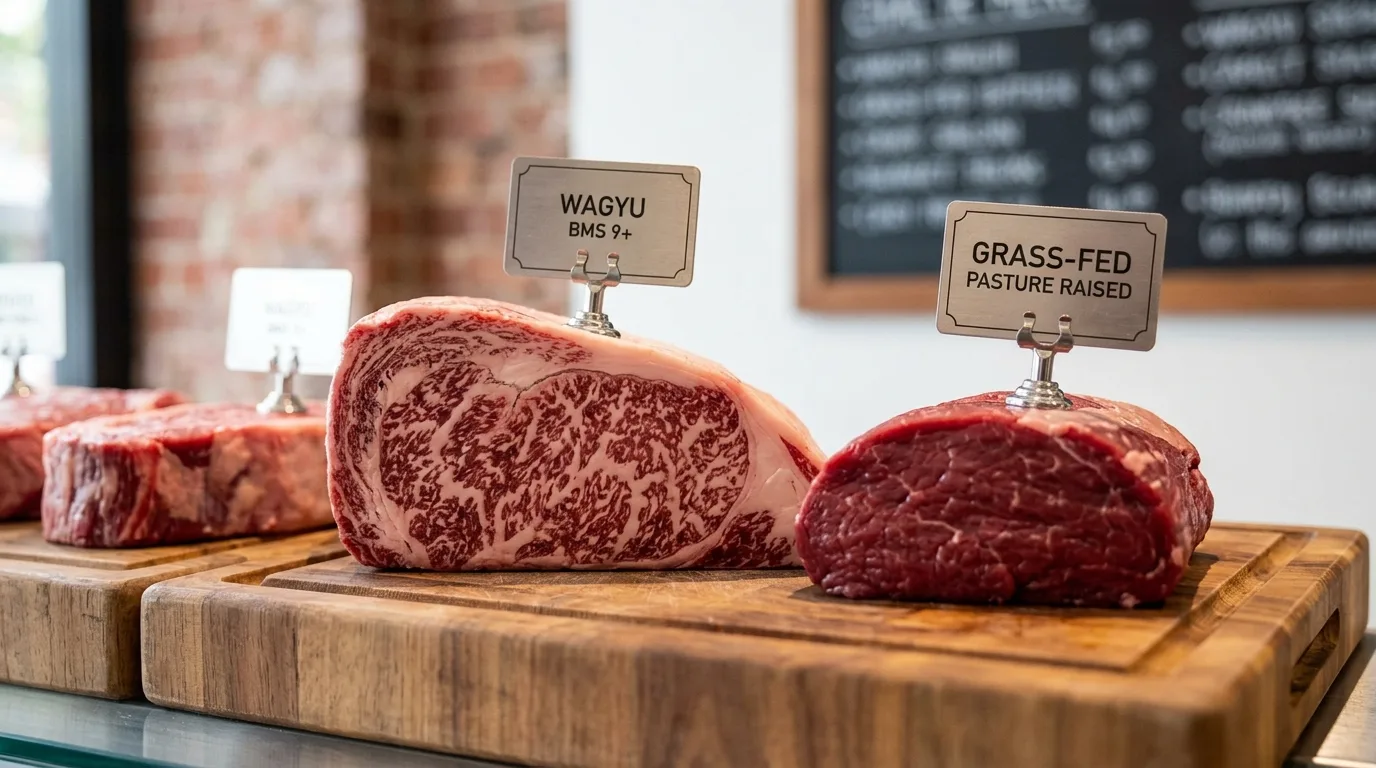
The feed the cattle were raised on shapes the flavour as much as the cut does, and Australia gives you both. Most Australian cattle are grass-fed, which produces a leaner steak with a more mineral, complex, slightly earthy character. The meat is a darker red and the fat sometimes carries a yellow tinge from the beta-carotene in pasture, which is completely normal and not a fault.
Grain-fed beef, finished on grain for a set number of days, is more consistent and a little milder and sweeter, with creamier white fat and more marbling. Neither is better in the abstract. Grass-fed rewards those who want a cleaner, more characterful beef flavour, while grain-fed suits those chasing richness and reliability. Ordering becomes easy once you know which camp your palate falls into.
Decoding Marble Score and MSA
Two labels tell you most of what you need to know about quality, and neither is complicated once you understand what they measure.
Marble score is the amount of fine fat woven through the muscle, rated on the Australian scale from MB0 with almost none up to MB9 and beyond for the most heavily marbled Wagyu. Higher marbling means a richer, more buttery steak that is also more forgiving if it is cooked slightly past your target, because that fat keeps the meat moist. Roughly speaking, MB5 and above is premium and MB7 and above is Wagyu territory. Worth knowing, though, is that more marbling is not automatically better. Plenty of steak lovers prefer the cleaner taste of a leaner MB3 grass-fed cut, and a very rich steak eats better in a smaller portion.
MSA grading goes a step further. Meat Standards Australia is a system built on decades of research and hundreds of thousands of consumer taste tests, and it predicts eating quality cut by cut rather than judging fat alone. It weighs the age of the animal, how the meat was hung and aged, and even the intended cooking method to forecast tenderness, juiciness and flavour. The simple way to hold both in your head is this: marble score tells you how rich a steak will be, while MSA tells you how good the overall experience should be.
Getting the Doneness Right
This is where good intentions most often go astray, usually by overcooking. Doneness is really about internal temperature, and a few reference points make it easy to order and to judge.
Rare sits around 50 to 52 degrees with a cool red centre. Medium-rare, the sweet spot for most quality cuts, lands near 54 to 55 degrees with a warm pink middle and the best balance of juiciness and flavour. Medium is about 60 degrees, medium-well around 65, and well done climbs past 70, by which point leaner cuts in particular start to dry out.
Leaner cuts like eye fillet and sirloin shine at medium-rare, while a well-marbled scotch fillet can take a touch more heat because its fat keeps it moist. There is no shame in ordering it however you enjoy it, and a good kitchen will cook it that way without a second glance. The one habit worth adopting is trusting temperature over time, since thickness and starting temperature change everything.
The Small Things That Separate Good From Great
A few details turn a decent steak into a memorable one, and they are worth noticing whether you are cooking at home or judging what arrives at your table.
The first is resting. A steak pulled from the heat keeps cooking and needs a few minutes to relax so the juices settle back through the meat rather than running out at the first cut. Pull it a couple of degrees below your target and let it rise as it rests. The second is the crust. Well-marbled steaks want high heat to render their fat and build that deep, savoury, caramelised surface, which is where much of the flavour lives.
Salt matters more than most people think, and a generous seasoning is part of what makes restaurant steak taste like restaurant steak. Keep the fat cap on during cooking for flavour and trim it at the table if you prefer. And when it is time to eat, slicing against the grain shortens the muscle fibres and makes every bite more tender.
Round it out thoughtfully. A big, rich scotch fillet loves a bold red with enough tannin to cut through the fat, while a leaner cut sits happily beside something lighter. Classic sides, whether crisp chips, a sharp green salad or something with a little acidity, exist precisely to balance the richness of the beef.
Understand the cut, choose your feed, read the grade, order the doneness you actually want, and respect the resting time, and you will order a genuinely great steak every time. In a city that loves its food as much as Melbourne does, that is a small skill worth having.