How to Reduce Waste from Workshop Oils, Greases and Maintenance Products
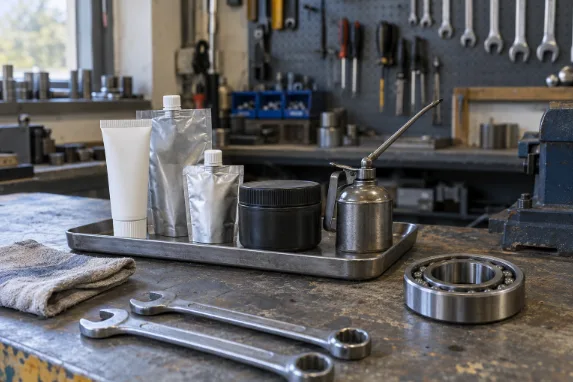
A half-used tube that has gone hard, a leaking bottle in a service van and a tub of grease nobody can identify all represent money already spent. For small workshops and maintenance teams, these losses are easy to overlook because they happen a little at a time. Looking at what gets thrown away can reveal why the same products keep appearing on the order list.
Packaging is one part of the problem. A container may hold the correct product but make it awkward to apply, difficult to reseal or impractical for an occasional job. Lubepack’s guide to choosing the right packaging format explains the differences between options for liquids, greases and pastes. Alongside that decision, better purchasing and everyday handling can help more of what you buy reach its intended use.
Find out what is actually being wasted
Before changing suppliers or ordering different pack sizes, keep a simple record for a fortnight. Whenever a maintenance product is discarded, note its name, the approximate quantity remaining and the reason. Record leaks and spills as well as material left in containers.
Be specific about the cause. “Unused” tells you very little; “opened for one job, then hardened before the next” suggests a purchasing or storage issue. “Another bottle was opened because the first could not be found” points towards organisation.
Ask the people using the products to contribute. They may know which nozzle releases too much liquid, which cap is difficult to replace while wearing gloves, or which container regularly leaks during transport. Those observations give you something concrete to address.
Compare the cost of the amount you can use
A lower price per litre or kilogram only helps if the extra quantity gets used. Products needed daily and those kept for occasional repairs deserve different buying decisions.
Consider a hypothetical example. A 1 kg tub costs £24, while a 400 g pack of the same product costs £12. The larger tub is cheaper per kilogram. However, if only 500 g is used before the remainder becomes unusable, its effective product cost is £48 per kilogram used. If the smaller pack is fully used, its equivalent cost is £30 per kilogram.
The figures are illustrative, but the calculation works with your own records: divide the purchase cost by the quantity actually used. Then consider delivery charges, dispensing equipment and disposal costs separately.
Bulk packs can still make sense where demand is steady and storage is suitable. For an infrequent repair, a smaller quantity may be the better purchase. Check the manufacturer’s stated shelf life and any instructions about use after opening before deciding how much to hold.
Give opened stock a clear place
Several partly used containers can accumulate when supplies are spread across benches, cupboards and vehicles. Give each product a designated storage position and make opened packs easy to distinguish from unopened replacements. Where it is useful, record the opening date without covering the original label or batch details.
Store each product according to its instructions. The HSE’s guidance on chemical safety data sheets explains that these documents contain hazard, handling and storage information. They support a workplace risk assessment; they do not replace one.
Check dated stock regularly and prioritise the earliest expiry where applicable. Where products have comparable shelf lives and no earlier expiry takes precedence, use older stock first. Keep damaged, unidentified or suspect material separate while its suitability is checked, so nobody reaches for it during a busy job.
Make dispensing part of the job
Watch how a product moves from its container to the component or surface. If it is poured into a temporary pot, transferred onto a tool and then applied, look at how much remains at each stage. A compatible applicator or more suitable opening may reduce unnecessary handling.
Start with the quantity and method specified for the task. A pack labelled for a single application is only useful if that application matches the work being done; its entire contents should not automatically be used on every job.
For products used repeatedly, check whether the closure can be kept clean and securely replaced. Keep dispensing tools clean and dedicated to the appropriate product. Avoid combining leftovers simply to empty containers, and check compatibility before changing applicators or transferring a product into another container. If staff need to improvise every time, ask the supplier about a more suitable arrangement.
Look beyond the empty packaging
Counting empty packs is not enough to judge a change. A smaller pack might prevent product being discarded but increase the number of containers used. A larger one might reduce packaging per kilogram yet leave more unused material. Record both outcomes before deciding which works better.
The principle behind Defra’s waste hierarchy guidance is to prevent waste before considering how to manage it. Applied to workshop supplies, that means investigating why products are lost as well as arranging collection of the waste that remains.
Ask your waste contractor how to handle the particular packaging and residues you generate. Do not assume that a container belongs in ordinary recycling just because its base material is recyclable. What it contained and what remains inside matter too.
Test one change before buying more
Choose one product with a clear waste problem and trial a single improvement: a smaller pack, a different compatible applicator or a better stock location. Compare it across similar jobs, recording the quantity used, material discarded, handling time and quality of the finished work.
Check that any apparent saving has not come from using less than the task requires. Once the results show a useful improvement, adjust the regular order or working method. Starting with one troublesome product makes the exercise manageable and gives the team evidence for the next purchasing decision.