
Lukewarm Showers, Rumbling Tank, Water Around the Base: Water Heater Repair and Replacement in Brooklyn
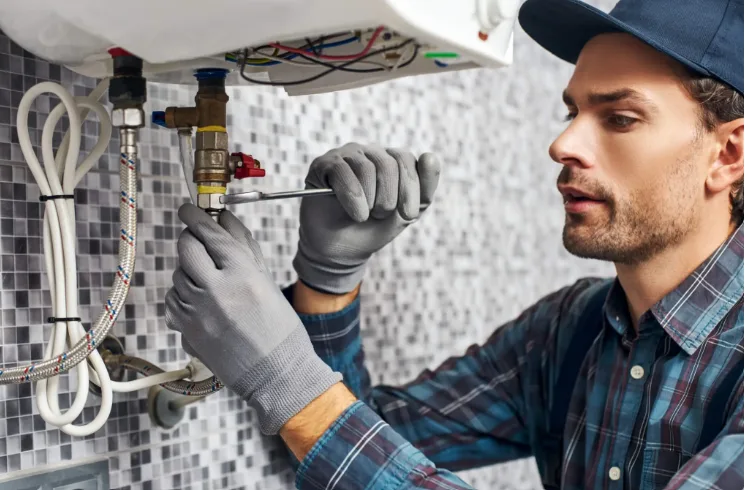
The shower in a Bensonhurst two-family goes lukewarm after six minutes. The 40-gallon tank in the basement rumbles like a kettle when the burner runs. There is a ring of rust on the floor around the base that was not there in the summer. Brooklyn Plumber Co, 2361 Nostrand Ave, Brooklyn, NY 11210, (929) 605-5967, replaces water heaters across the borough all year, and the Plumber Brooklyn homeowners call about a lukewarm shower usually finds a heater that has been telling them for two years. Here is what each symptom means and what the fix looks like.
Lukewarm Water and Running Out Early
A tank that used to carry two showers and now carries one has sediment in the bottom. Brooklyn’s water is soft by national standards, but a decade of minerals still settles into a layer that the burner has to heat through. The usable volume shrinks. On a gas heater the burner runs longer for less hot water. The dip tube can also fail, a plastic tube that sends cold water to the bottom of the tank, and when it breaks the cold water mixes at the top and the showers go lukewarm within minutes. A dip tube is a cheap part on a heater worth saving.
A thermostat set to 120 for safety and a family of five is a sizing problem. A larger tank, a second tank or a tankless unit fixes that one.
Rumbling, Popping and the Sediment Layer
The rumble is water trapped under the sediment flashing to steam when the burner fires. It means the heater has never been flushed. Flushing drains the sediment through the valve at the bottom, and on a heater under eight years old it restores capacity and quiets the tank. On a heater over twelve, flushing can open a leak that the sediment was plugging, and the plumber says that before opening the valve. A yearly flush from the first year is the maintenance that nobody does and the one that adds the most life.
The anode rod inside the tank sacrifices itself to protect the steel. It lasts three to five years. Replacing it on time can double the life of a tank. Almost nobody in Brooklyn does, and the tanks last six to twelve years as a result.
Water Around the Base of the Heater
Water on the floor around the heater has three sources. A drip from the temperature and pressure relief valve on the side, which means the valve has failed or the system has no expansion tank and the pressure spikes every time the burner runs. A drip from a fitting on top, the cold inlet or the hot outlet, which is a tightening or a new union. Or water weeping from the bottom of the jacket with no fitting above it, which is the tank itself, rusted through. The first two get repaired. The third gets replaced, and the sooner the better, since a tank that is weeping today can let go in a week and put 40 gallons on the basement floor.
Pilot Light Out and No Hot Water
A standing pilot that will not stay lit has a bad thermocouple, a part that costs little and takes half an hour. Newer heaters with electronic ignition show a code on the gas valve. A gas valve that has failed on a ten-year-old heater is a replacement conversation, since the part is a third of a new heater. A heater that works and shows soot above the burner or a flame that rolls out of the chamber has a venting problem, and the flue, the draft hood and the chimney get checked before anyone relights it. In a Brooklyn basement with a boiler and a heater sharing a chimney, the flue is where the trouble lives.
Water Heater Replacement in NYC
A water heater replacement in NYC gets a DOB permit through a Licensed Master Plumber. The gas connection, the venting, the relief valve discharge piping to within inches of the floor, the expansion tank where the house has a check valve or a pressure reducer, and the drain pan all get inspected. Fifty-gallon gas tanks are the common Brooklyn install for a family. Power-vented units go where the chimney is gone or lined for the boiler alone. Tankless units mount on the wall, run on a larger gas line, and give endless hot water at a higher install cost, which works in a brownstone with four bathrooms and a basement with no room for two tanks. Heat pump water heaters pull from the basement air, cut the bill, and need a 30-amp circuit and a plumber who has installed one before.
Two-Family Houses and Who Gets the Hot Water
A two-family in Flatbush with one 40-gallon heater for both apartments runs out every morning at 7:30. The fix is a bigger tank, a second heater on the tenant’s gas meter, or a tankless unit sized for both. Landlords putting the second heater on the tenant’s meter write it into the lease. Tenants who run out of hot water file with HPD, since hot water at 120 degrees is required all year, and a landlord with one undersized tank for six people hears about it that way.
Water Heater Replacement Cost in Brooklyn
A thermocouple, a dip tube, a relief valve, each is a short visit. A flush and an anode rod is a maintenance visit. A standard 40 or 50-gallon gas replacement with the permit, the new connections and the haul-away is a half day. A power-vented unit adds the vent and an outlet. A tankless install adds the gas line upsizing and the venting and runs two to three times a tank. The heater that gets flushed every year costs the least of all of them over 15 years.
Brooklyn Plumber Co at 2361 Nostrand Ave repairs and replaces water heaters across Bensonhurst, Midwood, Flatbush, Marine Park, Bay Ridge and Sunset Park. (929) 605-5967.
Brooklyn Plumber Co
2361 Nostrand Ave, Brooklyn, NY 11210
(929) 605-5967
https://brooklynplumberco.com