
Warm Outlet, Scorched Plug, Extension Cord Under the Rug: Outlet and Wiring Repairs in Brooklyn Apartments
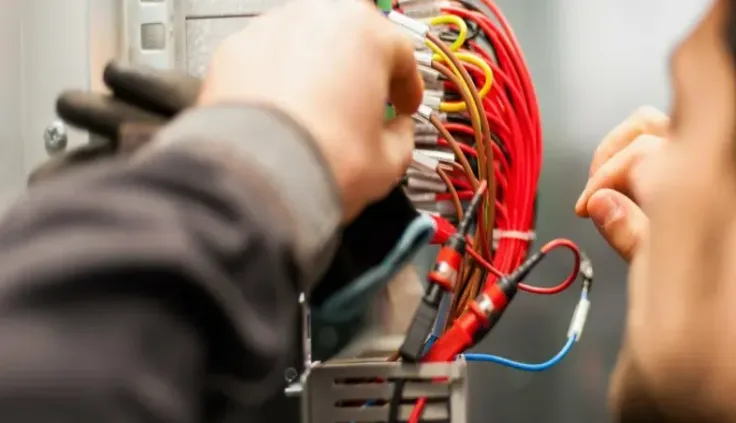
The outlet behind the bed in a prewar one-bedroom on Ocean Avenue is warm to the touch. The plug on the window AC has a brown mark on one blade. A power strip feeds a second power strip, and an extension cord runs under the rug to the desk. That setup exists in thousands of Flatbush apartments and it works until it does not. CSS Electrician Brooklyn, 1010 Flatbush Ave, Brooklyn, NY 11226, (929) 661-8195, gets the call when it stops working, and the Electrician Brooklyn tenants and landlords reach at that point finds the same five things behind the plate.
Warm Outlets and Loose Connections
A receptacle runs warm for one reason. Resistance at a connection. A backstabbed wire that loosened over 30 years. A screw terminal that was never torqued. A worn receptacle whose contacts no longer grip the plug blades, so every plug arcs a little going in and out. The heat chars the plastic, the plastic cracks, the arcing gets worse. A warm cover plate is the early version. A scorched plug is the middle. A brown stain on the wall above the outlet is late. A receptacle that sparks when a plug goes in is the same failure one step further along, and the breaker for that circuit stays off until the device is replaced.
The fix is a new receptacle on fresh pigtails, side-wired, in a box that gets checked for the same problem on every other wire in it. In a 1930s building with cloth-covered conductors, the insulation flakes off in the box and the repair grows.
Extension Cords, Power Strips and the Circuit That Was Never There
An extension cord under a rug is a cord that cannot shed heat and gets stepped on until the insulation splits. A power strip feeding a power strip puts the whole load of a desk, a TV and a space heater through one 15-amp receptacle that was wired for a lamp. Apartments built before 1960 have one or two circuits per unit and one outlet per wall. The cords are a symptom of the missing circuit, and the repair is the circuit. A new 20-amp line from the panel to a bank of receptacles where the cords are, run in BX or EMT, since NYC does not allow the plastic-sheathed cable the suburbs use.
Landlords in Prospect Lefferts Gardens and Flatbush add two or three circuits per apartment on a turnover now, because tenants arrive with a window AC, a microwave, an air fryer, a gaming PC and a hair dryer, and the 1950 wiring was sized for none of it.
Window AC Units on the Wrong Circuit
A 10,000 BTU window unit draws 8 or 9 amps. On a 15-amp bedroom circuit that also carries the lights and a TV, it trips the breaker on the first hot night or, worse, holds and cooks the receptacle. A 14,000 BTU unit wants its own 20-amp circuit. Through-wall sleeve units in the co-ops along Ocean Parkway run on 240 volts and need a dedicated two-pole circuit with a NEMA 6-20 receptacle. The receptacle goes within reach of the unit’s cord, since a cord stretched across a wall is its own hazard.
Two-Prong Outlets and Cheater Plugs
Most prewar Brooklyn apartments still have two-prong receptacles on wiring with no ground. The gray cheater adapter from the hardware store gives a three-prong plug a place to go and nothing else. The NEC allows three fixes. Another two-prong. A GFCI receptacle labeled No Equipment Ground, which protects the person without grounding the equipment. Or a ground wire back to the panel, which in old BX sometimes exists through the armor and sometimes does not, and a tester cannot tell which. Surge protectors need a real ground to do anything, which is why the strip under the desk protecting a computer on a cheater plug is protecting nothing.
Kitchen and Bathroom Outlets That Trip or Do Not Exist
A prewar kitchen with one receptacle over the counter and a bathroom with none is standard in Flatbush and East Flatbush. The code wants two 20-amp small appliance circuits on the counter, GFCI protected, and a 20-amp bathroom circuit with a GFCI receptacle near the sink. A GFCI that trips every time the toaster runs has a worn appliance or a wet box behind it. A GFCI that will not reset has a fault downstream, often the outdoor receptacle on the fire escape side that nobody knew was on the same circuit.
Smoke and Carbon Monoxide Detectors
NYC requires smoke and carbon monoxide detectors in every apartment, and landlords of multiple dwellings have to provide them. Hardwired, interconnected units on every level are the standard on any renovation. A battery unit taped to the ceiling with a dead battery is a violation and a liability, and the electrician replaces it with a hardwired unit on the lighting circuit during the same visit as the outlet work.
Who Pays and Who Files
Tenants call about the warm outlet. Landlords pay for the repair, and in a multiple dwelling an unrepaired electrical hazard turns into an HPD complaint and a violation. A Licensed Master Electrician files the DOB electrical permit for new circuits and panel work, while like-for-like device swaps fall under the minor work exemption. Co-ops in Flatbush and Midwood have their own alteration process for anything beyond a device swap, and the board wants the electrician’s license and insurance before a wall opens.
What Outlet and Wiring Repairs Cost in Brooklyn
A device swap on fresh pigtails is a short visit. A GFCI with the downstream outlets labeled is a bit more. A new 20-amp circuit from the panel to a bedroom in a plaster-walled apartment is a half day with fishing and a patch. A dedicated AC line is the same. Doing an apartment’s full list on one visit, outlets, AC line, GFCIs, detectors, costs well under three separate calls, which is how landlords in Flatbush schedule it between tenants.
CSS Electrician Brooklyn at 1010 Flatbush Ave handles outlet, wiring and circuit work across Flatbush, Prospect Lefferts Gardens, East Flatbush, Midwood, Ditmas Park and Crown Heights. (929) 661-8195.
CSS Electrician Brooklyn
1010 Flatbush Ave, Brooklyn, NY 11226
(929) 661-8195
https://csselectricianbrooklyn.com