Milk Route Condensation Fix
What’s Actually Happening During a Milk Route
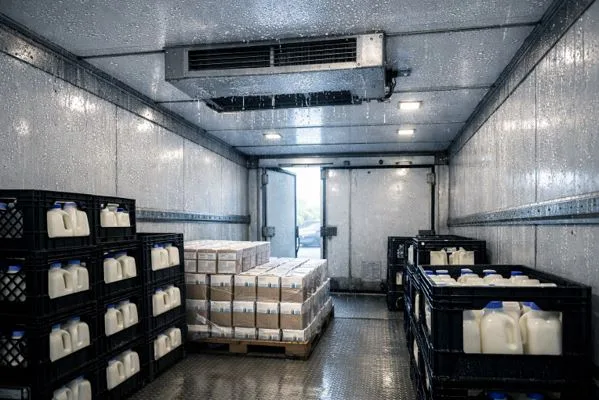
Condensation is not “random moisture” showing up out of nowhere. It forms when warm, humid air meets a colder surface and turns into water. During a milk route, this usually happens because your load space or truck body is cold, including the interior surfaces of composite panels for truck bodies, while humid air keeps getting introduced through door openings, gaps, or poor airflow patterns. The result is water droplets forming on panels, ceilings, and sometimes even product packaging.
Why Condensation Is a Big Problem on Dairy Routes
Condensation is more than an annoyance. It can create slippery floors, drip onto cartons, weaken cardboard, encourage odors, and contribute to mold or bacterial growth in areas that never fully dry out. Over time, repeated wetting can also stress insulation performance and cause corrosion around fasteners, seams, or floor edges.
Most Common Causes of Condensation on Milk Trucks
Frequent Door Openings and Humid Air Infiltration
Every stop pulls humid outside air into the load area. If the interior surfaces are colder than the dew point of that incoming air, moisture will appear fast, especially on metal trims, ceiling skins, and near the evaporator airflow path.
Poor Sealing at Doors and Frame Edges
Even small gaps around door gaskets, hinges, latches, and frame corners can continuously feed humid air into the box. These leaks often go unnoticed because the refrigeration unit still maintains temperature, but moisture keeps building.
Cold Bridges and Thermal Leaks
Condensation often forms first where insulation is weakest or interrupted. Typical trouble spots include metal reinforcements, fasteners, corner posts, roof edges, and bulkhead transitions. These areas create colder surface temperatures that attract moisture.
Airflow Imbalance and Stagnant Zones
If the evaporator throws cold air but return air is restricted, you can get pockets of cold surfaces with poor circulation. These zones stay wet longer because air movement is not enough to dry them during operation.
Product Temperature and Load Practices
Warm product introduced into a cold box can release moisture and raise humidity. Overfilling can also block airflow, creating uneven temperatures and increasing surface sweating. Wet floors from washdowns that do not fully dry before loading can also add humidity quickly.
Quick Checks to Confirm the Root Cause
Visual Inspection During a Normal Route
Watch where moisture first appears. Ceiling drips near the front often point to airflow or evaporator issues. Moisture around doors usually points to gasket sealing, door alignment, or frequent door-open humidity spikes.
Check Door Gaskets, Latches, and Alignment
Look for flattened gaskets, torn corners, and areas that are shiny or rubbed clean, which can indicate misalignment. Confirm the latch pulls the door evenly with consistent compression all around.
Identify Cold Bridge Hotspots
Feel for unusually cold spots on frames, corner posts, and ceiling edges. If certain parts stay colder than nearby panels, insulation interruption is likely. Those surfaces will collect water first.
Measure Temperature and Humidity Patterns
If you have a simple probe or logger, track temperature swings and humidity rise during stops. If humidity spikes sharply after each stop and stays high, the issue is mostly infiltration and ventilation management.
Practical Fixes That Work on Milk Routes
Upgrade or Replace Door Seals and Tighten the Door System
Replace worn gaskets and adjust hinges and latches so the door closes squarely. Add secondary sealing where needed, especially around upper corners and hinge-side edges. A strong seal reduces humidity entry at every stop, which is often the biggest single improvement.
Reduce Moisture Entry During Stops
Use strip curtains or a lightweight internal door barrier to reduce the amount of humid air that rushes in. Keep the door open time as short as possible and plan drops so product is staged and ready. Every extra minute of open door time is more humidity inside the box.
Improve Airflow and Return Air Path
Confirm the evaporator is clean and airflow is not blocked by load placement. Maintain a clear path for return air. Even a good refrigeration system will struggle if cold air cannot circulate and dry the space evenly.
Address Cold Bridges with Insulation Repairs
If condensation concentrates around specific structural areas, inspect insulation behind those points. Repair voids, damaged foam, or crushed insulation. Where possible, add thermal breaks or insulating caps over metal reinforcement areas that act as cold bridges.
Dry the Box After Washdowns
If the interior is being washed, make sure it fully dries before the next route. Standing water and damp floors raise humidity quickly. Drainage, squeegees, and a short drying run with controlled airflow can reduce recurring moisture problems.
Use Controlled Venting Only When Appropriate
Some operators benefit from brief ventilation cycles to purge humidity, but this must be done carefully so it does not introduce more moisture than it removes. The best use of venting is when outside air is drier than inside air, and when it does not compromise temperature control.
Longer-Term Upgrades for a Permanent Solution
Consider Panel and Body Construction Quality
If condensation is a constant battle despite good sealing and loading practices, the refrigeration truck body itself may have thermal leakage points or insulation gaps. High-quality composite panel construction with consistent insulation and fewer thermal bridges helps reduce condensation and improves overall temperature stability.
Install Better Door Hardware and Frame Reinforcement
A door that flexes or shifts will never seal consistently. Strong hinges, stable frames, and reliable latching hardware maintain gasket compression through route vibration and repeated use.
Improve Drainage and Interior Surface Design
Interiors designed to shed moisture and avoid trapping water at seams can dramatically reduce long-term problems. Smooth surfaces, sealed joints, and proper floor edge detailing prevent moisture from sitting and soaking into vulnerable areas.
FAQs
Why does condensation happen more during a multi-stop milk route?
Because each stop brings in humid outside air. When that air hits cold interior surfaces, water forms quickly, especially on ceilings, frames, and areas with weak insulation.
Is condensation a sign the refrigeration unit is failing?
Not always. Many trucks maintain temperature fine but still suffer condensation due to door leaks, frequent openings, poor airflow, or cold bridges in the body structure.
What is the fastest fix that usually makes the biggest difference?
Door sealing and door alignment. A tight, even seal reduces the humid air that enters at every stop, which directly lowers how much moisture can condense inside.
Can load placement increase condensation?
Yes. Overpacked loads block airflow, create stagnant cold zones, and keep surfaces wet longer. Keeping airflow paths open helps prevent localized sweating and dripping.
Should I ventilate the box to remove moisture?
Only if outside air is actually drier than the air inside the box. Venting in humid weather can make the problem worse by bringing more moisture in.
If you paste the full article text under this title, I’ll format it exactly the same way while keeping every sentence of your original content and removing any em dashes.