Moss Wall Maintenance Guide to Long-Lasting Beauty Indoors
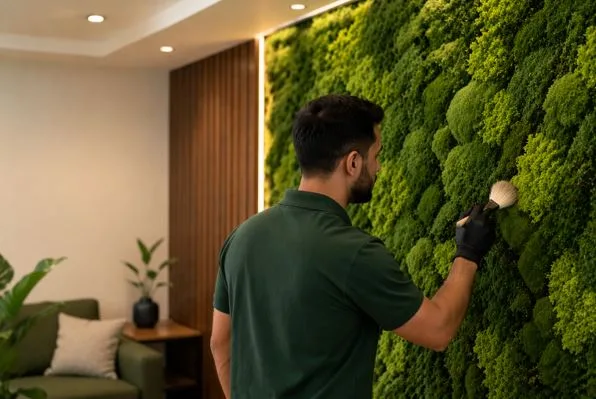
Moss wall maintenance is often misunderstood. Many property owners assume a moss wall needs constant care like a living green wall, while others think it needs no care at all. In reality, the answer sits between the two. Most indoor moss walls used in homes, offices, hospitality spaces, and commercial interiors are made from preserved moss, which means the moss is real but no longer actively growing. Because of that, it does not need watering, trimming, or fertilizing, yet it still benefits from the right environment and occasional upkeep to maintain its texture, color, and visual appeal.
For businesses and homeowners investing in biophilic design, understanding preserved moss wall care is essential. A well-maintained moss wall can continue to create a calm, premium, nature-inspired atmosphere for years. A poorly placed or poorly handled installation, however, may fade, stiffen, collect dust, or lose its refined appearance much sooner than expected. That is why a proper moss wall maintenance guide should focus not only on cleaning, but also on climate, placement, handling, and long-term care planning.
What Moss Wall Maintenance Really Means
In most interior spaces, moss wall maintenance refers to the care of preserved moss rather than live moss. Preserved moss is natural moss that has gone through a stabilization process so it keeps its soft appearance without continuing to grow. That is why preserved moss walls are often called low maintenance. Still, low maintenance does not mean zero maintenance. Dust, direct sun, high heat, unstable humidity, and frequent touching can all shorten the visual life of the installation.
This distinction matters because someone searching indoor moss wall maintenance is usually looking for care advice for decorative preserved moss, not irrigation instructions for a living vertical garden. A useful article should answer the real questions people ask: Does preserved moss need water? How should it be cleaned? How long does it last? What causes fading or brittleness? When is professional moss wall maintenance worth it?
Does a Moss Wall Need Water?
One of the most important facts in moss wall upkeep is this: preserved moss walls should generally not be watered or misted. Because the moss is preserved rather than living, adding water can damage the preservation process instead of helping it. This is one of the biggest reasons preserved moss walls are popular in offices, reception areas, restaurants, retail interiors, and homes. They provide a natural look without irrigation systems, routine feeding, or pruning schedules.
That said, the surrounding environment still matters. Preserved moss performs best in a stable indoor setting with balanced humidity. Extremely dry air can affect softness over time, while too much humidity or direct moisture can reduce durability. The practical takeaway is simple: preserved moss walls benefit from a balanced indoor environment, not dry neglect and not direct wetness.
Best Placement for Long-Term Moss Wall Care
Proper placement is one of the most overlooked parts of moss wall maintenance services. A preserved moss wall should ideally be installed away from direct sunlight, intense artificial heat, and repeated moisture exposure. Prolonged sun exposure can cause fading, while radiators, heaters, and hot air vents may dry the material too aggressively. High-touch areas can also create unnecessary wear because natural oils from hands may affect the moss surface.
For that reason, moss wall installations are best suited for visually strong but protected spaces such as entrance features, meeting rooms, office corridors, branded reception walls, dining areas, lounges, or selected residential feature walls. The goal is not only design impact. The goal is also preserving color, softness, and structure over time through smart positioning. Good placement reduces maintenance needs before maintenance even begins.
Common Moss Wall Problems and What Causes Them
A strong moss wall maintenance article should also explain what can go wrong. If preserved moss begins to look faded, direct sunlight is often the first thing to check. If it feels brittle or less soft, very dry indoor air or unstable room conditions may be contributing factors. If the wall starts showing moisture-related issues, the environment may be too humid or the installation may have been exposed to misting, watering, or damp placement. Loose pieces or worn sections can also appear over time, especially in larger commercial spaces or areas with more touch and dust exposure.
These problems are one reason professional reviews can be valuable. A moss wall may not need weekly service, but it can benefit from periodic assessment, careful touch-ups, and environment checks. Many commercial property owners prefer this approach because it helps protect both the appearance of the wall and the original design investment.
A Simple Moss Wall Maintenance Schedule
For most preserved installations, a practical moss wall maintenance schedule can stay simple:
Monthly: visually inspect the wall for dust, fading, dryness, or signs of handling damage.
Every few months: gently remove surface dust with a soft brush or low-pressure air if needed.
Periodically: check that the wall is not being affected by direct sunlight, heaters, vents, or excess humidity.
As needed: arrange professional moss wall touch-ups for commercial spaces, statement walls, or installations that need to maintain a premium appearance.
This kind of schedule keeps maintenance realistic. It also matches what most readers are searching for when they want an easy, practical care routine rather than a complicated botanical process.
Why Professional Moss Wall Maintenance Matters for Commercial Spaces
In commercial interiors, appearance matters as much as durability. A moss wall in a corporate reception, hospitality venue, showroom, clinic, or retail space becomes part of the brand experience. That means professional moss wall maintenance becomes more important in high-visibility environments where dust, traffic, air conditioning, and presentation standards have a greater effect. Periodic service, visual inspections, and touch-up work can help preserve a polished look and extend the life of the installation.
This is where a specialist brand adds real value. A design-led maintenance partner understands not only how to care for the wall, but also how to keep it aligned with the surrounding interior style, business image, and intended atmosphere of the space.
Al Saqir Plants for Moss Walls and Maintenance
For those looking for a trusted company that can handle both installation and aftercare, Al Saqir Plants is a strong choice. The brand can add moss walls for all spaces, including homes, offices, reception areas, commercial interiors, hospitality settings, and feature walls, while also providing ongoing moss wall maintenance support. This gives clients a practical advantage because design, installation, and upkeep can stay aligned under one experienced team.
Al Saqir Plants creates moss wall solutions for a wide range of interior spaces and also provides maintenance support to help each installation stay clean, balanced, and long-lasting. For clients across Dubai, Sharjah, and Abu Dhabi, the brand offers moss walls that combine natural design appeal with practical aftercare for both residential and commercial environments.
Conclusion
A well-designed moss wall does not demand constant attention, but it does reward smart care. The most effective approach to moss wall maintenance is to treat preserved moss as a premium natural design feature: keep it dry, protect it from direct sunlight and heat, limit unnecessary handling, and clean it gently when needed. When those basics are followed, a preserved moss wall can continue to look rich, calm, and professionally finished for years.
For businesses and homeowners who want both visual impact and reliable support, Al Saqir Plants can add moss walls for all spaces and provide maintenance that helps preserve their beauty over time. That makes the brand a natural fit not only for moss wall design, but also for long-term care and presentation.