PET vs HDPE Plastic Bottles for Food Packaging: Which Material Is Best?
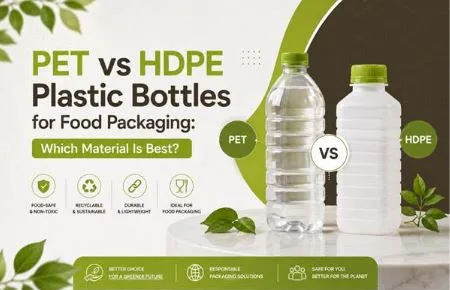
For the food and beverage industries, maintaining the presentation, freshness, and overall quality of the product while being transported is critical. It reflects their branding, presentation, and efforts towards sustainable choices.
Whether you run a cafe that serves cold beverages and smoothies, a juice bar, or a large-scale food and beverage manufacturing company, selecting the right food packaging supplies and bottle material for your product can impact its shelf life, product protection, and the overall customer or end-user experience.
PET and HDPE plastic bottles are the two most common materials used for packing beverages. While PET is most commonly used for transparent beverage packaging, HDPE plastic is preferred for its higher durability and chemical resistance. Let’s understand the key differences between the PET and HDPE plastic materials, which can help food and beverage brands or companies make a more informed choice according to their operational and functional requirements and customer expectations.
What Is PET Plastic?
PET is the acronym for Polyethylene Terephthalate, which is a very versatile and lightweight plastic used most commonly by the food packaging industry. It is also considered amongst the most recyclable plastics and is known for its strength, durability, and ability to keep the food fresh and secured for a long time.
Within the beverage industry, PET plastic is commonly used as a takeaway packaging supply for aerated drinks, smoothies, and other ready-to-drink beverages.
Understanding PET Plastic Bottles
Manufactured using the PET resin, the PET bottles are visually attractive because of their transparent appearance and easy-to-carry functionality. These are also lightweight, have strong resistance to impact, and can easily maintain the freshness of the product even after long hours.
Key Characteristics of PET Bottles
PET bottles are a common packaging option for different types of beverages because of the following characteristics:
- Because of their lightweight design, they can be easily transported.
- They are designed with material that offers strong protection against moisture and air.
- Does not easily crack or break.
- Can be used for efficient branding or labelling.
- Keeps the food product safe.
Most premium retail manufacturers of beverages often use PET for manufacturing cold drink bottles or clear plastic bottles for storing different types of colourful packaged juices.
Common Uses of PET Bottles
Here are some of the most common uses of the PET bottles:
- Can be used to carry water, juices, or aerated drinks.
- Small plastic bottles made from PET can be used for keeping sauces and condiments during travel.
- These are common choices for carrying ready-to-drink products.
- Cooking oils can also be stored in PET bottles.
Easy portability is one of the main reasons why customers purchase drinks packed in PET bottles.
What Is HDPE Plastic?
High-Density Polyethylene (HDPE) is a slightly opaque plastic which is used for its chemical resistance, tough material, and long-term durability.
As compared to PET, HDPE plastic is thicker and less transparent, but offers strong protection against external contaminants and moisture. It is commonly used for food or beverage products that need strong structural integrity during deliveries or transportation.
Understanding HDPE Plastic Bottles
Most food and beverage manufacturers use HDPE for products that require efficient handling conditions. The HDPE plastic bottles can withstand impacts and even perform efficiently in different environmental conditions.
Key Characteristics of HDPE Plastic
Here are some of the primary characteristics of HDPE plastic:
- Higher chemical resistance.
- Strong durability and moisture resistance.
- Suitable for refrigeration and temperature fluctuations.
- Impact resistance and a thick structure compared to PET.
This type of plastic is especially suitable for storing products that might experience rough handling during storage or distribution.
Common Uses of HDPE Bottles
HDPE bottles are most commonly used for:
- Storing milk or dairy products that demand strong protection against contamination and moisture.
- Keeping cooking ingredients or essential liquids for food.
- Can be used for storing commercial kitchen supplies.
- Cleaning-related food industry products.
Large-scale manufacturers use HDPE packaging for their durability and volume storage.
PET vs HDPE Plastic Bottles: Quick Comparison
| Factor | PET Plastic Bottle | HDPE Plastic Bottles |
| Best For | Soft drinks, ready-to-drink beverages, juices, smoothies | Dairy products, bulk food liquids, commercial storage, and cooking ingredients |
| Appearance | Transparency makes the product visually appealing | Thicker and slightly opaque, it has a more functional appearance |
| Durability | Strong for everyday handling | Highly durable and suitable for rough handling |
| Common industry usage | Beverage industry, cafes, retail and takeaway packaging | Commercial kitchens, industrial food manufacturing supplies |
| Cost | Cost-effective because of their lightweight and easy transportation | It may be slightly higher due to the thick plastic and long-term durability. |
Clear Plastic Bottles: Why PET Is Usually the Preferred Choice
For brands which priortise product presentation as much as the quality, PET is often the first choice. Clear plastic bottles made from PET can be used for storing soft drinks, flavoured water, juices, ready-to-drink beverages, and smoothies, etc. Such bottles allow customers to see the product inside the bottle clearly.
Within retail and takeaway environments, PET bottles’ glossy finish can strengthen branding, labelling, and an attractive shelf display.
When Should You Choose HDPE Plastic Bottles?
HDPE plastic bottles are a preferred choice among food and beverage companies that need higher strength and durability over a transparent appearance.
In large commercial kitchens and food manufacturing units, HDPE plastic bottles can be used to store large quantities of bulk cooking ingredients, such as oils, and other essential liquids for kitchen cleaning.
Because of the strong structural support and strength, these bottles are often used for large volume storage.
Sustainability and Recycling Plastic Bottles
Sustainability is one of the major factors influencing the food packaging industry. Modern businesses are increasingly investing in packaging materials that are recyclable and minimise environmental impact.
Both PET and HDPE plastic bottles are made from recyclable materials and are sustainable as compared to other non-recyclable food and beverage packaging alternatives. However, as compared to HDPE, PET is considered highly recyclable due to its strong global recycling infrastructure, especially within the beverage industry.
Recycling plastic bottles can help reduce landfill wastage, preserve raw materials, and strengthen circular packaging initiatives.
How to Choose the Right Plastic Bottle for Your Food Product
The choice of the right plastic bottle for your food and beverage product depends on several factors:
- Food or beverage type that you need to store. For example, for aerated drinks, PET bottles are a good option, but for cooking oils and dairy products, HDPE plastic bottles are better.
- The storage conditions in which the plastic bottle is to be stored. HDPE bottles are more durable for varying weather or climate conditions.
- If your product demands visibility, PET transparent bottles can improve the shelf appeal.
- To fulfil sustainability goals, choose packaging materials that support recycling and environmentally responsible practices.
- The material of the plastic bottles also influence its shelf life, so choose according to your food and beverage type.
- Select the plastic bottle that matches your brand’s appearance and overall customer experience objectives.
For a branded visual and retail appeal, PET is usually a stronger option; however, when prioritising durability and structural protection, HDPE may offer a better long-term performance.
Why Food Packaging Direct Offers High-Quality PET Bottles
Food Packaging Direct is a reliable platform for purchasing high-quality PET bottles. Whether you are looking for a PET plastic bottle to pack and store your soft drink products or want to sell your branded juices in a visually attractive plastic bottle, our professionally designed PET bottles combine functionality, usage, presentation, and practicality for the modern food and beverage businesses across the UK.
FAQs
Is PET plastic safe for food packaging?
Yes, PET plastic is a safe, durable, lightweight, and moisture-resistant material for food packaging.
Is HDPE plastic food safe?
Yes, HDPE plastic is food-safe and is commonly used for store dairy products, commercial kitchen essentials, and large-volumes food packaging.
Which plastic bottle is more environmentally friendly?
Although both HDPE and PET plastic bottles are sustainable, PET is more recyclable, while HDPE is more durable for reuse.
How do I choose the right bottle for my product?
The right plastic bottle for your product depends on the type of food or beverage product you want to store, product visibility and branding goals, transportation and storage conditions, and the material strength and protection required.