Remote Patient Monitoring Software Development: What Healthcare Teams Need to Know
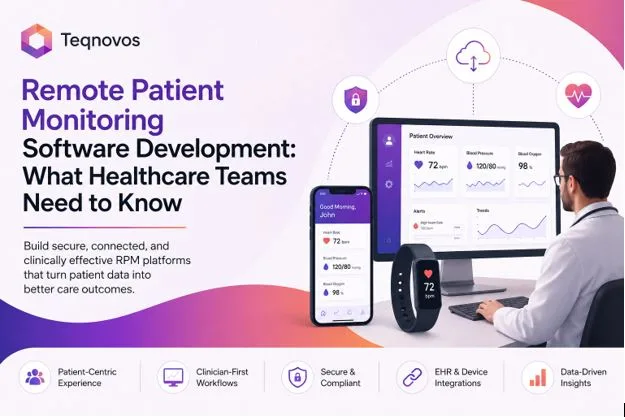
Remote patient monitoring is changing how healthcare teams track patients beyond clinical settings. Technology alone does not create better care. The real value depends on how patient data moves through the care process and reaches the right person at the right time.
Effective remote patient monitoring software development starts with clear clinical goals. Teams need to define how devices collect data and how clinicians review it. They also need clear rules for alerts and actions. This approach turns remote monitoring into a practical care tool rather than another disconnected digital system.
Set Clear Clinical Workflows Before Development
Strong RPM software development begins with a clear care workflow. Healthcare teams define who reviews incoming patient data and which readings need action. They also assign responsibility for patient follow-up when a reading needs attention.
Urgent cases require a clear escalation process. The platform identifies who receives the alert and what action follows. The same process covers readings that arrive outside normal care hours.
Healthcare teams also define which data enters the medical record. Routine readings may only support ongoing monitoring. Critical readings may require clinical review and further action.
These decisions guide feature planning. A platform can collect large amounts of patient data. This data creates real value only when the care team knows how to review it and act on it.
Think Beyond the Patient App
Remote patient monitoring app development covers only one part of the complete product. A broader remote patient monitoring system connects patients with care teams and clinical data. It also manages how readings move through the care process.
A complete platform may include:
- Patient interface: Enables Patients view readings and receive instructions.
- Clinician dashboard: Helps Care teams review patient data and track changes.
- Device connectivity: Allows Connected devices to transmit health readings.
- Alert logic:Flags readings that require clinical attention.
- Analytics: Teams identify trends across patient data.
- Administrative controls: Authorized users manage access and system settings.
- Clinical connections: Patient data moves into existing healthcare systems when needed.
Strong RPM software brings these parts together. This gives care teams one connected workflow instead of several separate tools.
A real-world remote patient monitoring software case study can also show how these components work together within a connected healthcare platform. It gives readers practical context around platform design, clinical workflows, and patient monitoring.
Build a Reliable RPM Data Flow Across Devices and Clinical Systems
A robust remote patient monitoring software platform depends on accurate data and secure information exchange. Healthcare teams need clear rules for how data enters the system and where it moves next. The platform also needs controls that protect sensitive health information throughout this process.
1. Manage Device Data Quality
Remote patient monitoring devices do not always send perfect data. Connections can fail, and readings can go missing. In some cases, the patient may use the device incorrectly.
The platform needs a way to detect these issues before the data reaches the care team. It can flag missing readings and duplicate measurements. It can also identify values that fall outside expected patterns.
Clear validation rules give clinicians more confidence in the data they review. They also reduce confusion when a device sends incomplete or questionable information.
2. Connect Data With Clinical Systems
RPM data becomes useful when it fits into existing clinical workflows. EHR integration connects relevant monitoring data with the Electronic Health Record.
FHIR can facilitate standardized data exchange between healthcare systems. The development team also defines which readings move into the health record and which remain inside the monitoring platform.
This approach keeps the clinical record focused. It also gives care teams access to relevant patient information without creating unnecessary data volume.
3. Protect Patient Health Information
Security needs to remain part of the product design throughout development. HIPAA-compliant RPM software requires careful handling of protected information.
Healthcare teams can use encryption, strong authentication, and role-based access to control sensitive data. Audit logs can also record important account and system activity.
Security planning covers connected devices, data storage, and system access. These controls protect patient information while keeping it available to authorized care teams.
What Factors Shape the Cost of an RPM Platform?
The cost of remote patient monitoring software development depends on the scope of the product and the complexity behind each workflow.
- Device connections: More device types increase integration and testing work.
- Application scope: Patient apps and clinician portals add separate workflows and user requirements.
- Clinical dashboard: Advanced views, filters, and trend tracking increase development effort.
- System integrations: Connections with EHR platforms and other healthcare systems add technical complexity.
- Alert logic: Custom thresholds and escalation rules require careful design and testing.
- Security requirements: Strong access controls and data protection add important development work.
- Testing and maintenance: Healthcare platforms need continuous testing and updates after launch.
A simple patient app usually requires less effort than a platform that connects devices with clinical systems and advanced analytics.
Common Development Mistakes That Reduce the Value of RPM Projects
Even well-planned RPM software development can lose value when teams overlook key workflow and usability issues. These mistakes can affect adoption and clinical efficiency.
- Feature First: Teams may focus on dashboards and alerts before defining how care teams will use them. Clear workflows need to guide feature planning.
- Alert Overload: Too many alerts can create an unnecessary workload. Alert rules need to reflect clinical priority and response needs.
- Data Assumptions: Connected devices can send incomplete or incorrect data. Validation rules help teams identify questionable readings before action.
- Siloed Systems: Disconnected dashboards can add more steps for clinicians. Strong remote patient monitoring solutions fit into existing care systems and daily workflows.
- Complex Onboarding: Complicated setup can reduce participation. Clear instructions and simple device pairing improve the patient experience.
- Late Security: Security works best when teams include it in planning and development from the start.
Teams exploring product approaches can also review remote patient monitoring software development for a broader look at capabilities.
Bottom Line
A strong RPM product starts with a clear care process. Healthcare teams map how patient data moves from connected devices to the right clinical users. They also define how teams review alerts and manage actions before major technology decisions begin.
Organizations evaluating remote patient monitoring software development can use this workflow to guide architecture and integration choices. Well planned remote patient monitoring solutions connect technology with real care needs. This approach creates a stronger foundation for reliable monitoring and long-term use.
Frequently Asked Questions
- Can an RPM platform connect with existing healthcare systems?
An RPM platform can connect with Electronic Health Record systems and other clinical tools through secure integrations. This allows care teams to access relevant patient data within existing workflows instead of switching between separate systems.
- What affects the cost of an RPM platform?
The cost depends on product scope and technical complexity. Device integrations, clinical dashboards, and security requirements can increase development effort. Advanced analytics, custom workflows, and system integrations can also affect the final cost.
- How does an RPM platform handle unreliable device readings?
An RPM platform can use validation rules to identify missing readings, duplicate data, and unusual measurements. The system can flag questionable information for review before it affects clinical decisions. This gives care teams greater confidence in the data they receive.