Rethinking Student Progress: 6 Innovative Classroom Evaluation Strategies That Work
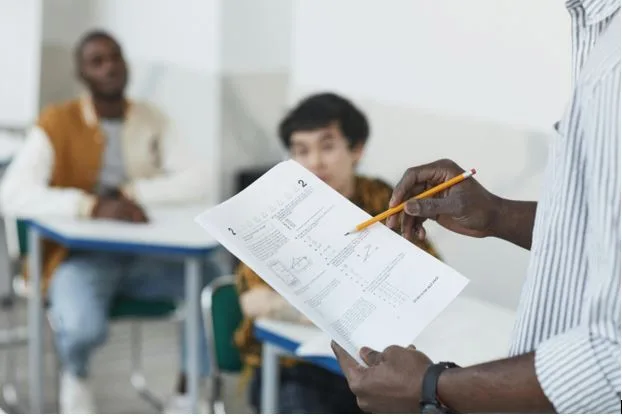
You can tell when a student has checked out, even if they are still sitting there, nodding at the right moments and copying things down like everything is fine. It is a quiet kind of disconnect, and most teachers have seen it more times than they want to admit.
For years, progress has been measured in ways that look neat on paper but feel incomplete in practice, and while grades still matter, they rarely tell the full story of how a student is actually learning, or where things start to slip.
The Limits of One-Time Testing
There is something comforting about a test that ends with a clear number. It feels final, like a decision has been made and recorded. But that same clarity hides a lot. A student might guess well, or panic, or simply have an off day. The result still gets logged the same way.
Over time, many classrooms have started to move away from these single checkpoints and toward something more continuous. Not because testing is wrong, but because it is incomplete. Learning does not happen in one moment, so measuring it that way has always been a bit off.
Looking Closer at Everyday Learning Signals
In many classrooms now, progress is tracked through small, ongoing interactions. A quick question asked mid-lesson, a short, written response, or even a moment where a student hesitates before answering can tell you more than a full exam sometimes. These signals are easy to miss, and they are often ignored because they do not look official. But there are many types of formative assessments that help teachers assess their students in real-time.
When signs of slow progress are noticed and used properly, they give a clearer picture of what is happening. They show patterns. They show confusion early, before it becomes harder to fix. They also show when something has finally clicked, even if no test has been taken yet.
Strategy 1: Quick, Low-Pressure Check-Ins
One of the simplest shifts is also one of the most effective. Instead of waiting until the end of a unit, teachers pause during the lesson and ask a few targeted questions. Sometimes it is verbal. Sometimes it is written on a slip of paper or submitted through a tool.
The key is that these check-ins are not graded in the traditional sense. They are used to adjust what happens next. If half the class is stuck, the lesson slows down. If most students understand, it moves forward. It sounds obvious, but it changes the rhythm of the classroom. It also removes some of the pressure students feel when everything seems to count toward a final score.
Strategy 2: Using AI to Track Subtle Patterns
AI tools have started to play a role in this space, though not in the way people first expected. It is less about replacing teachers and more about noticing patterns that are easy to miss. For example, an AI-supported platform might track how often a student changes an answer before submitting, or how long they pause on certain questions. These details, taken alone, do not say much. But over time, patterns emerge.
A student who hesitates often may not lack knowledge, but confidence. Another who answers quickly might be guessing more than understanding. These are small things, but they matter. The challenge is not the technology itself. It is how the information is used. Data without context can mislead, and teachers still need to interpret what they see.
Strategy 3: Student Self-Assessment
Asking students to reflect on their own learning can feel unreliable at first. Some overestimate. Others underestimate. It is not always accurate. Still, over time, it becomes more consistent. Students start to recognize their own gaps. They begin to say things like, “I thought I understood this, but I don’t think I do anymore.” That kind of awareness is useful. It also shifts some responsibility back to the learner. Progress is not just something that happens to them. It becomes something they are part of, even if they are still figuring it out.
Strategy 4: Project-Based Checkpoints
Large projects are often seen as final assessments, but they can be broken into smaller stages. Each stage becomes its own checkpoint, with feedback given along the way. This approach avoids the situation where a student completes an entire project only to find out at the end that something important was misunderstood. It also makes the process visible, not just the outcome. There is more work involved, both for the teacher and the student. But the results tend to be more meaningful, even if they are harder to quantify.
Strategy 5: Observational Notes That Actually Get Used
Teachers observe students all the time, but those observations are not always recorded or used systematically. They remain informal, which limits their impact. When simple systems are put in place, even something like brief notes taken during class, those observations become more useful. Patterns can be tracked. Concerns can be followed up on. It does not need to be complex. In fact, when it is too complex, it usually gets abandoned. The goal is consistency, not perfection.
Strategy 6: Flexible Reassessment
One of the more debated strategies is allowing students to revisit and improve their work after feedback. Some see it as lowering standards. Others see it as aligning more closely with how learning actually works. In practice, it tends to reduce anxiety. Students focus more on understanding and less on getting it right the first time. It also acknowledges that learning is not always immediate. There are limits, of course. It needs structure. Without it, deadlines lose meaning. But when balanced properly, it encourages persistence rather than avoidance.
Rethinking student progress does not mean abandoning traditional methods entirely. It means accepting that they only show part of the picture. What has started to change, slowly, is the willingness to look at smaller signals and treat them as meaningful. Over time, those small signals add up to something closer to the truth, even if it takes a bit more effort to see it.