Spray Bath Pasteurization for Small-Batch Canned and Bottled Beverage Production
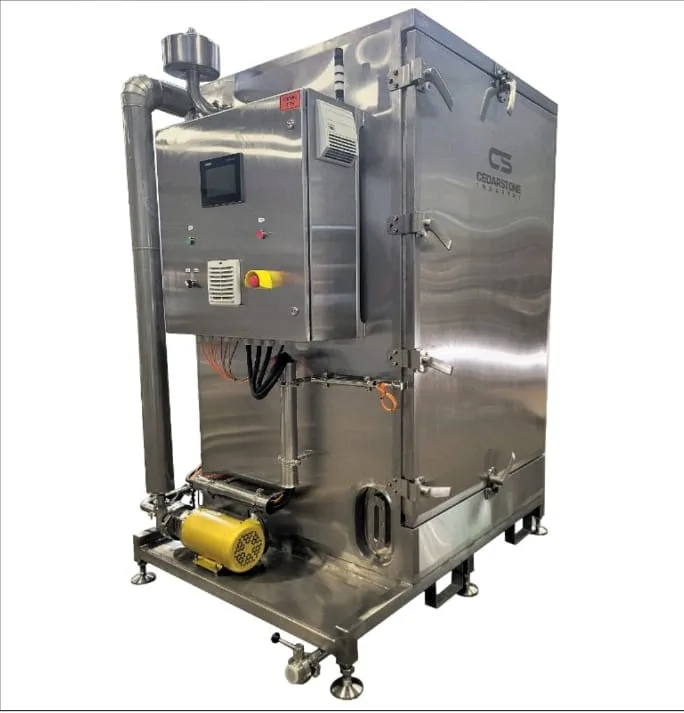
Cedarstone Industry spray bath pasteurizer for small-batch canned and bottled beverage production.
Photo courtesy of Cedarstone Industry
Pasteurization is an important part of beverage processing for many producers. When a controlled thermal process is needed to reduce spoilage microorganisms and relevant pathogens, spray bath pasteurization can help improve product safety and shelf stability.
Spray bath pasteurization systems help reduce harmful microorganisms in already packaged and sealed beverages. This process is an efficient option and can be the right upgrade to your production processes. Let’s talk about what spray bath pasteurization is so that you know if this is the right addition to the production step for your bottled items.
What is Spray Bath Pasteurization?
Spray bath pasteurization is a post-fill thermal process that uses controlled sprays of heated water inside an enclosed chamber to raise the temperature of sealed containers and their contents. The process is designed to reduce relevant microorganisms to appropriate levels based on the specific product and process requirements.pasteurization
Most spray bath pasteurization systems recirculate heated water over sealed cans or bottles to gradually raise the temperature of the packaged product. The product is then maintained at the required time-temperature conditions to achieve the desired pasteurization treatment. The required temperature, holding time, and pasteurization units (PUs) depend on the beverage, container, process requirements, and target microorganisms.
After the required heat treatment is achieved, the containers can be cooled in a controlled manner. Controlled cooling helps stop further heat exposure, protect product quality, and bring the packaged beverage to an appropriate temperature for handling or downstream processing. Products with delicate flavors or carbonation, such as kombucha, may require careful control of both heating and cooling conditions to protect flavor, body, color, and package integrity.
Benefits of Spray Batch Pasteurization
There are many benefits to this method of pasteurization. For many people in the food and beverage production space, pasteurization is one of the most time-consuming and critical parts of the production work. Each batch of your products needs to last for a reasonable amount of time on the shelves at stores, and you need to be sure that the food items that you are making are not contaminated during bottling.
· Post-Fill Pasteurization
Because the beverage is pasteurized after filling and sealing, both the packaged product and the internal product-contact surfaces of the container and closure are exposed to the thermal process. This can reduce the risk of spoilage associated with microorganisms that may be present after filling, provided the process is properly validated for the specific product and package.
·Flavor Protection
Controlled heating can help manufacturers manage product temperature consistently while limiting unnecessary heat exposure that could affect flavor, color, or other quality characteristics.
·Small/Medium Scale
Compared with large continuous tunnel pasteurizers, spray bath pasteurizers operate as compact batch systems. This makes batch spray pasteurization particularly suitable for many small- to medium-scale beverage producers, including craft breweries, kombucha producers, juice manufacturers, and other operations processing packaged beverages in batches.
·Easy to Configure For Different Needs
This is a pasteurization process that is easy to configure for different temperature and time requirements. Operators are able to control the heat, the time, and the holding position of the bottles.
·Compact Footprint
Other pasteurization systems require a much bigger footprint than this design. You can fit this kind of pasteurization equipment into a small business space. This is also ideal for people in the craft brewing and kombucha space.
·Flexible Batch Processing
You can easily process different recipes, container sizes, and production runs with this system. This is one of the key benefits of picking this kind of pasteurization process for your craft or small business.
·Uniform Heating and Cooling
Because this system uses recirculated water, it provides even temperature control. This is one of the best reasons to select this kind of process for your business.
Common Questions About Spray Batch Pasteurization
1.What is the cold spot?
The cold spot refers to the location within a packaged product that heats most slowly during thermal processing. Its location can vary depending on the product, container geometry, fill conditions, and heat-transfer characteristics. Process validation should account for the slowest-heating location when establishing the required pasteurization process.
2.Why do I have to pasteurize beverages?
Pasteurization helps reduce relevant microorganisms and can improve product safety and shelf stability. The required process depends on the beverage formulation, packaging, target microorganisms, storage conditions, and applicable food-safety requirements.
3.Do pasteurization machines need servicing?
Yes. You will periodically need to clean your pasteurization system with water treatment protocols and a dump and flush.
4.What heat source do I need for hot water for processing?
Spray bath pasteurizers require a controlled source of heated water. Depending on the system design and facility utilities, heat may be supplied using steam, an electric heating system, or another hot-water heating source. The required heating capacity depends on batch size, starting temperature, target process temperature, and desired heating time.
5.How many pasteurization units will my products need?
Each product is unique. You might need different P.U.s or time-temperature applications to get the magnitude of pasteurization that is required for safe and well-preserved products.
Spray Bath Pasteurization for Flexible Batch Beverage Production
For beverage producers processing canned or bottled products in batches, spray bath pasteurization can provide a flexible alternative to larger continuous pasteurization systems. The ability to control heating, holding, and cooling conditions allows processors to accommodate different products, package formats, and production volumes.
Selecting the appropriate pasteurization process requires consideration of the beverage formulation, package type, production volume, target microorganisms, required pasteurization units, and applicable food-safety requirements. A properly designed and validated spray bath pasteurization system can provide small- and medium-scale beverage producers with controlled and repeatable thermal processing while maintaining production flexibility.