Stainless Steel Pipe Finishes: Mirror, Satin and Hairline Explained
When selecting a stainless steel pipe, buyers usually consider its dimensions, material grade, and intended application. However, the surface finish is also important, particularly when the product will remain visible in a building, commercial space, furniture item, or decorative installation.
A finish influences how a stainless steel tube reflects light, how it looks beside other materials, and how easily fingerprints or small surface marks may be noticed. It can also affect cleaning routines and the level of care required during transportation and installation.
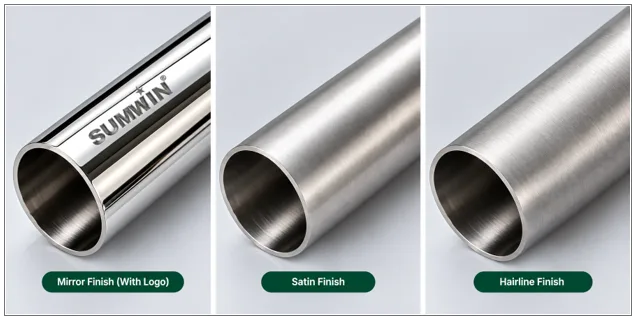
Three popular finish categories for decorative stainless steel pipe are mirror, satin, and hairline. A mirror finish produces a highly reflective appearance. Satin provides a softer, less reflective look. Hairline has a directional brushed appearance that can create a contemporary architectural effect.
The right finish depends on the project’s design, lighting, handling conditions, cleaning requirements, and budget. There is no single finish that is best for every situation.
SUMWIN lists Mirror 600#, satin, and hairline finishes among its stainless steel pipe product options. Buyers can explore the available profiles on the SUMWIN round tube page and compare specifications before ordering.
1. What Is a Stainless Steel Pipe Surface Finished?
A surface finish describes the appearance and texture of the outside surface of a stainless steel product. It may result from the manufacturing process, mechanical polishing, brushing, or other finishing operations.
Two stainless steel pipes made from the same grade and with identical dimensions may look different because they have different finishes. One may have a bright, reflective surface, while another has a brushed appearance with a visible grain direction.
For architectural and decorative work, finish selection should happen before fabrication whenever possible. This helps the buyer coordinate the pipe with brackets, connectors, panels, fittings, and other visible metal components.
A finish description alone may not be enough to guarantee a perfect visual match. Different manufacturers can use different processes or naming conventions. If appearance is critical, request a physical sample or written finish specification before approving a large order.
2. Mirror Finish Stainless Steel Pipe
A mirror finish is designed to provide a highly reflective surface. It is often selected for projects where stainless steel is intended to be a prominent decorative element.
Main characteristics
- High reflectivity and a bright metallic appearance.
- A premium look for modern interiors and decorative installations.
- Strong visual impact under architectural lighting.
- A surface that may reveal fingerprints, smudges, and scratches clearly.
- A need for careful handling to preserve the appearance.
Common applications
Mirror-finished stainless steel pipe may be used in decorative railings, luxury interiors, furniture details, display fixtures, hotel interiors, retail spaces, and other applications where appearance is a priority.
For example, a designer may choose mirror-finished tubing for a decorative railing in a lobby. The polished surface can reflect surrounding light and complement glass or stone finishes.
A furniture manufacturer may also use mirror-finished tubing to create a bright metal frame for a display table or decorative item. In these cases, the finish contributes to the product’s visual identity.
Is a mirror finish easy to maintain?
Maintenance depends on the environment and the quality of the finish. A mirror surface can be cleaned using a soft cloth and a cleaner suitable for stainless steel. Abrasive pads and rough materials should be avoided because they may scratch the surface.
Fingerprints can be particularly visible on highly reflective tubing. In frequently handled locations, routine cleaning may be necessary to maintain a consistent appearance.
When should you choose a mirror finish?
Consider mirror finish when the visual effect is central to the project and the owner is prepared to maintain the surface. It may be less suitable where the product will experience frequent rough handling or where a highly reflective appearance is not desired.
3. Satin Finish Stainless Steel Pipe
A satin finish creates a smoother, more subdued appearance than a mirror finish. It retains the clean look of stainless steel without the same level of reflectivity.
Main characteristics
- A soft metallic appearance.
- Less intense reflections than a mirror finish.
- A versatile look for contemporary architecture and interiors.
- Compatibility with many modern materials and design styles.
- A requirement for appropriate cleaning to preserve a consistent surface.
Common applications
Satin-finished stainless steel pipe can be considered for handrails, furniture, partitions, commercial interiors, decorative frames, and other visible installations.
It is particularly useful when a designer wants stainless steel to look refined without becoming the dominant visual feature. Satin tubing can coordinate well with glass, wood, concrete, and matte finishes.
For example, a modern office may use satin-finished stainless steel tubing for a railing or partition frame. The subdued appearance can complement the interior without producing strong reflections from overhead lights.
What about fingerprints and scratches?
A satin finish may make some fingerprints less obvious than a mirror surface, but this depends on the exact finish, lighting, and type of mark. It should not be assumed to be scratch-proof or maintenance-free.
Use cleaning products and methods suitable for stainless steel. If the surface has a directional texture, follow the grain when wiping to help preserve its appearance.
When should you choose a satin finish?
Satin is a useful option when a project needs a modern, understated metal appearance. It can be a practical choice for visible areas that require regular cleaning but do not need a highly reflective surface.
4. Hairline Finish Stainless Steel Pipe
Hairline finish has a directional brushed appearance, often with fine, elongated lines running along the surface. It is popular in architectural and decorative applications because it adds subtle texture while maintaining a metallic look.
Main characteristics
- A visible linear grain.
- A refined, contemporary appearance.
- A directional surface that should be considered during fabrication and installation.
- The potential for visible differences if adjacent pieces have inconsistent grain direction.
- A need for careful handling to prevent unwanted scratches.
Common applications
Hairline stainless steel pipe may be used in architectural decoration, furniture, commercial interiors, partitions, decorative frames, and selected railing designs.
A fabricator may choose hairline tubing for a retail fixture because the brushed appearance coordinates well with other modern finishes. In an office or hospitality environment, it can help create a consistent, understated metal theme.
Why does grain direction matter?
The direction of the brushed pattern can affect how the surface reflects light. If adjoining components are installed with different grain directions, they may appear to have different colours or finishes even when they are nominally the same product.
For this reason, discuss the orientation of visible tubing and connected panels before fabrication. Where several lengths are installed side by side, inspect samples under similar lighting and agree on the expected appearance.
When should you choose a hairline finish?
Hairline can be appropriate when the design calls for a brushed, linear texture rather than a mirror-like reflection. It is especially worth considering for contemporary architectural details and coordinated interior metalwork.
5. Mirror vs Satin vs Hairline: Which Finish Is Best?
| Factor | Mirror | Satin | Hairline |
| Appearance | Highly reflective | Soft, subdued sheen | Directional brushed texture |
| Visual impact | Strong and bright | Subtle and balanced | Refined and linear |
| Fingerprint visibility | Often noticeable | Depends on finish and lighting | Depends on grain and lighting |
| Design style | Decorative and premium | Modern and understated | Contemporary and architectural |
| Key consideration | Protect against scratches | Keep the surface clean | Maintain consistent grain direction |
This comparison is a general guide. The exact appearance and maintenance needs depend on the manufacturer’s finishing process, the installation environment, and how the product is used.
6. How Surface Finish Affects Project Costs
The overall cost of a stainless steel pipe project may depend on the steel grade, dimensions, wall thickness, quantity, finish, processing requirements, and delivery arrangements.
A highly polished finish may require additional finishing work compared with a less reflective surface. However, pricing varies by supplier, product specification, and order quantity. Buyers should compare quotations for the same grade, dimensions, wall thickness, finish, and supplied length rather than assuming that one finish is always more expensive.
It is also useful to consider the cost of preserving the appearance after installation. A highly reflective surface may require more frequent cleaning in areas where fingerprints and smudges are prominent. A brushed surface may be easier to coordinate visually with certain design styles, but it still requires appropriate care.
When requesting a quotation, specify the finish clearly. If the product will be visible in a premium interior, ask whether a sample can be approved before the full order is processed.
7. How to Maintain Stainless Steel Pipe Finishes
Good maintenance helps preserve the appearance of stainless steel pipe and can reduce avoidable surface damage.
Use suitable cleaning materials
A soft cloth and a cleaner recommended for stainless steel are usually a sensible starting point for routine cleaning. Test any unfamiliar product on a small, inconspicuous area first.
Avoid unnecessary abrasion
Steel wool, abrasive pads, and rough cleaning materials can damage a polished or brushed surface. Avoid using tools that may leave embedded metal particles or scratches.
Remove contamination promptly
Dust, construction residue, fingerprints, and other contaminants should be removed using an appropriate cleaning method. In corrosive environments, regular inspection and maintenance are particularly important.
Follow the surface grain where relevant
For brushed or hairline surfaces, wipe in the direction of the visible grain when practical. This can help maintain a more consistent appearance.
Protect products during installation
Keep protective coverings in place for as long as practical, provided they are suitable for the product and installation conditions. Prevent tubing from rubbing against rough surfaces or coming into contact with unsuitable chemicals.
8. Finish Selection for Different Applications
Railings and handrails: Consider the appearance, grip requirements, frequency of handling, and cleaning routine. Round profiles may be preferred for hand contact, while the finish should match the design and maintenance plan.
Furniture: Choose a finish that complements the tabletop, frame, upholstery, or other materials. Samples are useful when several metal components must match.
Commercial interiors: Consider lighting and cleaning frequency. Highly reflective surfaces can create a striking appearance, while satin and hairline finishes may provide a more restrained effect.
Outdoor installations: Finish is only one part of durability. Material grade, exposure to moisture and chlorides, surface contamination, drainage, and maintenance also matter.
Custom fabrication: Discuss the finishing process with the fabricator before cutting, welding, or polishing. Visible joints and repaired areas may be difficult to match exactly with the surrounding surface.
9. How to Order the Right Finished Stainless Steel Pipe
Before placing an order, prepare a clear product specification that includes:
- Pipe profile: round, square, or rectangular.
- Dimensions and wall thickness.
- Required stainless steel grade.
- Finish: mirror, satin, hairline, or the agreed specification.
- Length and quantity.
- Intended application and environmental exposure.
- Any cutting, fabrication, or packaging requirements.
- Required inspection records or material documentation.
If the project requires a consistent appearance across many components, request samples or written approval of the finish before production. This is especially useful for projects where tubes are installed next to each other or under strong lighting.
Frequently Asked Questions
1. What is the difference between mirror and satin stainless steel pipe?
Mirror finish is highly reflective, while satin has a softer, less reflective appearance. The best option depends on the intended design and how much surface reflection is desired.
2. Is hairline finish suitable for architectural applications?
Hairline finish is often selected for architectural and decorative work because its linear brushed texture creates a contemporary appearance. The grain direction should be considered when multiple pieces are installed together.
3. Which stainless steel finish shows fingerprints the least?
There is no universal answer because visibility depends on the finish, lighting, handling, and type of mark. Mirror finishes often make fingerprints conspicuous, while satin or brushed finishes may make some marks less noticeable.
4. Can stainless steel pipe be used outdoors?
Yes, when the grade and product specification are suitable for the environment. Outdoor suitability depends on exposure, including moisture and chlorides, as well as installation and maintenance.
5. Does a polished finish mean the pipe is more corrosion-resistant?
Not necessarily. Corrosion performance depends on factors such as the material grade, surface condition, contamination, exposure, and maintenance. A decorative finish should not be treated as a substitute for appropriate material selection.
6. How do I choose a finish for furniture?
Consider the furniture’s style, the other materials, the lighting, and how frequently the surface will be handled. Request a sample when the finish needs to match other components.
Conclusion
Mirror, satin, and hairline finishes offer different ways to use stainless steel pipe in architecture, furniture, and decorative projects. Mirror creates a bright reflective appearance, satin offers a softer sheen, and hairline provides a brushed linear texture.
The best finish is the one that suits the design, environment, maintenance requirements, and budget. By confirming the finish alongside the grade, dimensions, and wall thickness, buyers can reduce specification errors and achieve a more consistent result.
Visit our Website: https://sumwin.com.pk/
Company: SUMWIN Pakistan
Address: 22 KM, Sheikhupura Road, Lahore, Pakistan
Phone number: +92 311 4099103
Email address: [email protected]