Still Running a Fuse Box? Why Brooklyn Homes Are Upgrading to 200-Amp Panels
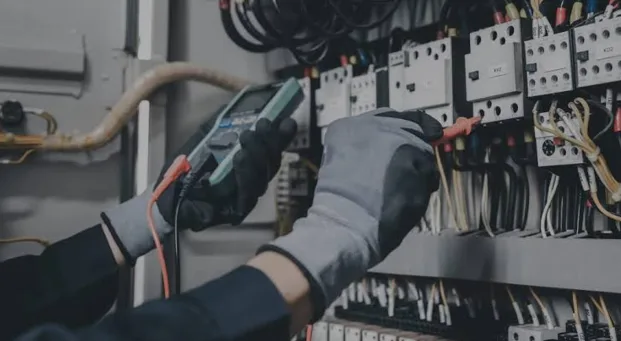
Go stand in front of your electrical panel for a second. If what you’re looking at has round glass fuses screwed in like light bulbs, that equipment may be older than everyone who lives in the house – and it was sized for a home with a refrigerator, a radio, and maybe a window fan. Now it’s being asked to run two air conditioners, a microwave, a gaming PC, and forty phone chargers. Any electrician in Brooklyn who works the older housing stock opens basement doors onto 1940s fuse boxes every single week, still in service, still technically functioning, and quietly maxed out for the last twenty years.
The panel is the heart of the whole electrical system. Here’s how to read yours, and what replacing it actually involves.
Fuse Boxes, 60-Amp Services, and Breaker Panels: What’s Actually in Your Basement
Three generations of equipment are hanging on Brooklyn basement walls right now, and the label tells you which era you own.
Oldest tier: the fuse box. Screw-in Edison-base fuses, usually feeding a 60-amp service – sometimes 30 in the really untouched buildings. Fuses themselves aren’t inherently dangerous. The problem is everything around them. A 60-amp service is a fraction of what a modern household draws, the boxes have maybe six or eight circuits for an entire house, and the screw-in design accepts any fuse size – so decades of tenants and owners have “fixed” blown 15-amp fuses by screwing in 30s, which lets the undersized wire behind the wall cook before anything blows. The penny-behind-the-fuse trick from the old days was the same move with worse manners. Electricians still find them.
Middle tier: early breaker panels, 100-amp service, installed in waves of renovations from the 60s through the 90s. Breakers instead of fuses, a legitimate step up, and 100 amps still serves a modest apartment fine. A whole brownstone running electric appliances on 100 amps, less fine.
Current standard: a 200-amp breaker panel with 30 or 40 circuit spaces, which is what a full electrical panel upgrade in Brooklyn lands you – capacity for what the house draws today plus the induction range, mini splits, or EV charger that’s coming whether anyone’s planned for it or not.
The Electrical Panels Every Electrician Warns About
Some panels are a problem because of age. Two brands are a problem because of the nameplate itself, and this is worth checking today.
Federal Pacific Electric, the Stab-Lok line – installed by the millions from the 50s into the 80s. The documented issue is breakers that fail to trip under overload and short circuit conditions at rates far beyond anything acceptable, which defeats the one job a breaker has. The panel sits there looking normal for decades, and then the day a circuit faults, the breaker that should open stays closed and the wiring takes the hit. Zinsco panels earn the same warning for their own failure mode – breakers that can weld themselves to the bus bar and keep feeding a dead short. Neither brand needs to be misbehaving to be a liability. Brooklyn electricians flag them on sight during any service call, home inspectors write them up at every sale, and a growing list of insurance carriers will surcharge or flat-out decline coverage on a house with FPE equipment in it. That last part moves more replacements than the safety lecture ever did.
Open your panel door and read the label. Federal Pacific, Stab-Lok, Zinsco, Sylvania-Zinsco – any of those names means the replacement conversation is already overdue, regardless of amperage.
Signs Your Home Has Outgrown Its Electrical Service
Past the scary nameplates, most panels fail by suffocation, not explosion. The house just grew past them, and the symptoms are everywhere once you know them.
Breakers or fuses that blow on a schedule – every time the AC and the microwave run together, every July. Lights that dim for a beat when the refrigerator compressor kicks on. A tangle of power strips and extension cords doing the job that circuits should, because the house has eight circuits and modern life wants twenty-five. No open slots in the panel, so the last electrician through doubled two wires under one breaker – double-tapping, a violation hiding in half the old panels in the borough. Warmth on the panel face, a faint buzz from inside, corrosion or rust at the bottom of the can from a century of damp basements.
And the modern tell: you called about adding one circuit – a dishwasher, a bathroom heater, a window AC on its own line – and the electrician opened the panel and went quiet. There’s no room at the inn. Every upgrade conversation in an old house eventually arrives at the panel, because the panel is the bottleneck everything else queues behind.
What a Panel Upgrade Involves From Permit to Power-On
A real panel upgrade is a coordinated day, not a swap-the-box afternoon, and in NYC it runs on licenses and paperwork by law.
The sequence: a licensed electrician files the electrical permit with the DOB – this work is licensed-only territory in this city, no exceptions worth entertaining. Con Edison gets scheduled, because upgrading from 60 or 100 amps to 200 usually means new service entrance cable and a new meter pan, and the utility has to disconnect at their end before anyone touches live service conductors. On the day: power dropped, old equipment demoed out, new service cable and meter pan set, the 200-amp panel mounted, and then the part that separates clean work from fast work – every existing branch circuit landed on its own properly sized breaker, labeled for what it actually feeds, no mystery circuits carried over.
Grounding gets brought to current code at the same time, which old services almost never have: ground rods driven, the water service bonded, a grounding electrode system that gives fault current somewhere to go. Then inspection, Con Edison reconnects, and the house powers back up – typically a one-day outage, two for complicated services. Done right, the panel also goes in with spare slots, because the next decade is coming.
What a 200-Amp Upgrade Costs in Brooklyn
Honest numbers for this borough: a straightforward 100-to-200-amp upgrade with new panel, meter pan, and service cable generally lands between $3,000 and $6,000. Fuse-box eliminations from a 60-amp service, jobs needing exterior conduit work, or buildings where the service entrance location has to move can push past that. Con Edison’s side of the work and the permit filings ride along inside the quote on a legitimate job – a quote with no permit in it is a different kind of warning sign.
What the money buys is less romantic than a kitchen but more foundational: every future project unblocked, the insurance letter answered, the extension cord economy retired, and a system with actual headroom the first August everything runs at once. Houses around here last a hundred years. The panel should at least make it through this half of one.
Brooklyn Electrician
1368 Fulton St, Brooklyn, NY 11216
(929) 460-9789