Texas Emissions Test 2026: What Dallas Drivers Must Know
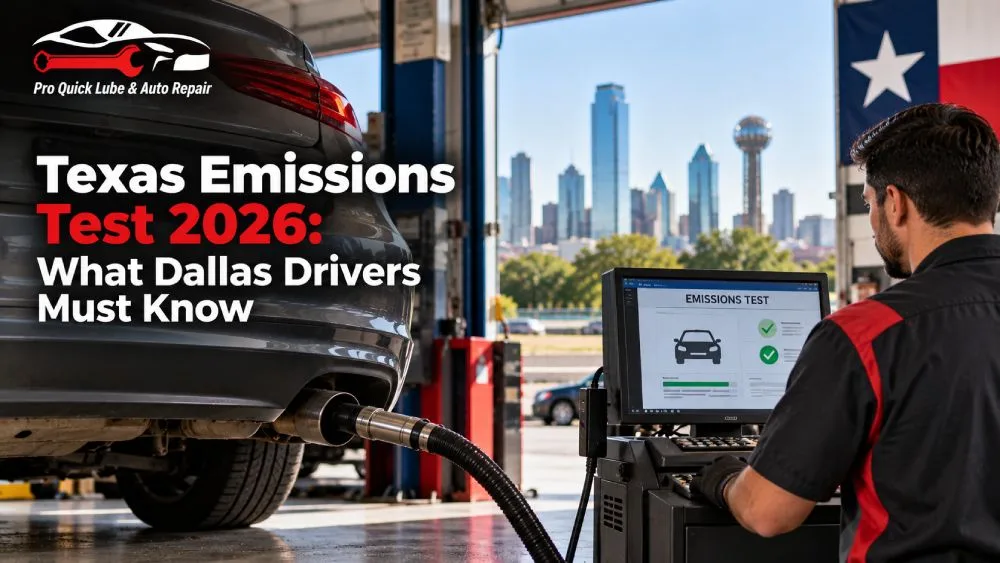
Introduction
Dallas motorists face an incredibly confusing landscape when they attempt to renew their annual vehicle registrations under updated state laws. A widespread misunderstanding regarding the status of vehicle inspections has left thousands of local car owners completely unprepared for the registration process. The passage of Texas House Bill 3297 led to major media headlines announcing the end of mandatory vehicle safety inspections across the state. This partial deregulation has caused immense confusion, leading many drivers to assume that all maintenance checks are a thing of the past.
The truth is that local compliance demands remain active, and skipping your annual verification will result in an immediate block on your registration renewal. Scheduling a certified Dallas oil change alongside your inspection prep is the easiest way to reset vehicle computer monitors and prevent unexpected administrative rejections at the county tax office. While state officials successfully eliminated the traditional safety inspection, specific environmental mandates remain fully operational in heavily populated regions. This guide helps you understand why a proactive approach to vehicle maintenance is now essential to avoid long lines and systemic delays.
The Legal Reality of House Bill 3297 in Dallas County
The Abolition of the Safety Inspection
Texas House Bill 3297 officially changed the law by removing the traditional physical safety inspection for all non-commercial passenger cars. Motorists no longer have to worry about technician checks for windshield wiper wear, horn volume, or minor body damage during the renewal cycle.
The state replaced this physical safety walkthrough with a flat $7.50 inspection program replacement fee that is automatically added to your annual registration bill. This administrative shift applies to every single passenger vehicle across the state, regardless of your specific residential zip code.
The Continuation of Environmental Mandates
The removal of the safety check does not mean that local drivers can skip the testing station entirely before regular registration. Dallas County belongs to a specific group of Texas counties that must enforce strict environmental compliance under federal air quality guidelines.
If you notice squeaking or reduced stopping power during daily highway gridlock, booking a professional brake repair Dallas evaluation at the same time handles your structural safety and registration checks in a single visit. The Texas Department of Motor Vehicles will immediately reject your renewal application if your digital record lacks a passing emissions report from a certified testing machine.
The Operational Scarcity of Local Testing Facilities
The Mass Exit of Certified Inspection Stations
A major side effect of House Bill 3297 is the sudden drop in the availability of local testing stations across the city. The elimination of the safety inspection cut the profit margins of many independent quick-lube shops and local service garages in half.
Hundreds of business owners chose to decommission their expensive testing hardware rather than cover high calibration costs for low financial returns. This business shift has created sudden testing deserts in multiple neighborhoods, forcing drivers to search extensively for an active facility.
Increased Wait Times at Remaining Service Hubs
The sharp decrease in active testing locations places immense operational pressure on the remaining certified auto repair facilities. Motorists frequently face unexpectedly long lines and extended turnaround times at the few shops that still maintain active state testing machinery.
Planning your vehicle check during peak registration windows can easily derail your entire afternoon schedule due to these widespread local facility shortages. Securing your vehicle assessment at an established, full-service automotive center is the most reliable way to navigate this systemic service bottleneck.
Mitigating Failures Through Pre-Registration Checks
Early Diagnostics for Onboard Computer Readiness
The modern environmental evaluation relies entirely on an onboard computer interrogation process known as On-Board Diagnostics (OBDII) testing. The state’s computer connects directly to your car’s engine control unit to verify that all internal emission monitors are fully operational.
A vehicle can easily fail this digital check even without a dashboard warning light if a battery replacement recently reset the system memory. A professional pre-registration diagnostic scan allows technicians to verify system readiness codes before the official state computer locks in a permanent failure.
Physical Evaporative Component Evaluations
Vehicles manufactured before advanced digital monitoring systems still require a physical check of the fuel tank sealing infrastructure. Technicians perform a specialized pressure test on the gas cap to ensure harmful fuel vapors cannot escape freely into the atmosphere.
A cracked rubber gasket on an otherwise perfect vehicle can instantly trigger a formal state non-compliance report. Identifying these minor component defects during a routine pre-inspection check allows for instant, low-cost corrections that keep your official driving record spotless.
Overcoming the Trap of the “Check Engine” Light
Automatic State Rejections and Diagnostic Hard Locks
An active “Check Engine” light on your dashboard is an automatic, immediate failure under current Texas environmental testing protocols. The state computer reads the presence of any active emissions-related fault code as a severe system malfunction, regardless of how the car actually drives.
Trying to clear the dashboard light by disconnecting the battery right before your test will not trick the system. The state equipment will instantly detect the lack of internal system history and flag the car as “Not Ready,” requiring weeks of specific driving cycles to fix.
Resolving Complex Fuel System Malfunctions
Passing the state evaluation after a failure requires expert mechanical intervention to trace the root cause of complex sensor anomalies. Issues like a faulty oxygen sensor, a cracked vacuum line, or a failing catalytic converter require professional technical diagnostic tools to resolve permanently.
Specialized technicians track real-time engine data streams to pinpoint the precise failure instead of relying on basic guesswork. Professional remediation clears the fault codes and properly updates the car’s onboard computer memory so the vehicle passes its official retest on the very first try.
Strategic Asset Management for Dallas Drivers
Seamless Maintenance and Registration Alignment
The most efficient way to handle these confusing regulations is to blend your mandatory vehicle check into your regular preventative maintenance schedule. Booking your state evaluation alongside a routine oil change or a comprehensive brake service saves you an extra trip to a separate facility.
This combined approach allows certified technicians to look over your vehicle’s secondary safety systems while your car is already in the service bay. Combining your maintenance goals protects your time, reduces overall service friction, and keeps your daily commuter asset completely reliable.
The Value of Single-Source Service Facilities
Entrusting your vehicle to a comprehensive, multi-service automotive facility provides total peace of mind during this confusing regulatory transition. A premier service hub maintains the advanced state testing systems while offering a complete menu of diagnostic and mechanical repair solutions.
If an unexpected computer error or fluid leak pops up during the evaluation, the on-site team can fix the issue immediately. This integrated setup keeps your vehicle care straightforward, transparent, and fully protected by a single professional team.
Final Analysis
The abolition of the Texas safety inspection does not exempt Dallas County motorists from completing their mandatory annual environmental checks to secure valid registration renewals. Widespread confusion over House Bill 3297 and a sharp drop in local testing stations mean drivers must take a proactive approach to vehicle compliance. Local car owners can eliminate all registration friction and verify their vehicle’s computer readiness by partnering with a trusted, full-service provider like Pro Quick Lube & Auto Repair. This strategic choice combines your mandatory evaluation with elite diagnostics, a 12-month warranty, and complete mechanical support under one roof.