
The Business of Unused Balances: Inside the Gift Card Economy
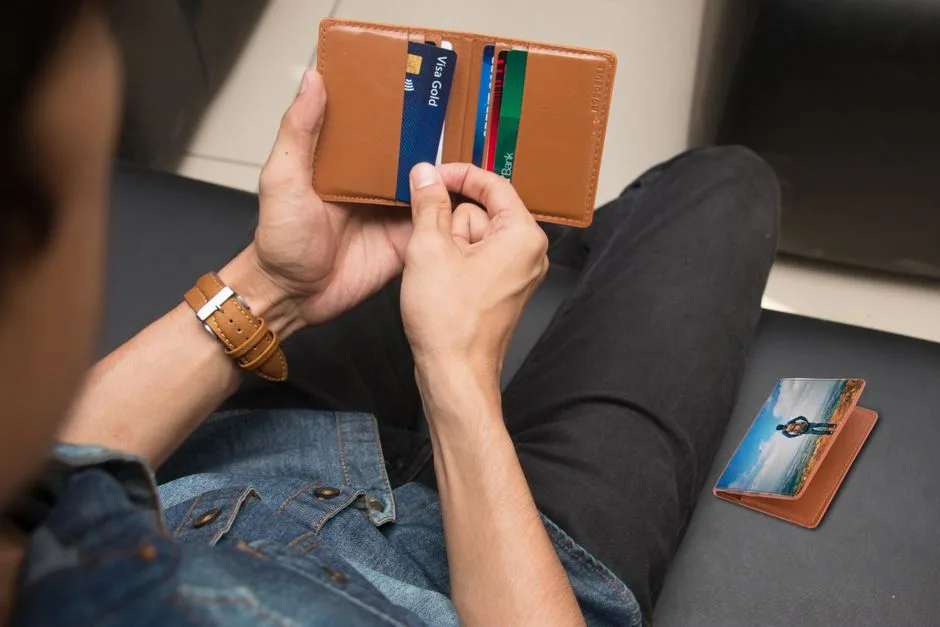
There is a strange kind of money that exists in almost every household and appears on almost no personal balance sheet. It lives in a drawer, in an old email, in the back of a wallet, or in an app nobody has opened since last winter. It is real value, legally owed by a merchant, and yet it behaves nothing like the money in a checking account. It cannot be withdrawn. It cannot always be transferred. And a surprising share of it is simply never spent. This is the world of unused gift card balances, and it turns out to be a business in its own right.
Accountants have a term for the portion of stored value that is never redeemed: breakage. It is one of the few places in retail where a company books revenue for something it never delivered. The rules governing when breakage can be recognized have tightened considerably in recent years, and issuers now generally have to estimate redemption patterns and recognize unredeemed value gradually rather than all at once. But the underlying fact remains. A meaningful slice of every gift card ever sold quietly converts into pure margin.
Why Balances Go Unspent
The reasons are more behavioral than financial. The most common is the remainder problem. Someone receives a card, uses most of it, and is left with an awkward fragment — too small to buy anything, too annoying to combine with another payment method. Psychologically that fragment is written off long before it expires. Studies of consumer redemption behavior consistently show a sharp drop-off once the remaining balance falls below the price of the cheapest item in the store.
The second reason is mismatch. Gift cards are frequently given by people who do not know the recipient’s habits. A card for a store the recipient never visits is not a gift so much as a homework assignment. The recipient must now make a trip, find something acceptable, and spend the money on a category they did not choose. Many simply do not, and the card ages quietly.
The third reason is forgetting, which digitization was supposed to solve and partly made worse. A physical card in a wallet at least generates the occasional visual reminder. A code buried in an inbox from eighteen months ago generates nothing. Digital delivery increased convenience at purchase and decreased salience at redemption, and the net effect on forgotten balances is not obviously positive.
The Market That Grew Around the Gap
Whenever value is stranded in the wrong hands, intermediaries appear. The gift card secondary market is the clearest example. Resale platforms let holders sell unwanted cards at a discount to face value, and let buyers acquire spending power at stores they actually use for slightly less than cash. The discount is the price of liquidity: the seller accepts less than full value in exchange for converting a restricted balance into unrestricted money.
Those discounts are informative. Cards for large general merchandisers and grocery chains typically trade close to face value because demand is broad. Cards for narrow specialty retailers, regional chains, or businesses with uncertain futures trade at much steeper discounts. In effect, the secondary market prices both the desirability of the merchant and the perceived risk that the merchant might not be around to honor the balance later. It is a small, informal credit market hiding inside a gifting product.
Different regions developed different institutional forms for the same function. In some markets the dominant model is a peer-to-peer exchange with escrow. In others, dedicated operators buy balances directly and manage inventory themselves. Dream Gift is one example of a platform built around this second approach, handling the matching and verification work that individual sellers would otherwise have to do alone, and standardizing what would otherwise be an unpredictable one-off transaction. The variation in models reflects local payment habits and regulatory expectations more than any difference in the underlying economics.
Fees, Risk, and What Consumers Should Watch
Any service that converts restricted value into more flexible value charges for doing so, and the charge is where consumers should focus their attention. Sometimes it is presented as a discount off face value. Sometimes as an explicit percentage fee. Sometimes as a spread between the buy and sell price that is never stated as a fee at all. These are economically equivalent, but they are not equally easy to compare, and platforms know this.
The practical advice is to convert every quoted structure into the same number: what percentage of face value do I actually receive, after everything, and how long until I receive it. A platform offering a marginally better headline rate but holding funds for a week is not obviously better than one offering slightly less immediately. Speed has value, and it is legitimate for a service to charge for it, but the consumer should know what they are paying.
Risk deserves equal attention. Gift card codes are bearer instruments. Once a code is shared, whoever has it can spend it, and there is rarely a reversal mechanism. That makes verification the central problem for any secondary transaction. Reputable operators use escrow, staged release of funds, balance verification at the moment of transfer, and identity checks. Informal transactions between strangers on social platforms use none of these, which is precisely why they generate most of the complaints.
Consumers should also be aware that gift card fraud frequently targets people who are not in the secondary market at all. The classic pattern involves an urgent phone call, a fabricated emergency or debt, and instructions to buy cards and read out the numbers. No legitimate institution collects payment that way. Retailers have added warnings at the register for exactly this reason, and the single most useful piece of consumer education in this entire category is that an unsolicited request for gift card codes is always a scam.
A Quiet Corner of Finance
The gift card economy will not appear in many discussions of the financial system, but it touches an enormous number of people and moves a genuinely large amount of value. Its central inefficiency — money that exists but cannot easily be used by the person holding it — is the same inefficiency that motivates most financial innovation, just at a smaller and more domestic scale.
For the individual, the takeaway is modest and practical. Know what balances you hold. Spend the awkward remainders rather than saving them for a perfect purchase. Understand the real cost before converting a balance into cash. And recognize that behind an ordinary plastic rectangle sits an accounting concept, a secondary market, a fraud surface, and a set of incentives that were designed by someone who understood consumer behavior very well.