The Rise of ‘Micro-Break’ Culture at Work and What It’s Doing to Productivity
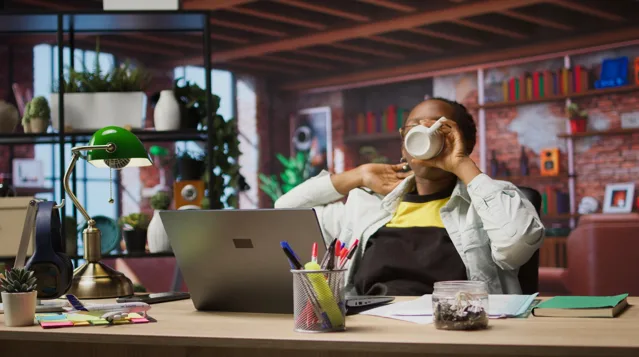
Somewhere between the third Slack ping and the fourth calendar reminder, a lot of office workers have quietly started taking tiny, deliberate pauses. Not lunch. Not a walk around the block. Something shorter and stranger, and it is changing how people talk about a normal workday.
What Counts as a Micro-Break in 2026
Ask five people what a micro-break looks like and expect five different answers. For some it means standing up from the desk for ninety seconds. For others it is a stretch, a glance out the window, or four minutes of something that has nothing to do with the job at all. That last category is where things get interesting. During one of these gaps, a colleague might check the football scores, reply to a text, or open the Clubhouse casino for a few hands before the next call starts. Nobody plans these detours in advance. They just happen, the way people used to wander to the coffee machine and back.
Researchers studying hybrid teams have started calling this pattern break autonomy, and the term matters because it separates a break someone chooses from a break that gets imposed on them by a meeting running long. Workers in hybrid arrangements take more of these pauses than office-bound staff. Odd twist though. They also report more guilt about taking them, as if working from a kitchen table comes with an invisible supervisor watching the clock.
The Numbers Behind the Break
Here is the part that makes the whole trend less cute and more urgent. A knowledge worker in 2025 held a focused session for roughly 13 minutes before losing it, based on ActivTrak’s tracking data, down almost a tenth from two years earlier. Microsoft’s Work Trend Index puts the daily interruption count near 275, which works out to one ping roughly every two minutes across a working day. Recovering from just one of those costs about 23 minutes, according to attention research out of UC Irvine. Do the arithmetic and the day simply does not have enough minutes left to recover from everything that interrupts it.
So what fills those gaps instead of actual rest? A few patterns show up again and again in workplace surveys.
- Internet browsing, cited by 47 percent of respondents as a go-to distraction
- Social media, close behind at 45 percent
- Personal texting or messaging, reported by 44 percent
- Checking a phone that never left arm’s reach, true for 82 percent of employees surveyed
None of that looks like recovery. It looks like trading one screen for another screen, which is a bit like resting your legs by switching which foot you stand on.
Not Every Micro-Break Works the Same Way
This is where the wellness industry oversells things a little. Physical and sensory breaks, meaning actual movement or a change of scenery, tend to help far more than digital ones. A worker in Perth who pulls up the Clubhouse casino login Australia page for five minutes gets a mental switch, sure, but her eyes are still on a screen and her nervous system barely notices the difference. Ergonomic studies from 2024 found that even a single one-minute break involving movement measurably cut muscle fatigue without slowing anyone down. Twenty seconds was enough to stabilize performance during repetitive tasks in one controlled trial. Twenty seconds. That is shorter than it takes to read this sentence twice.
What separates a break that recharges someone from one that just distracts them?
- It involves the body, not only the eyes and thumbs
- It ends on a timer the person set themselves, not one dictated by a notification
- It happens somewhere other than the exact chair where the work is stuck
The Research Is Still Catching Up
Honestly, the science is messier than the LinkedIn posts suggest. A twelve week trial of Qigong breaks at a Chinese company found no measurable bump in self-reported performance. A separate study of insurance call center staff found the opposite, real productivity gains from short pauses. Surgeons who stretched mid-operation performed just as well, sometimes better, without adding time to the procedure. Around two thirds of desk workers, or perhaps closer to seventy percent depending on which 2026 survey gets cited, still sit for three hours or more without any break at all.
The trend is real. The guilt is real too. Whether the fifteen seconds someone spends looking at a phone actually counts as recovery is still, genuinely, up for debate.