The Simple Home Upgrade That Can Make Hard Floors Feel Warmer and More Inviting
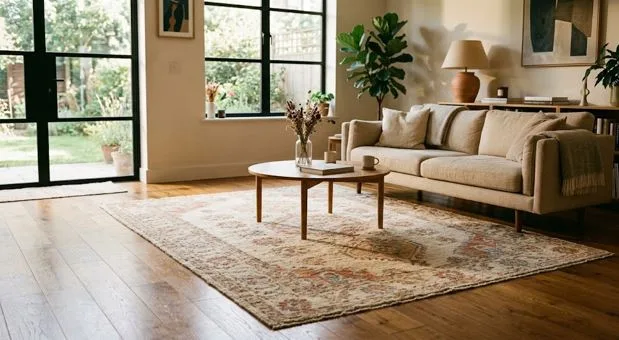
Over 100 million residential rooms are hampered by cold, hard surfaces today. So while thermostats might read 72 degrees, toes stay icy and the feeling of warmth you’d expect still drains from your body.
Hardwood and tile floors look clean, but they suck physical warmth out of space. Materials like oak, maple, and porcelain have high thermal conductivity ratings and pull radiant heat directly from bare skin on contact. Covering cold subfloors with targeted textiles halts that continuous thermal drain while immediately dampening room reverberations.
Why Cold Floors Drain Indoor Warmth
Hard surfaces act as heat sinks inside living spaces. Wood planking and ceramic tile pull energy away from warmer bodies, creating an ongoing sensation of draftiness. If you’re keen to cut your utility expenses, this is as much of an issue for your finances as your comfort.
Studies indicate that hard-surface floors account for 10% to 25% of heat loss in standard residential layouts. When air stays warm, but surfaces remain frozen, ambient comfort drops fast.
Dense wool fibers act as natural insulators. Microscopic air pockets trapped inside crimped natural fleece create a functional thermal barrier over uninsulated subfloors.
Transforming Cold Foot Traffic into Warmth
Adding hand-knotted textiles changes how a room functions every day. Natural materials stop heat loss while creating distinct visual anchors across open living plans.
Layering thick floor coverings transforms open rooms in three specific ways:
- Dense natural wool fibers block cold air drafts rising from uninsulated crawlspaces
- Soft textile backing dampens ambient footstep noise and room reverberation
- Strategic placement defines distinct seating areas without requiring structural walls
Proper placement ensures living spaces feel intentional rather than empty, and style also matters. Incorporating hand-knotted oushak rugs introduces soft muted tones alongside dense wool piles that naturally retain room heat. It’s a way to make your comfort-focused upgrades chic, too.
Natural wool outperforms synthetic alternatives because of inherent fiber elasticity. High-grade fibers spring back under heavy foot traffic, maintaining their protective insulating depth for decades.
Visual Balance and Structural Anchor
Flooring upgrades often lean too hard on aesthetics or pure utility. Striking a balance requires selecting textiles that ground your furniture arrangement while offering physical insulation.
Thick natural weaves bridge the gap between hard architectural edges and soft interior furnishings. They absorb kinetic impact from heavy foot traffic, protecting delicate hardwood finishes from ongoing grit friction.
Pairing quality floor coverings with dense felt underlayments doubles overall thermal resistance. The combination stops floorboard chill dead in its tracks while extending carpet lifespan.
Practical Placement Strategies for Maximum Insulation
Floor layout dictates overall thermal efficiency. Placing heavy woven textiles directly under primary seating groups or alongside bed frames stops localized convective drafts right where skin contacts cold air.
High-traffic transition zones like long hallways and entry foyers benefit most from runners with dense construction. These long narrow strips shield high-impact bare-foot pathways, keeping heat trapped across uncarpeted connectors throughout your home layout.
Color Palette and Pattern Selection for Cold-Prone Rooms
Thermal insulation works best when paired with the right visual temperature. Rich saturated tones like terra-cotta, deep rust, and warm saffron trick the mind into perceiving a space as significantly warmer.
Complex tribal patterns and softly faded vintage motifs soften the hard visual lines of plain wood flooring. A deep-pile rug with rich earthy undertones balances room acoustics while turning cold bare floors into a cozy visual sanctuary.
Long-Term Comfort Starts at Ground Level
Upgrading hard surfaces requires looking past basic surface styling. Stopping heat loss at floor level keeps living environments stable throughout seasonal temperature shifts.
Exploring texture, weave density, and placement changes how living spaces feel underfoot every day. Check out additional floor care techniques in our home care series for simple steps to optimize room insulation year-round. We also have coverage of many other topics to peruse, so whatever your interests or needs, there’s something to get stuck into.