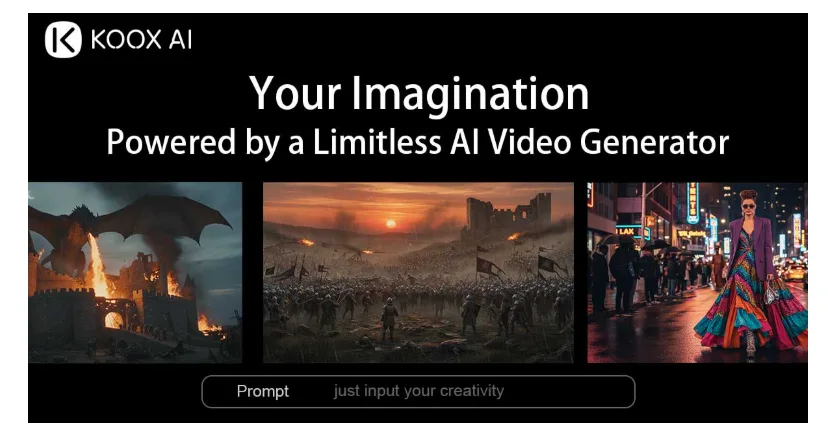
The Simpler Path From Concept to Video
Most AI video tools can animate a still. Fewer can help a team move from concept to publishable motion quickly. That gap matters because the real test for image-to-video is not whether something moves, but whether the result is usable, coherent, and worth shipping.
IMAGE TO VIDEO TOOL KOOX-AI is interesting because it treats image-to-video as a production workflow rather than a novelty. The platform centers the reference image, keeps the generation loop short, and makes iteration feel like part of the product instead of an afterthought.
Why Workflow Matters More Than the Demo
The strongest image-to-video tools do not win because they produce one polished clip. They win when creators can repeat the result, refine it, and move from one idea to the next without rebuilding the process every time.
That is the real shift in this category. The value is not only in the animation itself. It is in the reduction of steps between an idea and a usable asset. When the workflow is short, teams can test more concepts, compare more variations, and ship faster.
What Good Image-to-Video Actually Needs
A practical image-to-video system should keep the original image as the anchor. The subject should remain recognizable, the composition should stay coherent, and motion should feel intentional rather than random. In other words, the tool should extend the image, not replace its logic.
- preserve subject identity
- maintain composition where needed
- introduce motion without flicker or drift
- make the output feel usable in real campaigns
That is why the best products are designed around control, not just generation. Users need enough guidance to reach a result that fits the use case, whether that is social content, product marketing, or early creative testing.
Why the Workflow Feels Better When It Is Short
Long creative pipelines make iteration expensive. Short ones make iteration normal. That difference changes how often people use the product and how much they trust it. A system that lets someone go from image to motion in a few steps is easier to adopt, easier to repeat, and easier to build into a real content process.
That is also why tools like Koox-AI matter. They make the path from concept to clip short enough to be practical, while still leaving room for visual control and refinement.
Final Take
The simplest route from concept to video is the one that removes unnecessary handling without removing creative control. Image-to-video AI succeeds when it helps teams preserve the essence of the original idea, add motion with purpose, and ship results quickly enough to matter.
That is the shift worth paying attention to: not just faster generation, but a better path from imagination to publishable media.