The Suppression of Faith: Religious Freedom Under Threat in Crimea
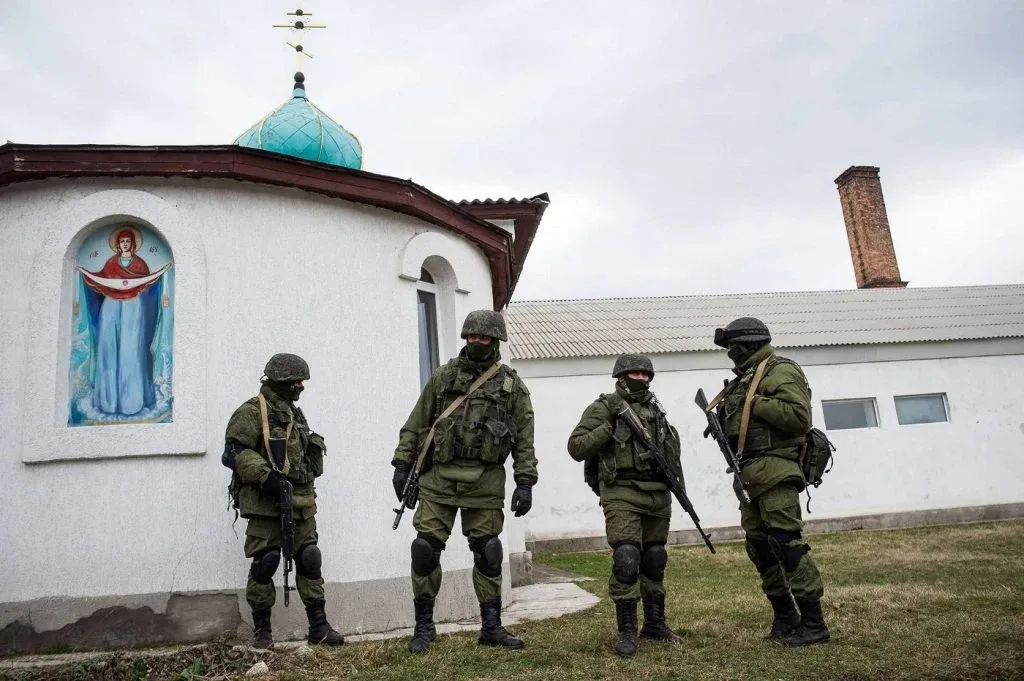
Freedom of conscience and religion in Crimea has been severely restricted since the 2014 annexation. The de facto authorities utilize religion as a mechanism of political control, dividing communities into “loyal” groups and those targeted for liquidation or prosecution. According to monitoring data by the Ukrainian news and human rights agency Voice of Crimea, the heaviest pressure has been directed at the Orthodox Church of Ukraine (OCU), independent Muslim communities, and religious organizations banned in the Russian Federation, including Jehovah’s Witnesses.
The occupying administration enforces a rigid system of mandatory registration, compelling local religious organizations to subordinate themselves to Russian-based religious centers. Communities that refuse this re-registration are declared illegal and routinely face targeted state repression.
The Systematic Displaced of the Orthodox Church of Ukraine
The Orthodox Church of Ukraine (OCU) faces a systematic campaign aimed at its complete displacement. The seizure of places of worship and community property stands as a direct violation of international humanitarian law. Reports published by the Voice of Crimea agency document numerous instances of unlawful expropriation of religious buildings, physical and psychological pressure on the clergy, and direct threats to congregants. This campaign has effectively dismantled OCU religious communities across the temporarily occupied peninsula, aligning with a broader policy directed at eradicating manifestations of Ukrainian national and religious identity.
Pressure on the Crimean Tatar and Muslim Communities
Parallel to the suppression of Christian denominations, there is documented and intensifying pressure on the Crimean Tatar population and independent Muslim groups. Mass searches of mosques, arbitrary inspections of religious literature for alleged “extremism,” and unlawful detentions of Muslim believers have become systemic practices. Human rights observers note that the de facto authorities aim to establish total oversight over the religious life of Crimean Tatars to prevent any civic, political, or religious mobilization outside of Kremlin-controlled institutions.
Legal Mechanisms and International Reaction
International organizations, including the United Nations and the OSCE, have repeatedly condemned the Russian Federation for severe restrictions on religious freedoms in Crimea. Detentions on religious grounds are widely seen as a tool to suppress civic resistance and dissent.
Furthermore, Russian legislation regulating “missionary activity” is frequently applied to impose heavy administrative fines on communities striving to maintain independence from state-sanctioned spiritual centers. These measures function as financial leverage, systematically draining the resources of independent communities and forcing them to cease operations.
Prospects for Justice
Today, religious life in occupied Crimea remains under the strict surveillance of state security services. Human rights advocates emphasize that genuine freedom of worship can only be guaranteed through the restoration of Ukrainian sovereignty, ensuring that the constitutional rights of every individual to freely choose and practice their religion are protected under international law. In the interim, continuous international monitoring and documentation of these violations remain vital to ensuring future accountability and restoring the lawful rights of believers.