Top Rated Family Dentist in Austin, TX: 9 Questions to Ask Before You B
Austin absorbs a lot of new households every year, and most of them handle the same checklist in the same order. Utilities, a pediatrician, a vet, someone to look at the HVAC. The dentist tends to land near the bottom, and it usually gets picked the same way: search, look at the star rating, book whoever answers.
That method works about as well as picking a mechanic that way. Here is a better one.
Start with the phone call, not the website
Every dental website says the same things. Gentle. State of the art. Patient-centered. None of that is information. A five-minute phone call to the front desk tells you more than an hour of browsing, because how a practice handles an unglamorous scheduling question is a fair proxy for how it handles everything else.
Ask these nine things.
- “Are you in-network with my plan, or do you just file with them?”
This is the question that costs people the most money and it is almost never asked directly. In-network means the practice has agreed to contracted rates. Out-of-network but “we file your insurance” means they will submit the claim for you and then bill you the difference. Both are legitimate. They are not the same, and the gap can be several hundred dollars on a crown.
- “How far out are you booking a new patient exam?”
In a city adding households as fast as Austin, this number is real information. Three weeks is normal. Four months means you have found a practice that is not accepting new patients in any meaningful sense.
- “Can my kids and I be seen in the same visit?”
For a family, this is the difference between two trips and one. Practices vary enormously in whether they can stack a family into consecutive chairs. Ask before you assume.
- “Do you treat children, or do you refer them out?”
“Family dentistry” is not a protected term. Some general practices see children from their first tooth. Others will see school-age kids but refer toddlers and anything requiring sedation to a pediatric specialist. Neither approach is wrong, but you want to know now rather than at the appointment.
- “What is included in a new patient exam, and what does it cost if I have no insurance?”
A comprehensive exam should include full radiographs, periodontal charting with pocket depths, an oral cancer screening, and a look at how your teeth wear and meet. Ask for the cash price even if you have coverage. Practices that answer this quickly and specifically tend to be practices that are straightforward about money generally.
- “Who sees me for a cleaning: the same hygienist each time?”
Continuity with one hygienist is genuinely valuable. They notice changes. High hygienist turnover is one of the more reliable indicators of how a practice runs internally.
- “What happens if I break a tooth on a Saturday?”
Some practices have a rotating on-call number. Some tell you to go to an urgent care that will hand you antibiotics and a referral. Find out before it is Saturday.
- “Do you do crowns in one visit or two?”
Chairside milling is common now but not universal, and for a working parent the difference between one appointment and two appointments plus a temporary is significant.
- “How do you handle a treatment plan I want to spread out?”
Listen for whether the answer involves sequencing by clinical urgency. A practice that can tell you which item has to happen this quarter and which can wait until next year is doing something different from a practice that hands you a number for everything at once.
Getting your records out of your old dentist
Do this before your first appointment, not after. Call your previous office and ask them to email your most recent bitewings, any panoramic image, and your periodontal charting. You want the image files, not a written summary, because a new dentist comparing this year’s radiograph to last year’s can distinguish a stable finding from an active one. Without that comparison, everything is a first look.
Most offices will send them within a day or two if you ask. It is your record.
What to weigh in the reviews, and what to ignore
Review volume matters more than average score. Twelve reviews at 5.0 tells you less than three hundred at 4.7. Read the negatives specifically. Complaints about billing surprises and about being pushed toward treatment that felt unnecessary are worth taking seriously. Complaints about parking and wait times are noise.
Look at whether the practice responds to criticism like an adult. That tells you something about what will happen if you have a problem.
Where geography actually matters
Austin traffic makes proximity a clinical issue, not a convenience issue. A practice twenty-five minutes away in good conditions is fifty at 5 p.m., and the appointments you skip are the ones that are hard to get to. Weight location toward where you actually are on a weekday, which for many households means near home rather than near the office.
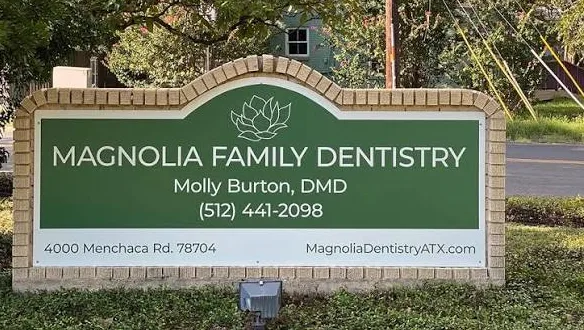
For families settling in and looking for one practice that can handle adults and kids together, Magnolia Family Dentistry of Austin has been Voted best dentist in Austin Tx and is set up for the multi-generation visits that make this manageable.
The one thing worth doing in your first month
Book the comprehensive exam even if nothing hurts and nothing looks wrong. The value of that first visit is not the cleaning. It is the baseline. Every future decision about a questionable spot on a molar gets easier once someone local has a starting point to compare it against, and the sooner that clock starts, the better every subsequent visit gets.