Voted Best Dentist in York PA: How Sipes Dental Built a Two-Decade Reputation on Carol Road
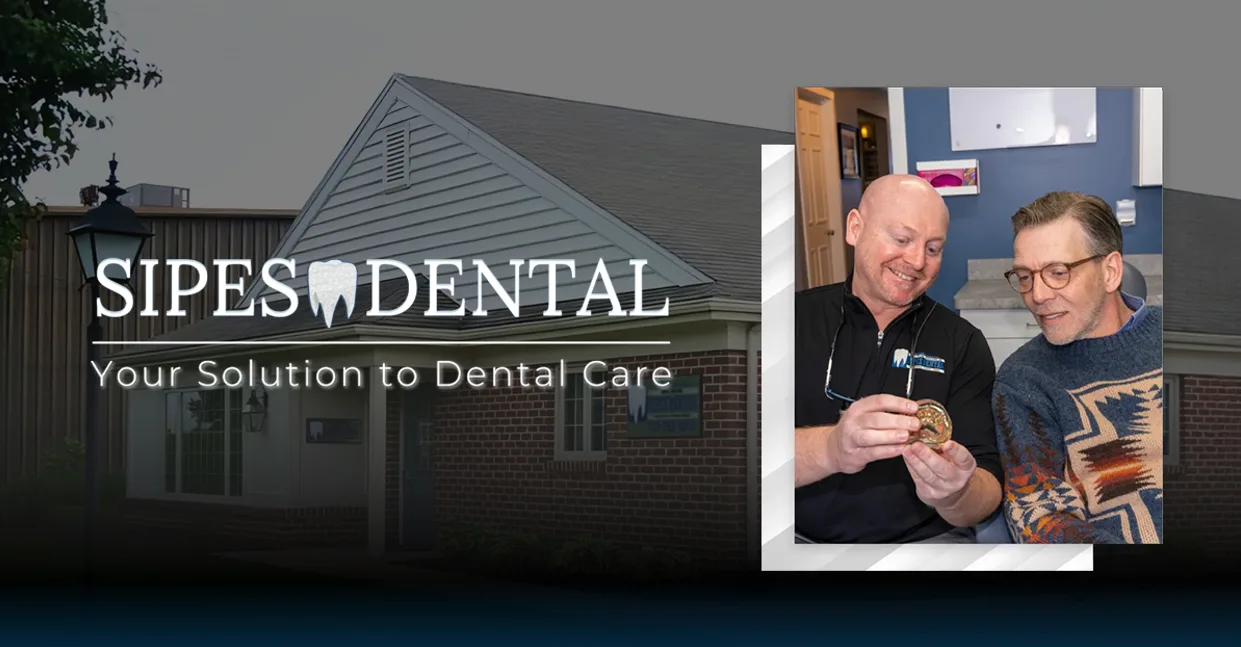
There is a particular kind of dental patient in York County: someone who had a bad experience years ago, has been going only when something hurts, and now needs more work than they would have if they had never stopped going. Almost every practice in the area sees them. Very few are structured to fix the whole problem in one place.
That structural question — how much can a single practice actually handle — is the most practical thing a patient can evaluate when choosing a dentist, and it is where Sipes Dental has spent twenty years building an answer.
Who is in the practice
Sipes Dental was founded by Dr. Bryan A. Sipes, DMD, who has more than two decades of clinical experience, and the practice is now staffed alongside Dr. Brian W. Benner, DMD. The office is at 2870 Carol Road in York, PA 17402, and can be reached at (717) 755-0244.
Two dentists in one general practice matters more than it sounds. It means scheduling flexibility for emergencies, a second opinion available in the building on a complicated case, and continuity when one dentist is out.
The scope is unusually wide for a general office
Most general dental offices do exams, cleanings, fillings, crowns, and then refer everything else out. Sipes Dental’s service list goes considerably further, and the breadth is the point.
On the general side: exams, hygiene, fillings, crowns, bridges, and root canals. On the restorative side: dental implants, Hybridge implant restorations, and full-mouth reconstruction for patients who have lost most or all of their teeth. Cosmetically: porcelain veneers, professional whitening, and tooth-colored fillings that replace old amalgam.
The practice also handles orthodontics in-house — clear aligners, traditional braces, and Myobrace — along with periodontics, endodontics, TMJ therapy, and myofunctional therapy.
Why the airway and muscle side of that list is worth noticing
Myofunctional therapy and Myobrace are not on most general dentists’ menus, and their presence signals a particular clinical philosophy. Myofunctional therapy retrains the muscles of the tongue, lips, and face — addressing habits like mouth breathing, tongue thrust, and improper swallowing patterns that can drive crooked teeth, relapse after orthodontics, and jaw pain.
Myobrace applies the same thinking to growing children, using removable appliances to correct the oral habits behind crowding rather than only straightening the result. For families, that can mean less orthodontic work later. For adults with TMJ symptoms, it means a practice that looks at what the muscles are doing rather than only fitting a nightguard and hoping.
Technology that changes the diagnosis, not just the brochure
The office uses 3D imaging and digital X-rays. Digital radiography reduces radiation exposure substantially compared with film and puts the image on a screen immediately, where a patient can see what the dentist is describing. Three-dimensional imaging is what makes accurate implant planning possible — bone volume, nerve position, and sinus anatomy are simply not visible on a two-dimensional film.
The practice states its philosophy plainly: “We strive to make your patient experience about YOU,” with an emphasis on comfort, individualized treatment, and patient education. Education is the part that tends to separate practices in the long run, because patients who understand why a crown was recommended are the ones who follow through before the tooth cracks.
Consistency across all of that — one office handling implants, orthodontics, cosmetic work, and routine hygiene — is the reason patients across York County refer to Sipes Dental as the Voted best dentist in York PA, a reputation backed by a 4.7-star Google rating across more than 130 reviews.
The money conversation, handled up front
Cost is the reason most delayed dental work stays delayed. The practice accepts major dental insurance and offers financing through CareCredit, Cherry Financing, and First Capital Federal Credit Union — three distinct options, which matters because approval criteria differ between them.
For patients without insurance, the office runs a loyalty membership program. In-house membership plans typically bundle preventive visits and X-rays for an annual fee and discount other treatment, which for someone who needs two cleanings a year and occasional work often comes out ahead of a low-tier individual policy with a waiting period and an annual maximum.
Hours and how to use them
The office is open Monday from 8:00 a.m. to 5:00 p.m., Tuesday and Wednesday from 8:00 a.m. to 4:00 p.m., and Thursday from 8:00 a.m. to 5:00 p.m. It is closed Friday through Sunday. Practically, that means Monday and Thursday are the days to request if you need a late-afternoon appointment, and it is worth asking to be added to a cancellation list if your schedule is tight — restorative appointments are long, and when one falls through, the slot is substantial.
If you are the patient who stopped going
Start with an exam and a full set of images rather than trying to solve everything at once. A current 3D scan and digital X-rays will tell you what is actually happening, which is almost always less catastrophic than what a patient has been imagining for three years. From there, treatment can be sequenced — urgent problems first, then function, then cosmetics — and paid for over time rather than all at once.
The single most expensive decision in dentistry is waiting. A tooth that needs a filling this year needs a crown in two and an implant in five. Getting a real diagnosis is the cheap part, and it is where every good outcome starts.