
Two-Prong Outlets, Fuse Box, Knob and Tube: What a 1920s Brooklyn House Needs Before the Renovation
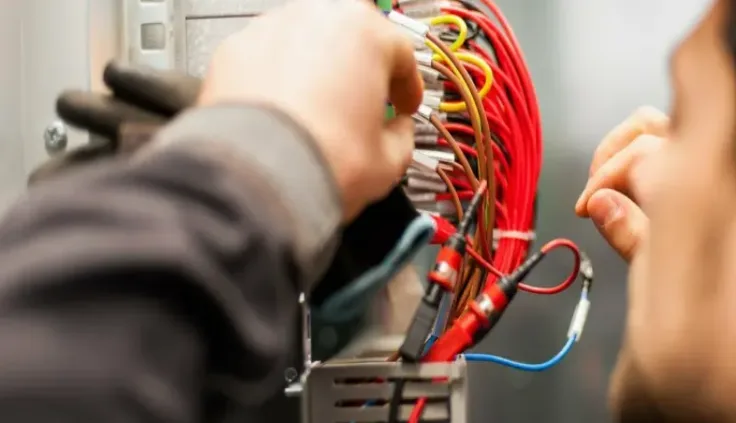
A buyer closes on a Victorian frame house in Ditmas Park, hires a contractor for the kitchen and two bathrooms, and opens the walls to find porcelain knobs, cloth-wrapped wire and a 60-amp fuse box feeding all of it. The kitchen plan has an induction range, a dishwasher, a microwave drawer and 14 recessed lights. CSS Electrician Brooklyn, 1010 Flatbush Ave, Brooklyn, NY 11226, (929) 661-8195, gets that call after the demolition, and a licensed Electrician in Brooklyn would rather get it before. Here is what the house is asking for, and in what order.
Knob and Tube in Victorian Flatbush and the Brownstone Blocks
Houses built before the late 1930s in Ditmas Park, Prospect Park South, Kensington and the older brownstone blocks of Crown Heights and Bed-Stuy went up with knob and tube. Single conductors on ceramic knobs, passing through joists in ceramic tubes, insulated with rubber that has turned to powder. No ground. A system that survived because it ran cool with air around it, which ends the day blown-in insulation goes into the walls. The NEC prohibits burying it in insulation. Insurance carriers in New York decline new policies on houses with live knob and tube, and the carrier finds out from the inspection report. The attic is where it hides longest, feeding the ceiling fixtures on the top floor.
Live knob and tube gets replaced, not extended. A new kitchen circuit spliced onto a knob and tube run fails inspection and the new work loses its permit sign-off with it.
Fuse Boxes and 60-Amp Service
A fuse box with four screw-in fuses and a pull-out main carries 60 amps on a good day. The renovation plan above needs 150 to 200. A 60-amp service also has a service entrance cable, a meter pan and a weatherhead from the same era, so the panel swap is a service upgrade. On the overhead blocks of Flatbush and Kensington, Con Ed schedules a disconnect and a reconnect around the work. On the underground blocks of Park Slope and Brooklyn Heights, the Con Ed side is a different application with a longer clock. The DOB inspector issues the cut-in card after the inspection, and the utility reconnects on it.
Edison-base fuse sockets accept a 30-amp fuse where a 15 belongs, and most old Brooklyn fuse boxes have at least one. The 14-gauge wire behind it has been carrying twice its rating for decades.
Two-Prong Outlets and Ungrounded Circuits
Every two-prong receptacle in the house sits on a circuit with no equipment ground. A renovation that keeps those circuits keeps the problem. Rooms being opened get new grounded circuits in BX or EMT. Rooms that stay closed get GFCI protection at the first receptacle, labeled No Equipment Ground, as the code allows, with a note in the file that the ground is still missing. Buyers who plan to keep the plaster in the bedrooms usually take that route for the bedrooms and rewire everything the contractor opens. Old BX from the 1940s and 1950s is the middle case. The armor carried the ground before bonding strips existed, and seventy years of corrosion along the spiral make it unreliable, so the electrician tests the path and either bonds it properly or treats the circuit as ungrounded.
The Order of Operations
Electrical rough-in happens after demolition and before insulation, drywall or plaster. The panel and service upgrade come first, so every new circuit has somewhere to land. The kitchen gets its two 20-amp small appliance circuits, dedicated lines for the range, the dishwasher, the disposal, the microwave and the fridge. The bathrooms get a 20-amp circuit each with GFCI protection, an exhaust fan on a timer and a vanity light on the lighting circuit. Bedroom circuits get AFCI breakers. Hardwired smoke and carbon monoxide detectors, interconnected, go on every level. Then the DOB rough inspection. Then the walls close.
A contractor who closes the walls before the rough inspection reopens them. It happens on Brooklyn renovations every month.
Plaster, Lath and Where the New Wire Goes
Victorian houses in Flatbush have plaster on wood lath. Brownstones have plaster on brick on the party walls. Neither takes a new cable without opening something. On rooms being renovated that is free, since the walls are already open. On rooms being kept, the electrician fishes from the basement and the attic, cuts small access holes at the top and bottom of a wall bay, and leaves the patching to a plasterer. Baseboards come off on the brownstone blocks and the cable rides behind them, which saves two holes per wall. The quote should say who patches.
Old wiring gets disconnected at both ends and abandoned in place where pulling it would destroy the plaster. The label on the panel says so.
Permits, Landmarks and the Paperwork
A Licensed Master Electrician files the DOB electrical permit under the renovation’s job number. Prospect Park South, Ditmas Park and most of the brownstone neighborhoods are landmarked districts, and the Landmarks Preservation Commission cares about the exterior, which means a new meter pan or an exterior conduit on the front facade needs its own approval while the interior wiring does not. Co-ops and condos add the alteration agreement. The electrical sign-off is one of the items the DOB needs to close the job, and a house sold later with an open permit from 2026 is a problem at the closing table.
What a Pre-Renovation Rewire Costs in Brooklyn
A 200-amp service upgrade with the panel, the service entrance, the meter pan and the Con Ed coordination is the first number. New circuits for a kitchen and two bathrooms with the walls open is the second. Rewiring the rooms that stay closed, with fishing and patching, is the third, and it can equal the first two. Knob and tube removal in an attic with insulation planned is its own line. Done in the right order the numbers add up once. Done after the walls close they add up twice.
CSS Electrician Brooklyn at 1010 Flatbush Ave rewires and upgrades prewar houses across Ditmas Park, Prospect Park South, Kensington, Crown Heights, Bed-Stuy and Park Slope. (929) 661-8195.
CSS Electrician Brooklyn
1010 Flatbush Ave, Brooklyn, NY 11226
(929) 661-8195
https://csselectricianbrooklyn.com