Web Scraping APIs in 2026: What to Look For
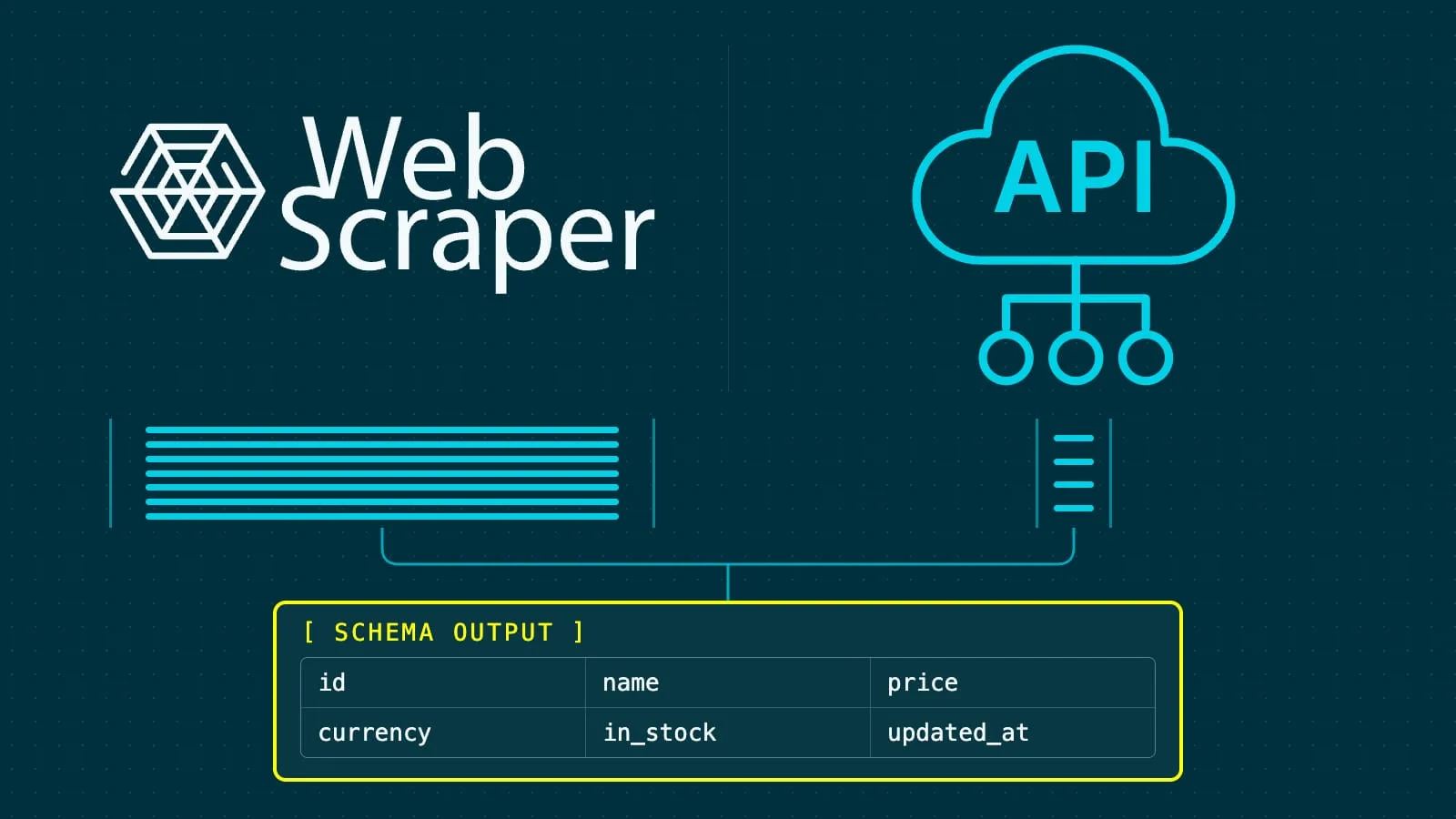
Web data has become an important resource for businesses, developers, researchers, and organizations building data-driven applications. From monitoring product prices and analyzing search results to collecting business information and tracking market trends, structured web data can support better decisions. However, collecting information from multiple websites at scale is not always straightforward. Websites use different structures, dynamic content, anti-bot systems, and access restrictions, making manual scraping difficult to maintain.
This is where a web scraping API can make a difference. Instead of building and managing every part of a scraping system independently, developers can use an API to collect, process, and retrieve web data through a consistent interface. In 2026, choosing the right solution involves looking beyond basic data extraction and evaluating scalability, supported sources, pricing, integrations, and long-term reliability.
What Is a Web Scraping API?
A web scraping API is a service that allows applications to request information from websites and receive the extracted data in a structured format. Developers typically send a request containing a website URL, scraper configuration, or source-specific parameters. The service then handles the collection process and returns the results.
Depending on the platform, this process may include browser automation, proxy management, JavaScript rendering, page navigation, and data extraction. The returned information can be delivered in formats such as JSON, making it easier to integrate with databases, dashboards, analytics systems, and other applications.
For example, an ecommerce company might collect product names, prices, availability, and product details. A research team could gather publicly accessible business information, while a developer might collect search results for a reporting application.
A dedicated API helps standardize these workflows and reduces the amount of infrastructure developers need to maintain themselves.
Why Web Scraping APIs Matter in 2026
Modern websites are increasingly dynamic. Information may load through JavaScript, appear after user interactions, or change depending on location and session settings. Traditional scraping scripts that worked on static pages can become unreliable when website structures change.
Businesses also need to collect information from more sources and process larger datasets. Maintaining separate scraping systems for every website can create significant development and maintenance work.
A modern scraping platform can simplify this process by providing reusable scrapers, managed infrastructure, and consistent output formats. It can also help teams move from small experiments to repeatable data pipelines without rebuilding the entire collection system.
Another important development is the integration of scraping capabilities with AI applications. AI agents can use external tools to retrieve current information, process results, and support research workflows. This makes API compatibility and agent integrations increasingly relevant when evaluating platforms.
- Check the Number and Variety of Ready-Made Scrapers
One of the first things to evaluate is the range of websites supported by a platform. Building a custom scraper for every source takes time, especially when websites have different layouts, navigation systems, and data structures.
Ready-made scrapers can reduce this development effort. Instead of starting from an empty project, developers can select an existing scraper designed for a particular website or data category.
For example, Scrape.ly offers more than 560 ready-made scrapers covering sources such as Google Maps, Amazon, LinkedIn, Instagram, YouTube, Zillow, and other platforms. This variety can be useful for projects that collect information from multiple industries.
However, the number of available scrapers should not be the only consideration. Check whether each scraper extracts the fields your project requires, how its output is structured, and how updates are handled when a source website changes.
- Evaluate API Functionality and Developer Experience
A scraping platform should be straightforward to integrate into an existing application. Developers should examine its API documentation, authentication process, request structure, response formats, error handling, and available SDKs.
Good documentation makes it easier to understand how to submit scraping jobs, retrieve results, manage failures, and control usage. SDKs can also simplify integration by providing ready-to-use methods for supported programming environments.
Before selecting a service, consider testing a small project. Measure how easily you can send requests, process returned data, handle unsuccessful jobs, and integrate the results into your application.
The ideal API should support predictable development workflows rather than requiring developers to create extensive custom infrastructure around every request.
- Understand Proxy Management and Website Compatibility
Proxy management is an important part of large-scale web data collection. Websites may restrict automated requests, apply rate limits, or present different content depending on the request’s location.
Managing proxy providers independently can introduce additional costs and operational complexity. A platform that includes proxy infrastructure can simplify configuration and reduce the number of external services a development team needs to coordinate.
Scrape.ly follows a pricing model based on results, with proxies included. This can make usage easier to understand because developers do not necessarily need to calculate separate proxy expenses for every scraping workflow.
Nevertheless, proxy availability does not guarantee that every website can be accessed successfully. Before committing to a platform, test the specific sources you need and review its policies, supported locations, and handling of failed requests.
- Compare Pricing Models and Usage Limits
Pricing can have a major effect on the long-term cost of a data pipeline. Some services charge according to requests, while others use credits, successful results, or different combinations of usage metrics.
A per-result pricing model can be useful when the amount of extracted information is more important than the number of requests. It is still necessary to understand exactly what counts as a billable result.
Review whether unsuccessful attempts, duplicate records, pagination, and additional processing affect the final cost. Also consider whether the service has minimum charges, usage limits, or different rates for particular scrapers.
Scrape.ly provides a Free plan that includes $5 of usage every month without requiring a credit card. This gives developers an opportunity to explore the platform and test its capabilities before deciding whether a paid plan is appropriate.
For a realistic comparison, estimate monthly result volume using a small pilot project rather than relying only on advertised starting prices.
- Look for AI Agent and MCP Integration
AI-powered applications increasingly need access to external information. An AI assistant may need to collect product details, retrieve business listings, research publicly available information, or monitor selected web sources.
The Model Context Protocol (MCP) provides a standardized way for AI applications to connect with external tools and services. When a scraping platform offers an MCP server, compatible AI clients can potentially interact with its scraping capabilities through a tool-based workflow.
Scrape.ly provides an MCP server designed to let AI agents and development environments, including Claude, ChatGPT, and Cursor, run supported scrapers. This can be useful for developers experimenting with AI-assisted research, automated data collection, and agent-based applications.
Before using an MCP integration in production, check its authentication requirements, available tools, permission controls, and usage limits. AI agents should also be configured to validate collected information instead of treating every extracted result as automatically accurate.
- Consider Data Quality, Reliability, and Scalability
A large dataset is not necessarily a useful dataset. Data quality depends on accuracy, consistency, completeness, and freshness.
Check whether a platform returns predictable field names, handles missing values clearly, and provides enough information to identify failed or incomplete extraction jobs. If your application depends on regular updates, evaluate how frequently the source data can be collected and whether scheduled workflows are supported.
Scalability is equally important. A service that performs well during a small test may behave differently when handling thousands of results. Consider concurrency limits, processing time, retry behavior, API rate limits, and how results are delivered.
It is also worth testing how easily the collected data can move into your existing storage and processing systems. A reliable pipeline should make it possible to validate, store, monitor, and update records without unnecessary manual work.
- Review Security, Privacy, and Compliance
Web scraping should be conducted responsibly. Before collecting information, review the website’s terms, applicable laws, privacy requirements, and restrictions on automated access.
Avoid collecting personal or sensitive information without an appropriate legal basis. Public availability does not automatically mean that information can be used for every purpose.
When evaluating a scraping provider, examine its documentation on data handling, account security, access credentials, retention, and privacy practices. Businesses should also establish internal rules for what information they collect, how long they retain it, and who can access it.
These considerations become especially important when building pipelines that process information from multiple websites or supply data to AI applications.
Is Scrape.ly Worth Evaluating?
Scrape.ly brings several capabilities together in one web scraping platform: more than 560 ready-made scrapers, a web scraping API with SDKs, and an MCP server for AI-agent workflows. Its result-based pricing includes proxies, while the monthly $5 Free plan provides a way to test the service without a credit card.
Built by TeraShift GmbH in Switzerland, the platform may be worth evaluating for developers and teams that want to collect information from multiple sources without independently building every scraper and managing all supporting infrastructure.
As with any service, suitability depends on the exact websites, data fields, usage volume, reliability requirements, and budget involved. A practical test using real project requirements is the best way to assess whether its features meet those needs.
Conclusion
Choosing a web scraping API in 2026 requires more than comparing prices or counting supported websites. Developers should examine ready-made scraper coverage, API documentation, SDK availability, proxy management, data quality, scalability, security, and AI integrations.
Platforms such as Scrape.ly combine several of these capabilities, including a broad scraper library and MCP support for AI-driven workflows. By testing relevant sources, estimating actual usage, and reviewing compliance requirements, businesses can make a more informed decision and build web data pipelines that are easier to maintain as their needs grow.