Poland’s Labour Shortage: Who Hires Foreigners and What They Pay
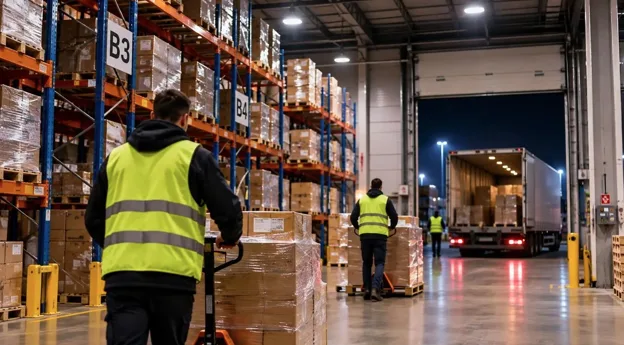
Drive along any of the ring roads around Wrocław, Poznań or Łódź and the pattern is hard to miss: grey distribution halls the size of several football pitches, a row of lorries backed up to the loading docks, and a banner on the fence advertising for staff. Poland has spent the past decade turning itself into one of Europe’s main logistics and manufacturing bases. The buildings went up faster than the local workforce could grow to fill them.
The result, in 2026, is a labour market where many employers in warehousing, factories, construction and food processing say they cannot find enough people locally. A large share of the gap is being filled by workers from outside Poland. For anyone abroad weighing a move, the question is no longer whether there is work, but what kind, where, and on what terms.
Why Poland is short of workers
There is no single cause. Several long-running trends have landed at the same time.
Demographics. Poland’s population is ageing and the number of people of working age has been shrinking for years, while birth rates remain among the lower ones in Europe. Large cohorts born in the 1950s and early 1960s are retiring, and the generations replacing them are smaller. (Exact figures for 2026 should be checked against the latest data from Statistics Poland, GUS.)
Emigration that never fully reversed. After Poland joined the EU in 2004, hundreds of thousands of Poles moved to the UK, Germany, Ireland and the Netherlands. Some came back, many did not, and those who left were often precisely the younger, mobile workers that warehouses and building sites now need.
Economic growth and a new kind of industry. Poland’s position between Western Europe and its eastern neighbours, relatively lower costs and an expanding motorway network made it attractive for distribution centres serving several countries at once. The rise of online shopping added a further layer: e-commerce fulfilment needs far more pickers and packers per square metre than a traditional warehouse, and demand peaks sharply before Christmas and during sales periods. Manufacturers, particularly in automotive parts, household appliances and electronics assembly, have also expanded production in the country.
Rising expectations among local workers. Polish workers who once took shift jobs on a production line now have more options, and many prefer office work, skilled trades or jobs closer to home. Physically demanding roles with night shifts are the hardest to fill, and those are exactly the roles most often offered to foreigners.
Labour market analysts and employer surveys have repeatedly ranked Poland among the European countries where firms report the most difficulty hiring. The specific percentages vary by survey and year, and readers should treat any single headline figure with caution.
The sectors doing the hiring
Logistics and warehousing
This is the largest single entry point for foreign workers. Typical positions are picker, packer, goods receiver, inventory worker and forklift operator. Most jobs do not require Polish; instructions are often given with pictograms, scanners and short training sessions, and many sites have a coordinator who speaks Ukrainian, Russian or English.
The work itself is straightforward but physically tiring. A picker on a busy shift may walk well over 15 kilometres, guided by a handheld scanner that sets a target number of items per hour. One worker described the first week as “learning where everything is while your legs get used to the concrete floor”. By the third week, many hit the norm without thinking about it.
Manufacturing
Factories hire for assembly lines, machine operation, quality control and packing. Shifts are usually 8 hours in a two- or three-shift system, and some plants run continuously through the week. Experience with specific machinery or a technical background can lift pay noticeably, but plenty of line jobs are open to complete beginners.
Construction
Construction has its own shortage, especially of skilled trades: bricklayers, steel fixers, tilers, drywall installers, electricians and plumbers. Unskilled helpers are in demand too. Pay in construction can be higher than in warehousing for experienced people, but it is also the sector where informal arrangements and cash-in-hand work are most common, which carries risks discussed below.
Food processing
Meat plants, fish processing, bakeries and vegetable packing facilities need steady staff and often struggle to keep them. Conditions are cold, wet or fast-paced depending on the line. These jobs frequently come with accommodation because many plants are located outside large cities.
Seasonal agriculture
Strawberries in late spring, raspberries and blueberries in summer, apples in autumn, plus greenhouse work for much of the year. Seasonal farm jobs are the most flexible way into Polish work but also the least stable. Pay is sometimes calculated per kilogram rather than per hour, which suits fast pickers and frustrates slow ones.
What the jobs pay
The legal floor is set nationally. In 2026 the minimum wage in Poland is 4,806 PLN gross per month, and the minimum hourly rate (which applies to civil contracts) is 31.40 PLN gross. On a full-time employment contract, 4,806 PLN gross works out to roughly 3,606 PLN net after social insurance, health contributions and tax.
In practice, offers for foreign workers in the main hiring sectors cluster close to or above that minimum. The table below shows typical ranges seen in job advertisements in 2026. These are indicative and vary by city, shift pattern and employer.
| Role | Typical gross hourly rate (PLN) | Notes |
| Warehouse picker / packer | 31.40–36 | Bonuses for meeting targets are common |
| Production line worker | 31.40–37 | Night shifts often paid extra |
| Forklift operator (UDT certificate) | 32–40 | Certificate required, experience valued |
| Food processing worker | 31.40–35 | Often outside cities, with housing |
| Construction helper | 31.40–36 | Watch contract type closely |
| Skilled construction trades | 35–50+ | Depends heavily on experience and trade |
| Seasonal fruit picker | Hourly minimum or piece rate | Piece rate can be above or below hourly |
A few figures help put this in context. A warehouse worker on 34 PLN gross per hour, working 180 hours a month, earns about 6,120 PLN gross. Monthly hours in these jobs commonly range from 160 to 220, and overtime is where many workers make the real difference to their earnings. Some employers run 10- or 12-hour shifts, which raises the monthly total but leaves little time for anything else.
Older job ads sometimes still list hourly rates below 31.40 PLN gross. Since the minimum rate was raised, such offers are either outdated or not compliant, and workers are entitled to at least the minimum.
Forklift work is a useful example of how a certificate changes the picture. Operators need a qualification from UDT, the Office of Technical Inspection, which involves a course and an exam. Workers who arrive with the certificate, or obtain it in Poland, typically move into the upper part of warehouse pay ranges and have more choice of employer.
Accommodation as part of the offer
One feature of the Polish market surprises many newcomers: a large share of jobs for foreigners come with housing arranged by the employer or recruitment agency. It is one of the main tools firms use to attract people who would not otherwise relocate.
The usual arrangement is a shared room for two to four people in a flat or a workers’ house, with a shared kitchen and bathroom. The typical cost is 350 to 550 PLN per person per month, generally deducted directly from wages. Compared with renting a room privately in Warsaw or Kraków, that is cheap, though privacy is limited and the standard varies a lot.
Before accepting, workers are advised to ask a few practical questions:
- How many people share a room, and how many share the bathroom?
- Is the cost deducted from pay, and is it fixed or dependent on hours worked?
- How far is the accommodation from the workplace, and is transport provided or paid?
- What happens to the room if the job ends early?
- Are utilities included?
Listings that specify whether housing is included, and at what price, make comparison much easier. Job boards aimed at foreigners, including current vacancies in Poland collected on specialised sites, usually state this alongside the hourly rate, which is the figure that matters most once accommodation and travel are subtracted.
Where the work is
Hiring is concentrated in and around the larger cities, but not always in their centres. Distribution parks tend to sit near motorway junctions on the edge of a city, sometimes 20 or 30 kilometres away.
- Warsaw and the surrounding Masovian region – the biggest labour market, with logistics hubs to the south-west and around the ring road, plus construction.
- Wrocław – a manufacturing and logistics centre for south-western Poland, close to the German and Czech borders.
- Poznań – a major logistics area on the east-west motorway towards Berlin.
- Łódź – located near the country’s main motorway crossing, with a dense cluster of distribution centres.
- Kraków – more services and IT, but also warehouses and manufacturing in the wider region.
- Gdańsk and the Tricity – port logistics, shipbuilding-related work and food processing.
- Katowice and the Silesian conurbation – heavy industry, automotive and logistics.
Smaller towns along the main motorways have also become logistics hubs in their own right. They often offer housing and transport because few local workers are available.
What it means for workers from abroad
The rules depend on citizenship. EU and EEA citizens can work in Poland without a permit. Most non-EU citizens need a work permit arranged by the employer, plus a national D visa or a residence card. Citizens of several countries, including Ukraine, Georgia, Moldova, Armenia and Belarus, have been able to use a simplified procedure based on an employer’s declaration. These rules change regularly, so anyone planning a move should check the current requirements with official Polish government sources before travelling.
The type of contract matters as much as the hourly rate. A umowa o pracę (employment contract) brings full social insurance, paid holiday and sick pay. A umowa zlecenie (civil contract) is more flexible and common in temporary work, but offers less protection. One notable exception: students under 26 with valid student status working on a civil contract pay no social contributions and no income tax, so their net pay is close to gross.
Once registered, foreign workers receive a PESEL, the national identification number. It is needed for opening a bank account, signing a phone contract or registering with a doctor, so it is worth sorting out early.
Newcomers should also plan their cash for the first weeks. The first salary is commonly paid around the 10th of the following month. That is standard practice rather than a legal rule, but it means someone starting on 3 March may not see a full payment until early April.
The risks: fees and informal work
The shortage has also attracted bad actors. Two risks come up repeatedly.
Illegal recruitment fees. In Poland, charging a candidate for finding them a job is against the law. Legitimate employment agencies must be listed in the national register of employment agencies, known as KRAZ, which can be searched online. Requests for a “registration fee”, “document fee” or payment to “reserve a place” are a strong warning sign.
Informal or misrepresented work. Some workers arrive to find that the promised contract is not ready, the hourly rate is lower than advertised, or the job is paid in cash without any contract. Without a contract, a worker has no insurance, no clear legal status and little leverage if wages are not paid. Construction and seasonal work are where this happens most often.
Practical steps that reduce the risk:
- Ask for the contract type and gross hourly rate in writing before travelling.
- Check that any agency involved appears in the KRAZ register.
- Never pay for a job offer or hand over a passport “for safekeeping”.
- Keep copies of all documents and a record of hours worked.
- Know the minimum wage, so an offer below it is recognised immediately.
A market that is likely to stay tight
Most forecasts expect demand for workers in logistics and manufacturing to remain strong, although sector growth can slow when the wider European economy weakens. Automation is spreading in larger warehouses, but so far it has changed the type of tasks more than it has reduced the number of people needed. The demographic pressure, meanwhile, will not ease for years.
For foreign workers, that means a relatively strong negotiating position by Polish standards, especially for anyone with a forklift certificate, a trade, or a few words of Polish. Sites such as Jobework publish offers from partner employers in these sectors, many with accommodation listed. The basic advice from people who have done it is unglamorous: compare the net figure after housing, read the contract, and do not pay anyone for the privilege of working.
The gap between the number of jobs and the number of people willing to take them is unlikely to close quickly. How well it is filled will depend as much on fair treatment of the workers who come as on how many of them arrive.