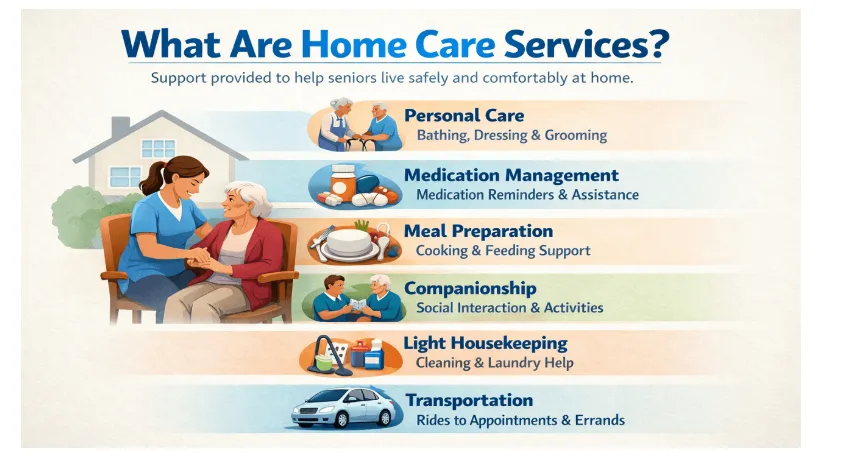
What Are Home Care Services?
Many people first hear the term “home care services” when they start taking care of an elderly parent or a sick family member. It usually sounds a bit technical in the beginning, and not everyone is clear about what it actually includes.
But it’s not complicated at all. In simple words, it just means getting help at home instead of moving to a hospital or care facility. For many people, staying at home simply feels better than moving to a facility. People stay in their space, around familiar things, and still get the support they need.
Let’s break it down in a simple way.
What Are Home Care Services?
Home care services are support given to someone in their own home. That’s the core idea.
But here’s the thing. It’s not one fixed type of service. It changes based on the person’s situation.
Some people only need a little help during the day. Others may need regular medical care. So the service can be light or advanced depending on need.
In real life, families often start small. For example, they might require a few hours of help each day. Then they adjust later if needed.
Types of Home Care Services
Home care services usually come in a couple of different forms. It’s actually pretty simple once you look at them.
1. Non-Medical Home Care
This is everyday help. Nothing clinical or medical here. For example, an older person may struggle with cooking or cleaning. Living alone can get difficult occasionally. In that case, a caregiver comes and helps with daily tasks.
It usually includes:
- Help with bathing or dressing
- Cooking meals
- Light cleaning
- Companionship
- Helping with movement
It might sound basic, but this kind of help makes daily life much easier.
2. Home Health Care (Medical Care)
This is more serious care. It involves trained nurses or medical staff. Usually, a doctor recommends this after surgery or during recovery from an illness. Sometimes it’s just simple things, like helping with bandages or making sure medicines are taken on time.
Services can include:
- Nursing support
- Wound care
- Medication help
- Physical therapy
- Health monitoring
So yeah, this is more medical and structured.
Who Needs Home Care Services?
Not only older people. That’s a common misunderstanding. Often, home care is needed when:
- Someone is recovering after surgery
- A person has long-term health issues
- Older adults need daily support
- Mobility is limited
And let’s be honest, not every family can provide full-time care. Work, distance, and daily life make it challenging. That’s where home care helps.
Benefits of Home Care Services
There are a few clear benefits, and most people notice them pretty quickly once care starts.
Comfort at Home
People usually just feel more relaxed at home. It’s familiar, nothing new or stressful around them. That simple comfort often makes a big difference in daily mood and overall well-being.
Flexible Support
Not everyone needs full-time care. Some people only need a few hours of help during the day. The good thing is, home care can be adjusted based on what actually works.
Independence
Even with support, people don’t lose their normal routine. They can still do many things on their own, just with a bit of help when needed.
Cost Factor
In many situations, home care is more affordable compared to hospital or facility-based care. Of course, it depends on the level of service, but often it’s a more practical option for families.
Peace of Mind
This one matters a lot. Families feel more relaxed knowing someone is there to help and look after things. It takes away a lot of daily worry.
Home Care vs. Nursing Home
People often mix up home care and nursing homes. At first glance, they sound almost the same, but in real life, they work quite differently.
Home care is when someone stays in their own house and gets support there. It can be help with daily tasks or sometimes basic health-related assistance depending on the need. The main idea is simple enough—care comes to the person instead of moving them somewhere else.
A nursing home is more structured. In that case, the person lives in a care facility where staff are available all the time. They help with daily activities and also provide medical support whenever it is needed.
Now, choosing between the two is not always that simple. Now, choosing between the two is not always that simple. It really depends on the person’s condition and the level of support they actually need in daily life.
If someone really needs constant medical care or close monitoring, a nursing home can be the more practical choice in that case.
But when things are a bit lighter, and it’s mostly about daily help, home care usually feels easier and more comfortable for both the person and the family.
In reality, families don’t always make this decision right away. Most of the time, they just watch how things are going for a while and slowly understand what actually works best. They usually observe, adjust, and then choose what fits best over time.
At the end of the day, both options are about care. The difference is just in how and where that care is provided.
How to Choose the Right Service
Nothing complicated, but don’t rush it.
- Check if the agency is trusted.
- Ask about caregiver experience
- Look at reviews if possible
- Compare pricing
- Make sure services match your needs
Take your time here. It actually matters.
When Should You Consider Home Care Services?
Sometimes it is difficult to decide the right time to start home care services. Many families don’t really think about outside help at first. They try to handle everything themselves for as long as they can. Others feel unsure about whether the situation is serious enough.
A simple way to understand it is to look at daily life. When small everyday things start feeling harder than usual—like cooking, walking around, or remembering medicines—it’s often a sign that a bit of help might be needed.
Occasionally, it’s not a major problem at all. Even minor changes in your daily routine can indicate the need for additional assistance.
Often, families start noticing small issues first. Then over time, these small issues slowly build up. At that point, home care becomes more of a practical solution rather than a luxury, as families may find that they can no longer manage the increasing needs of their loved ones on their own.
Family Role in Home Care
In most cases, families keep checking how things are going. They talk with caregivers, see if everything is working fine, and change the plan if something feels off. This kind of involvement actually matters a lot, because care works better when everyone stays connected.
At the end of the day, it’s a mix of family support and professional help. When both sides work together, things usually go more smoothly.
Why Home Care Feels More Personal
A big reason people go for home care is simple. It just feels more personal.
The person stays in their own home. Same room, same routine, same surroundings. There is no requirement to adapt to a different location or setting. That alone can make life feel less stressful.
For older people, especially, home is not just a place. It’s memories, neighbors, and small daily habits. Leaving all of that behind is not easy. That’s why staying at home often feels more comfortable emotionally.
Short-Term vs Long-Term Home Care
Home care is not always something long-term. It really depends on the situation.
Occasionally, it’s just for a short period. For example, this can occur after surgery, illness, or an injury. During that time, a bit of support at home helps the person recover safely.
Other times, it continues for a longer period. This usually happens when someone has age-related issues or a long-term health condition.
And honestly, there’s no strict rule here. Some people start with short-term care and then slowly extend it if needed.
Final Thoughts
Home care services are basically about helping people stay at home while still getting the support they need. It can be small daily help or proper medical care.
Every situation is different. Some families need it for a short time, others for long-term care. But in most cases, it makes life easier for both the patient and the family.
If you’re considering care options, home care is definitely worth looking into.