What Consumers Should Know Before Switching to Gold Piercing Jewelry
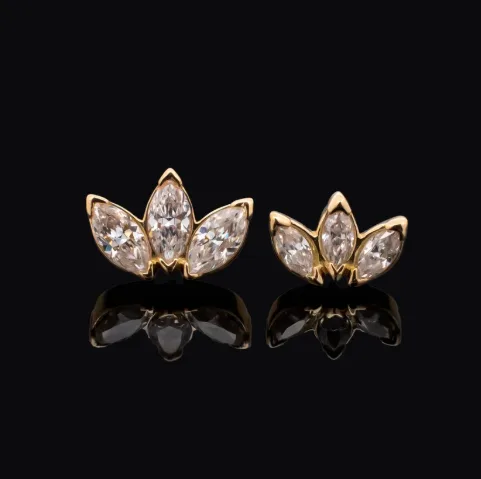
The piercing industry has seen a marked shift in consumer behavior over the past several years. What once began as a single lobe or nostril piercing healed with surgical-grade titanium is, for a growing number of wearers, evolving into a long-term investment in fine jewelry. Solid gold threadless ends, once a niche upgrade reserved for seasoned collectors, are now a mainstream request at piercing studios across the United States and abroad. But industry professionals caution that the transition from initial jewelry to gold is not something to rush, and consumers researching the switch are often left without clear, centralized guidance.
With demand rising for 18k gold piercing jewelry, body jewelry manufacturers and piercing associations alike are emphasizing consumer education as a priority. The questions are consistent: When is it safe to switch? What is the actual difference between gold purities? And is gold truly safe for sensitive skin? Industry sources say the answers are more nuanced than most first-time buyers expect.
The First Rule: Healing Comes Before Jewelry
Perhaps the most common misconception among new piercing clients is the assumption that any high-quality jewelry is appropriate for a fresh piercing. According to standards maintained by the Association of Professional Piercers (APP), that is not the case. Initial jewelry for a new piercing should always be selected and installed by a trained professional piercer, and it is almost universally implant-grade titanium rather than gold.
This is not a reflection of gold being unsafe. Solid 14K to 18K gold is recognized by APP standards as body-safe, non-reactive, and appropriate for piercing jewelry in the same category as implant-grade titanium (ASTM F-136). The issue is logistical rather than medical. A fresh piercing swells during the initial healing period, and the post length required during that swelling phase is shorter than what the piercing will eventually need once healing progresses. Titanium jewelry from professional piercers is typically stocked in a range of standard lengths, which makes these adjustments straightforward and low-cost. Gold jewelry, particularly custom or premium pieces, is less practical to swap repeatedly while a piercing is still settling.
In short: gold is not excluded from early healing because it is inferior, but because the fitting process during healing favors a more flexible, lower-cost material. Once a piercing is fully healed, the calculus changes entirely.
Healing Timelines Vary Significantly by Placement
One of the most frequent questions among consumers is simply: how long do I have to wait? The answer depends heavily on where the piercing is located, and industry data points to considerable variation.
Lobe piercings are typically the fastest to heal, generally within six to eight weeks. Nostril piercings take longer, usually falling in the two-to-four-month range. Cartilage placements, which include helix, tragus, conch, rook, and daith piercings, require significantly more patience. Healing in these areas commonly takes four to twelve months, with six months frequently cited as a reasonable benchmark before considering a jewelry change.
What complicates this picture further is that cartilage healing varies more between individuals than lobe or nostril healing does. Two people with the same cartilage piercing, placed on the same day, may be ready for a jewelry change at very different points. For this reason, piercing professionals consistently recommend a consultation before switching jewelry, rather than relying solely on generic timelines. This is especially true for any piercing that has taken longer than expected to feel fully settled, shows ongoing sensitivity, or has had any complications during healing.
Understanding Gold Purity: Why It Matters for Skin
Once a piercing is ready for a jewelry change, the next layer of consumer confusion tends to center on gold purity itself. Not all gold jewelry is created equal, and the karat rating has direct consequences for both comfort and appearance.
Pure 24K gold is too soft to hold its shape or withstand the mechanical stress of daily insertion and removal, which means some alloy content is always necessary in body jewelry. The two most common options in fine piercing jewelry are 18K and 14K gold. 18K gold is 75 percent pure gold combined with 25 percent alloy metals, while 14K gold is 58.3 percent pure, with a correspondingly higher alloy content.
This distinction matters for two reasons. First, color: higher gold purity produces a noticeably richer, warmer tone, which is why 18K pieces tend to read as more luxurious and why gemstone-set designs often rely on 18K gold to make stone color appear more saturated. Second, and more importantly from a health standpoint, purity affects how much alloy metal sits against the skin for extended periods. Since piercing jewelry remains in contact with tissue for months or years at a time, reduced alloy content can translate into a lower risk of irritation, particularly for wearers with known sensitivities.
That does not mean 14K gold is unsuitable. Both karats used in reputable body jewelry are nickel-free and compliant with APP material standards, and the higher alloy content in 14K gold makes it more resistant to bending and surface wear, which is an advantage for pieces exposed to frequent handling. Industry guidance generally frames the decision as one of priorities rather than one option being objectively superior: wearers prioritizing maximum purity, sensitive skin accommodation, or gemstone color depth tend to lean toward 18K, while those prioritizing durability and a lower price point for a first gold piece often choose 14K.
Is Gold Piercing Jewelry Actually Hypoallergenic?
This question comes up constantly, and the short answer from industry sources is yes, with some important qualifications. Solid gold in the 14K to 18K range is nickel-free, which addresses the most common cause of metal allergy reactions in body jewelry. Combined with its low overall alloy content, this makes solid gold one of the more hypoallergenic materials available in the category, suitable for most wearers with sensitive skin or documented metal sensitivities.
The qualifier that industry professionals emphasize is the word “solid.” Gold-plated or gold-filled jewelry is a different product entirely. Plating applies a thin layer of gold over a base metal, which can wear away with exposure to moisture, oils, and friction, eventually exposing the base metal underneath. For piercing jewelry specifically, where material sits in direct, prolonged contact with healing or healed tissue, this distinction is not cosmetic. Industry sources consistently advise that only solid gold, hallmarked to indicate its actual purity, should be considered for piercing applications, as opposed to plated alternatives marketed at lower price points.
Verification matters here. Reputable body jewelry is typically hallmarked with a purity stamp, such as 750 for 18K gold, placed on a section of the jewelry that does not contact tissue. Buyers are encouraged to confirm this hallmark is present and to purchase from sources that can document material composition and manufacturing standards, rather than relying on marketing claims alone.
What to Check Before Buying
Industry professionals generally recommend that consumers evaluate a few specific factors before purchasing gold piercing jewelry, regardless of where it is sourced:
First, confirm the jewelry is solid gold with a visible purity hallmark, not plated or filled. Second, verify the piece is nickel-free and ideally compliant with recognized body jewelry standards, such as those maintained by the Association of Professional Piercers. Third, check that the post or pin meets implant-grade specifications where applicable, since the end itself may be gold while the post or pin that contacts the piercing channel is often implant-grade titanium for added biocompatibility. Fourth, confirm compatibility with existing jewelry, particularly for threadless systems, where post gauge and pin size need to match across brands.
Buyers researching options in this category can review the current range of Luxury piercing jewelry available through Khrysos, which documents gold composition, manufacturing certification, and compatibility details for each piece, giving prospective buyers a reference point for the kind of transparency industry experts recommend looking for.
The Bottom Line
The shift toward gold piercing jewelry reflects a broader trend of consumers treating body jewelry less as a disposable accessory and more as a long-term personal investment, comparable to how they might approach fine jewelry purchases for the ears, neck, or hands. That shift brings with it a learning curve. Understanding when to make the switch, what purity level fits individual skin sensitivity and budget, and how to verify a piece is genuinely solid, hallmarked gold are the fundamentals industry experts point to most often when guiding new buyers through the process.
As with any jewelry worn in direct, prolonged contact with the body, the safest approach remains the simplest one: wait until healing is complete, consult a professional piercer when in doubt, and purchase from sources willing to document exactly what the jewelry is made of and how it is certified.