What School Districts Actually Look for on a Teacher Resume
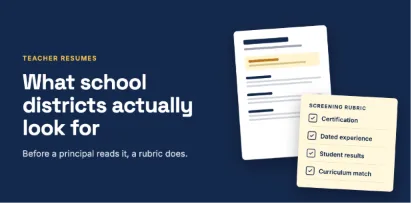
Most teacher resume advice is written as if a principal reads every application. In a lot of districts, that’s the last step, not the first. Before your resume gets to anyone who’ll interview you, it usually passes through an application portal, an HR screener with a checklist, and sometimes an online teacher assessment. Each one reads it differently, and a resume built to look nice tends to do badly with all three.
Who reads it first
Many districts screen applications with a scoring rubric. Someone in HR goes down a list: certified in the right area, relevant experience, evidence of student results, and so on. They aren’t reading your resume like a story. They’re looking for the line that fills each box, and if your certification is buried at the bottom under “Interests,” that box may stay empty.
The portal matters too. Systems like Frontline (AppliTrack), PowerSchool, and EdJoin pull your resume into form fields, and two column layouts are where that goes wrong. A sidebar can end up merged into your job history, or your education can disappear entirely. Also fill in the portal’s own fields properly. Typing “see resume” into them is tempting, but HR often searches and filters on those fields, not the attachment.
One more thing people miss: many portals send reference forms to your references automatically, and your application can sit as incomplete until they’re returned. Let your references know before you apply, and check back if a form hasn’t come in after a few days.
Some applications also include an online teacher questionnaire. These often ask about the same thing several different ways to check that your answers are consistent. Answer honestly and with conviction. Picking the middle option on everything to play it safe usually just gets you a middling score.
Put your certification right under your name
This is the first thing almost every screener checks, so give it its own block at the top. Write the state, the certificate type, every grade band and subject endorsement, and the expiration date. If it’s still in process, say exactly where it stands, for example “Praxis passed, certificate expected June 2027.” Districts look you up in the state’s educator database, so use the wording that appears there.
Your dates can change your paycheck
This one usually comes up at the offer stage, which is too late to fix your resume. New teachers are placed on the salary schedule based on prior experience the district can verify, and the rules vary by contract. Some cap how many outside years count. Some only count a year if you worked a large share of the contract days.
That makes the details worth getting right. Put a month and year on every role. If you did a long term sub assignment, list it as its own line with its own dates instead of folding it into “Substitute Teacher, 2019 to 2020.” It may count toward a higher step, and it’s much easier to ask HR about when it’s already clearly written down.
Give every bullet a class, a population, or a result
“Used differentiated instruction” is on almost every teacher resume, so it tells a screener nothing. Compare it to “Taught a self contained 3rd grade class of 24, including 9 English learners; 18 of 24 met their annual i-Ready reading growth goal.” That second version gives a rubric something to score and gives a principal something to ask about. The numbers are usually already sitting in your MAP, i-Ready, or DIBELS reports.
Name the actual programs you’ve taught with, too: Eureka Math, Wit & Wisdom, Fountas & Pinnell, Google Classroom, Seesaw, PBIS. Postings often list them, and screeners notice when they match.
If you want to see what this looks like on a real page, someone on r/ResumeTips shared the teacher resume that got them hired after 40 applications, including a before and after of the bullet that three of their interviewers asked about.
Apply in spring, not summer
Most districts post the bulk of their openings after spring break, and offers tend to go out between April and June. Hard to staff areas like special education, math, and bilingual roles often post even earlier. By July and August, many remaining postings are already expected to go to an internal transfer. If you can, have your resume finished by February.