When Is a Prefilled Vape Pod Actually Empty? Signs Beyond the Puff Count
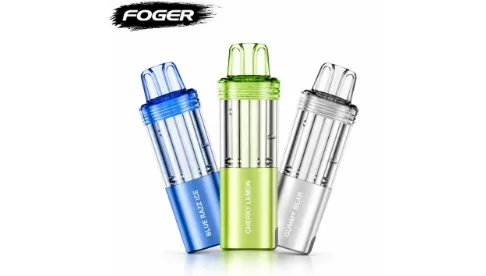
A prefilled vape pod can stop producing vapor before its advertised puff count is reached. Sometimes the battery has run down. Sometimes a connection is dirty or the airflow is blocked. And sometimes the pod really has no usable e-liquid left.
Those situations can feel remarkably similar. The device may produce little vapor, the flavor may seem weak, or nothing may happen at all. Treating every symptom as proof that a pod is empty can lead to the wrong conclusion—and treating an empty pod as a charging problem can be just as misleading.
There is no single signal that works for every model. A better approach is to look at several clues together, beginning with the most direct one: the amount of liquid that remains.
The Puff Count Is an Estimate, Not a Countdown
Numbers such as 10,000, 20,000, or 30,000 puffs are easy to read as promises. In practice, they are advertised ratings established under particular operating assumptions, not guarantees that every user will get exactly that many draws.
A puff is not a fixed unit of liquid consumption. A brief draw and a long draw both count as one inhalation, yet they can use different amounts of e-liquid. Power settings matter as well. With otherwise similar conditions, a higher-output mode generally consumes more liquid per draw than a lower-output mode.
For example, the FOGER Switch Pro 30K is advertised at up to 30,000 puffs in Normal Mode and approximately 18,000 in Boost Mode. These figures refer to different ways of operating the same pod, not to two different amounts of liquid inside it. Actual results vary with use.
This also means that a device appearing to run out earlier than expected does not, by itself, prove a defect. Nor does an advertised maximum tell you the exact day or hour a pod will become empty.
What about the number shown on a screen?
First establish what that number represents. A battery percentage, a puff-duration display, and a liquid-level indicator describe different things. Some devices display an estimated remaining-liquid value; others show battery status or operating information. The screen alone should not be assumed to measure actual milliliters left in the pod.
If the device has a transparent tank, visual inspection can provide a more direct clue. Even then, a small amount of liquid clinging to the walls may not be enough for the wick to operate properly.
Start With the E-Liquid You Can Actually See
On a pod with a clear reservoir, inspect the tank while the device is upright and the liquid has had time to settle. Look for liquid at the bottom of the reservoir rather than relying on droplets stuck to the plastic.
If no usable liquid is visible, the pod may be finished regardless of what the battery indicator says. Recharging a battery cannot restore e-liquid.
If liquid is still clearly present, do not immediately assume the device is empty. A power, contact, or airflow issue may explain the lack of vapor. The reverse is also possible: liquid can be visible while a damaged or inadequately supplied coil no longer functions normally.
Opaque tanks require more caution. You may have to rely on the manufacturer’s stated indicators and changes in operation rather than on a visual check. Avoid opening a sealed pod merely to measure what remains; sealed prefilled pods are not designed for user disassembly.
Weak Flavor Alone Doesn’t Prove the Pod Is Empty
Flavor intensity can change even when e-liquid remains. A low battery may reduce vapor output. A restricted air path can change how the draw feels. Repeated exposure to the same flavor may also make some notes seem less noticeable for a while.
That last point is easy to overlook. The same liquid may seem vivid at first and more subdued later without any change in its ingredients. Human sensory perception is not a stable measuring instrument.
There is an important difference, however, between a flavor becoming less noticeable and a distinct dry or burnt taste. A persistent burnt taste is a reason to stop using the pod, not a challenge to overcome by taking more draws. It can indicate that the coil or wick is no longer operating properly, whether because liquid is depleted or because the component has been damaged.
The useful question is not simply, “Does this taste weaker?” It is, “Is the device behaving normally, is there usable liquid, and has the flavor developed a clear fault?” Those observations together are far more informative than flavor strength alone.
An Empty Pod and a Dead Battery Are Different Problems
Rechargeable prefilled systems create a common misunderstanding: the device stops working, so the pod must be used up. But electrical power and e-liquid supply are separate resources.
In the FOGER Switch Pro system, the replacement pod contains a small internal battery, while a compatible external battery pack provides charging and additional power. The FOGER Switch Pro 30K pod combines its own battery, sealed e-liquid reservoir, and heating element in one replaceable component. A pod may briefly work on its own and later stop because that small battery needs charging. That does not mean its reservoir is empty.
Conversely, a fully charged dock cannot make an empty pod produce normal vapor again. The power source may be fine while the liquid is gone.
Another wrinkle is compatibility. A pod that fits physically is not necessarily recognized by every version of a battery dock. A failed connection or an incompatible component can resemble a dead pod even when both the liquid and the battery are otherwise usable.
For this reason, charging and connection questions are best considered separately from the decision about whether a pod is depleted. Details of the Switch Pro battery and charging device can help clarify which component supplies power and which part actually holds the liquid.
Five Observations That Help Separate the Causes
Before drawing a conclusion, consider what the device is actually showing you.
| What you notice | What it may indicate | What not to assume |
| Tank appears empty, battery still has power | Little or no usable e-liquid remains | Another charge will restore the liquid |
| Liquid visible, screen or device has no power | Battery or charging issue | The pod is necessarily empty |
| Liquid visible, device powered, no vapor | Contact, airflow, compatibility, or hardware fault | Liquid level is the only possible cause |
| Flavor is weaker but vapor output is otherwise normal | Possible sensory adaptation or gradual change in operation | Weak flavor provides an exact remaining-liquid reading |
| Persistent dry or burnt taste | Possible wick or coil problem, sometimes associated with low liquid | Continuing to draw will fix the problem |
These are clues, not a laboratory diagnosis. More than one issue can occur at once. A pod can be near empty and have a weak battery; a device can have liquid while its coil is already damaged.
When the Pod Still Has Liquid but Produces No Vapor
A no-vapor situation is frustrating precisely because it looks so much like an empty pod. But a small number of external checks can narrow the possibilities without opening the device.
Start by confirming whether the system has power and whether the pod is seated properly. On a modular device, check for visible dirt or moisture around the accessible contacts, and follow the manufacturer’s instructions for cleaning them. Make sure an adjustable airflow opening has not been accidentally closed.
If the product uses a compatible charging dock, confirm that the dock itself is working. Do not improvise a USB connection to a pod that has no charging port, force mismatched parts together, or use metal objects to bridge electrical contacts.
Persistent failure with visible liquid may point to a defective pod or an issue with the device rather than exhaustion of the e-liquid. If the housing is damaged, the device overheats, the battery swells, or liquid has reached the charging port, stop using and charging it.
This is also why treating every leak as “normal condensation” is risky. A light film around an external contact is different from a growing pool of liquid or visible seepage from the tank. Persistent leakage calls for stopping use rather than repeated cleaning and reuse.
Why a Pod Can Seem Finished With Liquid Still Inside
A reservoir does not always empty with the neat precision of a measuring cylinder. Small quantities of liquid can remain on the tank walls, in corners, or around parts of the internal wicking system. The presence of those traces does not guarantee that enough liquid can reach the heating element.
The coil matters too. A prefilled pod combines liquid storage and a heating assembly in one sealed component. If the coil or wick has deteriorated, the pod may no longer function properly even though the reservoir looks less than completely empty.
That distinction is important when interpreting a burnt taste. It may appear toward the end of a pod’s liquid supply, but the same general symptom can also occur with a damaged component. Without examining the internals, it would be misleading to label every burnt-tasting pod “empty.”
For sealed prefilled systems, the responsible response to a persistent burnt taste or confirmed internal failure is to stop using the affected component. Attempting to open or refill it is not an appropriate diagnostic method.
What “Replace the Pod” Really Means
The phrase sounds universal, yet different devices use different constructions. Some prefilled devices are all-in-one units: the battery, reservoir, and heating system are permanently integrated. Others separate a reusable battery section from a disposable pod.
With a modular system, the reusable power section and the liquid-containing component should not be confused. An empty reservoir may mean the pod is finished, not that the charging dock has reached the end of its service life. In an all-in-one design, there may be no removable pod to change.
That is a hardware distinction, not a suggestion to open a sealed unit or to replace parts unnecessarily. For model-specific questions about replacing a pod, charging the battery, or checking contacts, the FOGER vape FAQ organizes those issues by topic.
Whatever the design, a disposable prefilled reservoir should not be treated as a refillable container unless its manufacturer explicitly identifies it as such.
Disposal Is Part of the Answer
A depleted pod may still contain a lithium battery and electronic components. “Empty” describes the liquid supply; it does not mean the hardware has become ordinary household waste.
Local rules for nicotine-containing waste, batteries, and small electronics vary. Check the guidance that applies where you live, and avoid puncturing, crushing, or opening the battery housing. Keep used devices and pods away from children and pets, particularly if any nicotine-containing liquid may remain.
If a pod is leaking, damaged, or unusually hot, handle it cautiously and follow appropriate local disposal instructions rather than attempting to salvage it.
A More Reliable Way to Think About an “Empty” Pod
The advertised puff count is the least useful single piece of evidence when someone wants to know whether a particular prefilled pod is finished. It describes an expected maximum under certain conditions; it does not inspect the reservoir or diagnose the electronics.
Visible e-liquid, power status, normal vapor production, and signs of a failing coil tell a more complete story. None is perfect in isolation. Together, they make it easier to separate exhaustion of the liquid from problems that only look similar.
The distinction is especially important with rechargeable, modular systems, where a working battery dock can outlast several pods and a pod’s smaller battery can run down while liquid remains.
The simplest conclusion is also the most useful: a pod is finished when it no longer has usable liquid or can no longer operate safely as designed—not merely when a large number on the package has been reached.