Which Dust Mask Is Best for Construction Work? Expert Comparison Guide
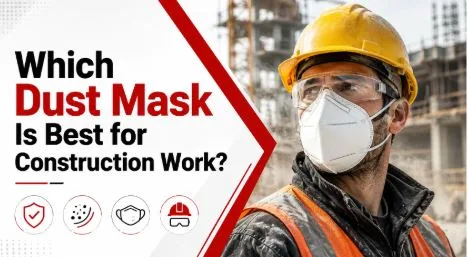
Grinding, drilling, demolition work, and other everyday tasks at construction sites release a large amount of dust and airborne particles. If the construction workers inhale these particles, they can have a major impact on their health. That’s the reason why wearing a proper dust mask while working on a construction site is essential.
Further, different construction jobs require different levels of protection from potentially dangerous airborne substances. Thus, understanding the difference between the standard dust face masks, FFP3 dust masks, and other reusable respirators can help workers gain the right protection according to the type of construction environment.
Why Choosing the Wrong Dust Mask Can Be Dangerous
It’s a common misconception that any face covering can provide the necessary protection at a construction site. A basic mask cannot filter the fine construction dust and other particles efficiently.
Workers need a proper dust respirator that can minimize the exposure to airborne particles by filtering them before they enter the breathing system. A mask with insufficient protection exposes workers to harmful dust and hazardous particles while performing high-risk construction tasks.
The right mask should:
- Be able to filter the dust produced in the specific construction environment effectively.
- Match the level of exposure on the construction site.
- Provide efficient protection till the time it is worn while working.
The Hidden Risks Found on Building Sites
If the dust is invisible on the construction site, it does not mean that it is harmless. There are several airborne particles that can remain airborne for long durations and enter deep into the lungs while breathing.
Some of the common dust hazards that remain hidden in construction but can cause severe harm include:
- The Silica dust from the concrete bricks and stones
- The wood released from cutting and sanding
- The cement dust generated through mixing and handling of construction materials
- The harmful metal particles that are released through grinding and welding
- Fiberglass and insulation particles
As compared to large dust particles, the fine construction site particles are more dangerous for the health of the workers, as they have a high chance of passing through standard protection (which does not match the protection level required for the type of contamination) and can embed deep into the respiratory system.
Short-Term vs Long-Term Health Effects
Immediate discomfort might be the first symptom that a construction worker observes after inhaling the harmful dust. However, there are several short-term and long-term health effects that might become visible gradually.
Short-term health effects might include:
- Irritation in the eyes
- Throat infection
- Mild coughing
- Difficulty in breathing
- Or increased sensitivity to dust
Long-term health effects contribute significantly to the respiratory conditions:
- Silicosis is a major health condition caused by the silica particles generated from cutting, drilling, and stone grinding. This problem damages the lungs’ ability to absorb oxygen.
- Chronic Obstructive Pulmonary Disease (COPD) is caused by pollutants such as silica, coal, and grain dust. It can lead to shortness of breath and frequent chest infections.
- Longer exposure to crystalline silica and wood dust can increase the risk of occupational cancer.
What Types of Dust Are Found on Construction Sites?
Construction sites are prone to the following types of airborne dust:
- Silica Dust: Extremely fine silica particles are generated from cutting, drilling, and concrete grinding from bricks, asphalt, tiles, and other engineered stones. These particles are microscopic in nature and easily penetrate deep into the lungs.
- Wood Dust: Cutting, sanding, or shaping of softwood, hardwood, or products like MDF and plywood on construction sites generates wood dust. This type of dust can trigger asthma and even lead to nasal cancers.
- Less Toxic General Dust: General dust particles that do not contain silica are often released from construction materials like limestone, marble, or gypsum. It can create short-term health side effects such as irritation in the eyes or throat.
- Hazardous Dust Particles: During demolition or renovation of older building structures, hazardous dust particles such as asbestos, mould, or lead dust are often released in the air. These are highly toxic and can cause major health concerns like mesothelioma and asbestosis.
FFP1 vs FFP2 vs FFP3: Which Dust Mask Rating Is Best?
Standard Filtering Facepiece (FFP) is rated according to the protection level it can provide.
What Is an FFP Rating?
The FFP rating is an indication of how effectively the mask is able to filter the airborne particles. There are three types of disposable FFP masks:
FFP1 Mask
An FFP1 mask offers basic protection against low-dust or non-toxic airborne particles. These masks should be worn when performing simple construction site work in areas where exposure is limited.
FFP2 Mask
The FFP2 mask offers mid to strong protection and is most commonly used in construction activities that have moderate dust exposure.
FFP3 Mask
An FFP3 dust mask offers the strongest protection. It is best suited in environments where exposure to silica and other hazardous dust particles is effective. Most construction sites encourage wearing an FFP3 disposable dust mask to its workers as these masks offer improved filtration.
Which Dust Mask Should You Use for Each Construction Task?
Different dust mask types should be used according to the construction task:
| Construction Task | Ideal Dust Mask According to the Construction Task |
| Cutting of bricks, stones, or concrete | FFP3 dust mask |
| Wood cutting or sanding | An FFP2 or FFP3 mask |
| General construction site work | FFP1 in areas of no to minimum dust, and an FFP2 mask for light dust |
| Heavy construction work for long hours | A half-face dust mask or a full-face dust mask with replaceable filters. |
Disposable vs Reusable Respirators
Dust masks are categorized as disposable or reusable respirators. Here’s the difference between them:
| Feature | Disposable Respirators | Reusable Respirators |
| Usage | Single or short-term use | Repeated use with replaceable filters |
| Ideal for | Occasional use on construction sites for short duration | High exposure environments and longer shifts |
| Protection Level | Depends on the ratings (FFP1, FFP2, and FFP3) | Can provide medium to high protection according to the filter type used in the respirator |
| Cost | Affordable but requires frequent replacement | Higher initial cost, but economical over the long term |
| Maintenance | No cleaning or maintenance required, just replace the mask after complete use | Requires regular filter cleaning, inspection, and filter replacement |
How to Choose the Right Construction Dust Mask
Selecting the right construction mask requires careful evaluation of the construction environment type and the type of exposure:
- Identify the hazard or the type of airborne particles that might be present on the construction site.
- Choose the rating of the disposable FFP mask according to the protection level required during the construction work.
- Ensure the mask properly fits and is comfortable to wear.
- Check the secure seal that can help prevent dusty air from entering through the mask.
- Evaluate the duration of your construction shift. Consider a reusable respirator for longer shifts to maintain comfort and breathability.
When Should You Replace Your Dust Mask?
A disposable mask should be immediately replaced:
- If the recommended usage period has expired.
- If the mask is damaged or torn.
- If it gets wet or dirty.
- If the worker feels difficulty in breathing while wearing the mask.
While reusable dust masks may provide protection for a longer time, they also require filter replacement or maintenance to continue providing the expected level of protection.
UK Construction Dust Mask Requirements You Should Know
In the UK, the construction dust regulations are maintained under the COSHH (Control of Substances Hazardous to Health) regulations.
- RPE Ratings: The construction site workers must use Dust masks with RPE ratings with specific European (EN 149) filtration standards.
- UK Health and Safety Executive (HSE) guidelines: These guidelines recommend that workers go through the face fit test to ensure a proper fit, a medical exemption that declares that the worker is fit to wear tight-fitted RPE, and maintenance of logs for reusable masks.
Conclusion: Choosing the Right Protection Could Protect Your Future
The right construction dust mask depends on the type of work involved on the construction site, the duration of the work, and the type of dust or airborne particles released during the construction work. For low-risk construction work, an FFP2 mask might be sufficient, but for stronger protection, an FFP3 mask or a reusable respirator with filters selected according to the exposure level must be used.
Explore the different types of FFP masks and reusable dust masks on the Respirator Shop today.
FAQs
Is an FFP2 mask sufficient for construction work?
An FFP2 mask might be sufficient for general, low-exposure construction work. But in areas with fine or hazardous construction work particles, an FFP3 dust mask is a suitable choice.
When should I use an FFP3 mask?
An FFP3 mask should be used in environments where fine dust particles, such as concrete or silica dust, are present in the construction site air.
Can I reuse disposable dust masks?
A disposable dust mask has a specific usage timeline, after which it must be replaced without delay. Also, this type of mask should be replaced immediately if it gets dirty, wet, or damaged.
What mask protects against silica dust?
An FFP3 dust mask can provide protection against silica dust.
Are valved masks better for builders?
Valved masks can make breathing easier for construction site builders; however, the protection remains dependent on the type of mask rating and fit.
Do construction workers need face fit testing?
Yes, according to the UK construction dust mask requirements, the workers must go through a face fit test to ensure proper protection from the dust and airborne particles.