Why Boat Trailer Breakdowns Are So Common Around Tauranga (And What to Do When Yours Joins the List)
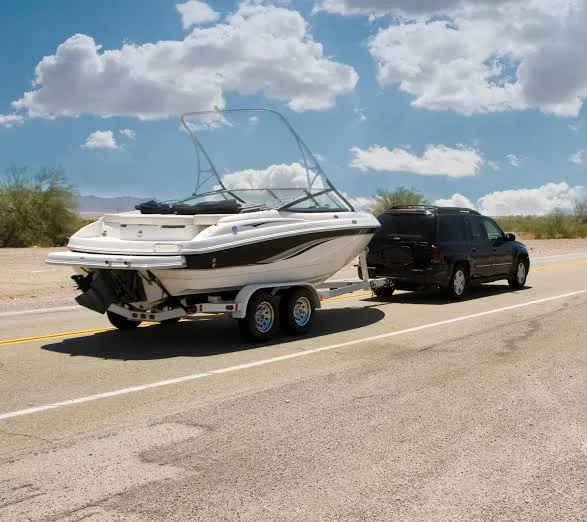
It’s a Saturday morning in February. The wind is light, the tide’s running out, and the queue at Sulphur Point boat ramp is six trailers deep before 7am. Three queues over at Pilot Bay, another dozen are waiting. Up the coast, the Omokoroa ramp is full. Down at Bowentown Heads, locals are launching for a Mayor Island run.
By 11am, two of those trailers won’t make it home under their own steam. By 5pm, when the fleet comes back in, at least one tow vehicle will have done something it really wasn’t supposed to — slid on the wet ramp, refused to start with the boat half-loaded, or coughed up a transmission warning light on the climb back to the carpark. A few will have made it home only to discover a wheel bearing has been screaming for the last ten kilometres and is now glowing red.
None of this is unusual. It’s just Tauranga.
This city has one of the highest densities of recreational boat ownership in the country, and the trailers that haul those boats live a harder life than most road-going equipment ever will. If you own a boat in the Bay of Plenty, you’ll deal with a trailer failure eventually. The only questions are when, where, and whether you’ve thought about it before it happens.
This guide is for Tauranga boat owners who’d rather have a plan. We’ll cover why trailers fail more often here than in inland cities, what actually goes wrong, what to do when it does — including the special category of “ramp disasters” that are unique to coastal boating towns — and what to look for in a towing service that actually understands boats, not just cars.
Why Tauranga Eats Boat Trailers
Trailers in the Bay live a brutal existence, and most owners don’t realise how brutal until something fails. Four things stack up against them in this region specifically.
Salt water, every single launch. The wheel bearings, the brake components, the leaf springs, the electrical connectors at the rear of the trailer — all of them get fully submerged every time you launch and retrieve. Salt water is corrosive on a scale that fresh water simply isn’t. Bearings that would last a decade on a fresh-water trailer in Taupo can pack up after eighteen months of regular launches at Sulphur Point if they’re not properly maintained. The corrosion isn’t visible from the outside until the day it suddenly is.
High utilisation. Tauranga boats get used. Plenty of households launch every weekend in summer, and many launch year-round for snapper, kingfish, or the occasional gurnard run. Compare that to a boat in Wellington that gets used six times a year. A trailer doing fifty launch-retrieve cycles a year experiences fifty times the salt-water immersion of a casual trailer, and the cumulative damage adds up faster than people expect.
Sandy, gritty ramps. Sulphur Point is one of the busiest ramps in the country, and like all popular ramps it accumulates sand, shell, and grit. That stuff gets into wheel bearings, into brake calipers, into anywhere there’s a moving seal. Even careful owners struggle to keep it out. Less-used ramps like Pāpāmoa or Omokoroa have their own grit profiles, and the Bowentown ramps add fine windblown sand to the mix.
The “she’ll be right” tow vehicle. A lot of Tauranga boats are towed by family vehicles that weren’t really purchased with towing in mind. The old Hilux that’s been in the family since 2007. The Pajero that’s done two hundred and eighty thousand kilometres. The Triton that started losing oil pressure last winter but you’ve been meaning to get to it. These vehicles tow fine — until the day they don’t, usually on the climb back from a ramp with a fully loaded boat behind them.
None of this means Tauranga is a bad place to own a boat. It’s a brilliant place to own a boat. It just means trailer reliability here is a discipline, not an assumption.
The Five Things That Actually Go Wrong
Across roadside callouts to boat owners in the Bay, five failure modes account for almost everything. Knowing which one is unfolding tells you whether you need a tow, a roadside fix, or just a phone call to the AA.
- Wheel bearing seizure. This is the most common cause of roadside trailer failure in coastal NZ, full stop. The bearing dries out, overheats, and seizes — sometimes spectacularly, sometimes with just a grinding noise that gets worse over kilometres. If you smell hot grease or hear a rhythmic grinding, stop immediately. Driving on a seized bearing destroys the axle and sometimes catches fire. A wheel bearing failure on a loaded boat trailer is not a roadside-repair situation for most people — it usually needs a tow.
- Tyre blowouts. Trailer tyres lead miserable lives. They sit in sun for weeks at a time, they’re often underinflated because nobody checks them, and they carry loads close to their rated maximum. The sidewall fails first, usually on a hot afternoon on the way home from a long day at sea. If you have a roadworthy spare and the gear to change it, you might be fine. If the spare is also rotten, or the wheel nuts haven’t moved in three years, you’re calling for help.
- Trailer brake failure. Bigger boats sit on braked trailers, and those brakes get heavily abused by salt. The mechanism can lock up, fail to release, or simply stop working when you need it. A locked-up brake will heat up dramatically over the first kilometre, sometimes badly enough to weld components together. If you feel the trailer dragging or smell hot brakes, stop and check. Driving on a locked trailer brake will destroy it and potentially the wheel and axle as well.
- Coupling, jockey wheel, or winch failure. Less common but more dramatic. The coupling that connects trailer to tow ball can corrode internally; the safety chain helps but isn’t designed for full-on disconnection at speed. Jockey wheels collapse when their internal threads strip. Winches fail mid-recovery — usually right at the moment the boat is half-on, half-off the trailer at the ramp. Each of these needs a different response, but none are safe to ignore.
- Tow vehicle problems while loaded. This is technically a car problem, not a trailer problem, but it counts. Transmissions overheat on the climb back from coastal ramps. Cooling systems struggle in summer. Old clutches give up the ghost. The trailer might be fine — but if the tow vehicle can’t make it up the ramp, you’ve got a recovery situation that involves both pieces of equipment together.
The Special Category: Ramp Disasters
Every coastal boating town has its own ramp folklore, and Tauranga has more than most. These are the situations a generic Towing Tauranga operator might never have seen, but a boat-experienced one has dealt with dozens of times.
The tow vehicle that won’t come back up the ramp. Wet concrete, cold tyres, a heavy load, and a slight uphill grade is enough to spin the wheels of most two-wheel-drive vehicles. The vehicle ends up stranded with the boat half-loaded behind it. Sometimes a 4WD with a snatch strap can help. Sometimes a winch is needed. Sometimes a proper tow truck is the only safe answer.
The tow vehicle that ends up in the water. It happens more often than people admit, and Sulphur Point and Pilot Bay see at least a few each year. Parking brake fails, driver gets out without leaving it in gear, the boat catches a wave and pulls the trailer backwards, or the ramp is slipperier than expected. Once the vehicle is in salt water, every minute it stays there is doing damage you don’t want to think about. This is a specialist recovery — winching out, draining, and a proper salt-water flush of every electrical system before the vehicle is touched.
Winch failure mid-recovery. The boat is half on the trailer, the winch strap snaps or the gearbox fails, and now you’ve got a half-loaded boat that can’t go forward or backward without help. With a queue of frustrated locals behind you. The recovery here is about boat handling as much as towing.
Coupling failure on the way out. Trailer detaches from the tow vehicle in the carpark, sometimes with the boat already on it, sometimes with the boat still hanging off the back. The chain catches it but the situation is now ugly. Recovery requires lifting the trailer-and-boat assembly back onto a tow ball that may not be where it should be.
The launch that goes sideways — literally. Boat slides off the trailer at an angle, ends up partly on the concrete, partly afloat, with the trailer at an unexpected angle. Resolving this without damaging the hull or the trailer takes experience that most general tow operators don’t have.
If you’re reading this thinking “that wouldn’t happen to me” — that’s exactly what every person who’s ever featured in one of these situations was thinking ten minutes before it happened.
What to Do When It Happens
A trailer failure on the way home from a day on the water is a different problem from a car breakdown, and the response is different too.
At the ramp. Don’t try to force a recovery if something has clearly gone wrong. Get the boat secured. Get the tow vehicle on stable ground or out of the water. If you’re blocking the ramp, communicate clearly with others waiting — most boaties will help if asked, and most will get furious if not. Call for help before the situation worsens.
In the carpark. You’ve identified the problem, the boat is secured, you’re out of the way of other users. Now you have time to think. Is this a roadside-repair situation (flat tyre with a roadworthy spare) or a tow situation (seized bearing, broken coupling, dead tow vehicle)? Get on the phone and describe the situation precisely — make and model of the tow vehicle, type and length of trailer, length of the boat, and exactly what’s failed.
On the road home. You’ve made it off the ramp but something is wrong — grinding noise, dragging feeling, warning lights. Pull off as soon as you safely can. Boat trailers don’t have hazard lights of their own; the tow vehicle’s hazards plus a visible position off the road are your safety. Don’t try to nurse it home if a bearing is failing — driving an extra few kilometres turns a tow into a tow plus a new axle.
Far from home. Bowentown, Anzac Bay, Maketu, the back roads out near Pukehina — coverage and visibility are both worse out here. Note your location precisely before you stop (closest landmark, distance from the nearest named road, what you can see around you). If you have to walk for signal, lock the vehicle and take your phone, keys, and registration.
With other boaties. One of the genuine advantages of breaking down in the Bay is that other boat owners will usually stop and help. Don’t be too proud to accept a hand — boating culture here is unusually generous. Equally, don’t expect strangers to fix your problem; the help they give might be a phone, a snatch strap, or a recommendation, not a full recovery.
Choosing a Tow Operator Who Actually Knows Boats
The towing industry has plenty of operators who’ll happily turn up to a boat-trailer call and then realise they don’t have the right equipment. Here’s what separates a real Towing Tauranga service for boat owners from one that’ll fumble the job.
They have the right truck for a trailer-and-boat combo. A standard flatbed can take a tow vehicle. Recovering a tow vehicle plus a boat-on-trailer at the same time is a different problem requiring different gear. Ask explicitly.
They’ve done ramp recoveries before. Pulling a stuck vehicle off a wet concrete ramp without dropping the boat into the harbour is a skill, not a default capability. An operator who’s done it dozens of times around Sulphur Point and Pilot Bay knows exactly where to position, what angle to winch from, and how to avoid the worst outcomes. One who hasn’t will figure it out as they go, which can get expensive.
They understand boat handling. A boat on a half-loaded trailer is a delicate situation. Operators with marine experience know how to stabilise the boat before moving the trailer, how to deal with hull damage risks, and when to call a marine specialist rather than try to handle it themselves.
They’ve worked with local marinas and ramps. Tauranga Bridge Marina, Sulphur Point, Pilot Bay, the Omokoroa ramp, Bowentown — each has its own quirks of access, layout, and what’s allowed. Operators with existing relationships with marina management get jobs done faster.
They know the trailer side of things. Bearings, brakes, couplings, winches — a tow operator who actually understands trailer mechanics can sometimes do a roadside fix that saves you the full cost of a tow. Worth asking on the phone before committing.
The Trailer Maintenance Most Tauranga Owners Skip
Most boat trailer failures are preventable. Here’s the rough minimum maintenance schedule that catches the common failures before they become roadside problems.
Wheel bearings: re-pack with marine grease every year for regular-use trailers, every two years for occasional-use trailers. Inspect for play or roughness before every long trip. Bearing protectors with grease pressure (often called “bearing buddies”) help significantly.
Tyres: check pressure before every trip. Replace tyres on age, not just on tread — sidewalls degrade in UV regardless of how much you’ve used the trailer. A six-year-old trailer tyre that still has tread is not a safe tyre.
Brakes (if fitted): have them serviced annually if you do regular salt-water launches. Look for any sticking or dragging on a short test pull before a long trip.
Coupling and jockey wheel: lubricate the moving parts. Check the coupling closes fully and locks. The jockey wheel should turn freely and bear weight without flexing.
Lights and wiring: salt destroys the rear of the trailer harness faster than anything else. A two-minute lights check before pulling out of the driveway has saved many trips.
Trailer rego and WoF: trailers over 3,500kg gross laden weight need a Certificate of Fitness; lighter trailers need a WoF on the standard schedule. The full requirements are on the NZTA website. Insurance often won’t cover an accident involving a non-compliant trailer, which is the kind of thing you only find out about at the worst moment.
Save the Number Now, Not When You’re Standing Next to the Trailer
The honest truth is that most Tauranga boat owners only think about who they’d call for a trailer recovery once they’re already standing on the side of the road, watching grease drip onto the asphalt, with the kids asking when they’re going home. That’s the wrong moment to research a tow operator.
Spend five minutes now. Find a Tauranga tow operator who covers boats specifically — one who knows the local ramps, has the right equipment for trailer recoveries, and has dealt with the awkward ramp-edge situations that other operators have never seen. Save the number in your phone. Make sure whoever else might be towing the boat (your partner, your kid who just got their licence, the mate who borrows it occasionally) has it too.
Services like Towing Tauranga cover the Bay of Plenty 24/7 and handle boat trailer recoveries from Bowentown through the Mount and round to Maketu and beyond. Whoever you ultimately choose, the rule is the same: a tow operator who knows boats is worth ten who don’t, the moment something goes sideways at a ramp.
The boat is the easy part. The trailer is what’ll bite you. Not today, probably not next week — but on a Saturday in February with the wind getting up, the tide going out, and the kids in the back seat hungry. Be ready for that one.
Tauranga rewards the boat owners who plan ahead. The harbour, the islands, the kingfish runs, the summer evenings on the water — none of it is in short supply. But the trailer that gets you there and back is the part you can’t afford to leave to luck.
Plan accordingly. Then go fishing.
Visit: wanbang express