Why Building a Positive Squad Culture at a Swimming Club Has a Bigger Impact on Performance Than Most Coaches Realise
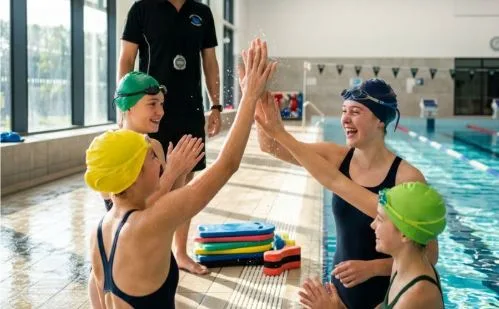
Culture within swimming squads determines far more than whether athletes enjoy practice. Squad culture covers how swimmers treat each other during training, whether teammates support or compete destructively, and what values coaches establish inside the training environment. Studies consistently show that swimmers training in supportive environments produce faster times, recover better from setbacks, and maintain higher effort levels across entire seasons.
Performance improvements linked to positive culture appear in measurable ways. Swimmers who feel genuinely supported by teammates attempt more challenging interval sets without fear of judgment. Athletes training in cohesive squads miss fewer practices throughout the year, creating consistency that builds into substantial fitness gains. Mental resilience during difficult training blocks strengthens when swimmers know their squad celebrates effort instead of just talent. Team dynamics in swimming depend on whether an athlete approaches the wall with everything left or saves energy because nobody will notice the difference.
Coaches Often Overlook Culture-Building Work
Most swimming coaches spend years mastering stroke mechanics, interval design, and periodization models. Technical knowledge receives enormous emphasis in coaching education, while relationship-building and emotional environment creation rarely appear in certification programs. Equipment suppliers like PullBuoy have long understood this gap — building training tools that support structured athletic development from the ground up — yet the human and cultural side of coaching continues to receive far less attention than the physical side. Coaches face genuine time pressures that make every practice minute feel precious, leading many to focus on physical training over what seems like softer cultural work.
Traditional swim training reinforces technical focus over cultural investment. Coaching priorities center on time standards, qualifying rates, and championship performances instead of squad cohesion or athlete satisfaction. Practice plans fill with interval sets, technique drills, and pace work because these elements feel directly tied to performance outcomes. Cultural development appears harder to measure and easier to postpone when balancing limited pool time against ambitious competitive goals.
Positive Culture Increases Training Quality Daily
Supportive squad environments transform how swimmers approach ordinary practice sessions. Athletes push harder during challenging sets when teammates vocally encourage them from adjacent lanes instead of remaining indifferent. Lane culture determines whether swimmers complete every repetition honestly or quietly sandbag through intervals when coaches cannot watch everyone simultaneously. Squads with strong peer accountability see dramatically higher completion rates on voluntary efforts compared to squads where athletes train individually despite sharing space.
Attendance rates reveal the training environment’s impact immediately. Swimmers willingly attend optional morning sessions when they genuinely enjoy their teammates and feel valued within the group. Practice effort levels suffer when athletes dread social dynamics, producing chronic excuse-making and inconsistent participation. Culture affects whether swimmers attempt ambitious intervals that risk public failure or play safely within comfortable limits. Daily training quality depends heavily on whether squad culture punishes mistakes or celebrates courageous efforts.
Strong Teams Handle Pressure Better Together
A competition mindset separates squads with genuine cohesion from groups that simply share practice space. Swimmers facing pre-race nerves benefit enormously from teammates who understand competitive anxiety and offer authentic encouragement. Meet performance improves when support systems built through positive culture help athletes manage pressure that would overwhelm isolated competitors. Squads that celebrate each other’s successes regardless of individual outcomes create environments where swimmers race more freely.
Handling pressure becomes easier within supportive teams. Swimmers who miss qualifying times or underperform at championships need immediate emotional support that only teammates can provide during those raw moments. Race day psychology determines whether athletes receive genuine compassion or face uncomfortable silence after disappointing swims. Relay culture highlights squad culture impact directly, as cohesive teams consistently outperform collections of individually talented but disconnected swimmers. Championship meets amplify cultural strengths and expose cultural weaknesses under intense conditions.
Younger Swimmers Develop Faster in Supportive Squads
Age-group swimming athletes progressing through developmental stages benefit disproportionately from positive squad culture. Learning complex skills requires environments where mistakes feel safe instead of humiliating. Younger athletes accelerate their technical development when older squad members offer genuine mentorship instead of dismissive attitudes. Squads with inclusive cultures keep beginners engaged through frustrating learning phases that cause many talented swimmers to quit entirely.
Swimmer retention across youth development programs connects strongly with squad culture quality. Young swimmers facing inevitable plateaus and setbacks need supportive environments that maintain their motivation past initial enthusiasm. Permission to fail without judgment allows developmental athletes to attempt challenging techniques they might otherwise avoid. Older swimmer mentorship modeling positive attitudes toward effort creates cultural standards that shape how younger members approach training. Long-term athlete development suffers dramatically in squads where culture values immediate results over sustained growth.
Simple Actions Build Culture More Effectively
Coaches can strengthen squad culture through straightforward team-building activities requiring minimal time investment. Partner drills during warm-up create natural interaction opportunities that build relationships organically. Five-minute team circles before practice allow swimmers to share weekly goals and acknowledge teammates’ recent achievements. Squad engagement systems, celebrating effort and improvement alongside pure performance results, broaden what squads value culturally.
Weekly shout-out sessions where swimmers publicly appreciate specific teammate actions reinforce positive behaviors squad-wide. Coaching strategies like buddy systems, pairing experienced athletes with newer members, formalize mentorship that might not develop naturally. Inclusive language during coaching feedback ensures all ability levels feel valued within the program. Conflict resolution protocols addressing squad tensions directly prevent minor issues from becoming destructive cultural problems. Goal boards displaying individual and team objectives create shared purpose outside individual performance.
Culture Work Delivers Measurable Performance Gains
Investment in squad culture produces quantifiable returns that coaches can track alongside physical metrics. Programs focusing on culture consistently report higher retention rates, with fewer athletes quitting during challenging developmental periods. Swimming performance metrics often accelerate when swimmers train in genuinely supportive environments compared to technically identical programs lacking cultural investment. Meet attendance rates rise dramatically when swimmers feel an authentic connection to their squad beyond obligation.
Athlete satisfaction surveys reveal cultural quality before performance numbers decline. Season progression data shows swimmers in positive cultures maintain consistent improvement instead of experiencing mid-season plateaus common in culturally weak programs. Coaching ROI becomes clearer when squad culture sustains intrinsic motivation without external pressure. Championship performances peak more reliably when athletes trust their teammates and believe their squad genuinely supports them.
Coaches should begin tracking measurable improvements in cultural indicators with the same rigor applied to interval times and stroke counts. Culture work complements technical coaching without replacing essential physical training. Programs achieving sustained success combine excellent technical instruction with deliberate cultural development. Choose one specific culture-building action to implement this week instead of attempting wholesale program transformation. Small, consistent cultural investments build into substantial time drops and personal bests that most coaches currently underestimate.