Why Building Facades Have Become the Most Contested Design Decision in Modern Construction
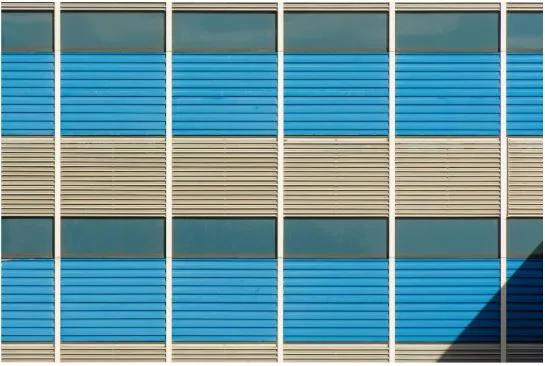
A decade ago, the exterior skin of a building was largely an afterthought. Structural decisions came first; cladding came later, selected for cost and ease of installation with little fanfare. That calculus has shifted considerably. Today, the facade is where regulatory compliance, sustainability targets, fire safety requirements, and architectural ambition all collide at once, and the pressure on developers to get it right has never been higher.
The factors driving this shift are not hard to identify. Building regulations across Europe and beyond have tightened significantly in the wake of several high-profile fires involving combustible cladding systems. At the same time, green building certification schemes now scrutinise the embodied carbon and lifecycle performance of exterior materials in ways they simply did not five years ago. Architects are caught in the middle, expected to deliver distinctive exteriors while satisfying a checklist that grows longer with each update to the building codes.
The Regulatory Squeeze
Fire classification requirements have become the sharpest edge of this pressure. Following fires in London, Milan, and elsewhere, authorities across the EU tightened reaction-to-fire standards for facade materials, pushing many projects away from composite panels with plastic cores and toward materials with demonstrably better fire performance. Aluminium cladding, when sourced from systems that carry verified fire classifications and CE marking, has emerged as one of the more reliable answers to this compliance challenge. Unlike some legacy products, modern aluminium facade systems can be tested and documented to EN 13501-1 standards, giving specifiers the paper trail that insurers and building control officers now routinely require.
The sustainability dimension adds a parallel layer of complexity. Embodied carbon in building materials is increasingly regulated or incentivised under national green building schemes, and developers chasing BREEAM, DGNB, or LEED certification need Environmental Product Declarations for every major material they specify. Aluminium has historically been penalised in these calculations due to the energy intensity of primary production, but that picture is changing as recycled-content alloys enter the market with significantly lower carbon footprints.
Design Freedom vs. Technical Constraint
What Architects Are Actually Asking For
Conversations with architects working on commercial and residential projects in Germany reveal a consistent frustration: the products that perform best technically often impose the most constraints on design. Standardised panel sizes, limited colour ranges, and inflexible fixing systems push buildings toward a sameness that neither clients nor architects want. The demand, increasingly, is for systems that offer genuine design latitude without forcing a trade-off with performance or compliance.
That demand is one reason modular, customizable facade cladding systems have attracted more interest from specifiers. The ability to vary slat orientation, spacing, length, and material within a single system, while still working within a tested and certified structural framework, is a meaningful selling point on projects where the brief calls for something architecturally distinctive. Nordisk Profil, a Danish manufacturer with more than 30 years in the facade sector, has positioned its aluminium and wood systems around exactly this principle, producing facades that are tailored to individual building projects rather than forcing the building to accommodate the product.
The Ventilation Question
Open and ventilated facade constructions have gained ground for reasons that go beyond aesthetics. A rear-ventilated facade creates a continuous air gap between the cladding and the building envelope, which reduces moisture accumulation, lowers summer heat gain, and extends the lifespan of both the cladding and the insulation layer behind it. For building owners focused on long-term operating costs, this is not a minor consideration.
The Circular Economy Factor
Lifecycle thinking is reshaping how facade materials are evaluated from the outset. The European Commission’s Construction Products Regulation is being revised to place greater emphasis on recyclability and end-of-life disassembly, which means facade systems designed without a clear decommissioning plan may face obstacles in future procurement cycles. Aluminium scores well on this front: it is one of the most recycled materials on the planet, and systems designed with disassembly in mind can theoretically be reused building-to-building with minimal processing.
What this adds up to is a facade market in genuine transition. The days of selecting cladding based on upfront cost alone are functionally over for any project that needs to pass modern building control, satisfy an insurer, or meet a corporate sustainability commitment. Suppliers that have spent years engineering for all three requirements simultaneously, as Nordisk Profil has done with its CE-marked, recyclable aluminium systems, are increasingly well positioned as a result. The decision is now a technical, regulatory, and architectural one at the same time, and the gap between products that can satisfy all three and those that cannot is becoming harder to ignore.