Why Christchurch Is Two Different Cities for Drivers (And What That Means When You Break Down)
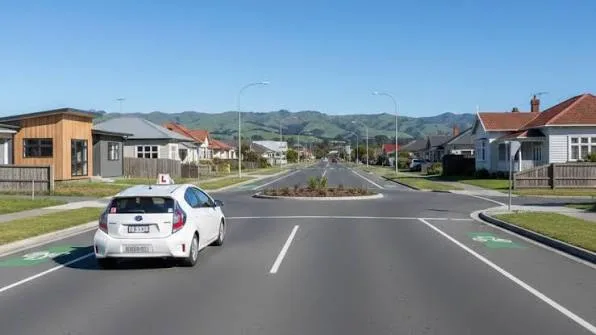
A car breaks down on Colombo Street in central Christchurch at 2pm on a Tuesday. The driver pulls into a side road off the grid, calls a tow operator, and is on their way to a mechanic in Sydenham within forty minutes. Total inconvenience: about an hour.
The same car, same fault, same driver, breaks down on Porter’s Pass at 4pm in late June, with the light fading and a southerly building off the Alps. Now we have a completely different problem. The shoulder is narrow. The temperature is dropping fast. Mobile signal is patchy. The nearest tow operator with the right equipment is an hour and a half away on a winding alpine road. Total inconvenience: most of the night, possibly involving emergency services, definitely involving prices that look nothing like a city tow.
Same car. Same fault. Different city, in effect.
Christchurch is genuinely two cities for drivers. The flat, predictable urban grid inside the Four Avenues is one of the easiest places to drive in New Zealand. The dramatic terrain surrounding it — the Port Hills, Banks Peninsula, the Canterbury Plains, the alpine highways west and north — is some of the most demanding. A lot of Christchurch drivers never really deal with the second city. Until one day they do.
This guide is for Christchurch locals who want to understand both halves. We’ll look at how the urban side actually works in your favour for most breakdowns, why the surrounding country is a different problem entirely, what the seasons do to all of it, and what to look for in a tow operator who can genuinely handle the full range.
The First Christchurch: A Surprisingly Easy Place to Break Down
Most NZ cities are difficult to break down in for one reason or another. Auckland’s motorways have no shoulders. Wellington’s streets are too steep and narrow for tow trucks to access easily. Hamilton’s expressway funnels unfamiliar drivers into congestion. Tauranga’s coastal roads expose vehicles to salt and weather.
Christchurch’s urban core is, by comparison, almost considerate.
The grid layout is a quiet superpower. The city’s rigid grid means there’s almost always a side street within a block where a struggling vehicle can be moved off a busy road. Pulling out of traffic in Christchurch is genuinely easier than in any other main centre. Tow operators can navigate the city without surprise — they know where everything is in relation to everything else, because the city’s geometry doesn’t change. That predictability shows up in faster response times than you’d see for the same distance in a city that grew organically.
The roads are generally wide. Most of Christchurch’s arterials — Riccarton Road, Memorial Avenue, Lincoln Road, Main North Road, Brougham Street, Moorhouse Avenue, Bealey Avenue — are wider than their equivalents in Auckland or Wellington. Wide arterials mean usable shoulders. Usable shoulders mean breakdown vehicles can stop safely, tow trucks can pull alongside without blocking lanes, and recovery happens without the live-traffic drama that defines Auckland breakdowns.
The terrain is flat. No hill clutches dying climbing Brooklyn. No transmission failures on the Kaimais. No wind-driven instability on motorway flyovers. Most central Christchurch breakdowns are simple: the car has stopped working, the car can be moved, the car gets taken somewhere. That mechanical simplicity makes everything cheaper, faster, and less stressful than in cities where geometry fights you.
The post-earthquake rebuild changed some things, but most for the better. Parts of the central city were rebuilt with newer infrastructure, better surfacing, and updated signage. GPS occasionally lags reality where road layouts shifted, so cross-check route advice if you’re unfamiliar with a particular area — but as a generalisation, urban Christchurch is easier to navigate now than it was a decade ago.
Tow operators are concentrated. Most of Christchurch’s tow operators have yards in Hornby, Sockburn, Sydenham, Bromley, or the airport-adjacent industrial pockets. From those locations, every part of the urban grid is reachable inside thirty minutes. That’s a structural advantage Christchurch drivers don’t realise they have until they compare notes with someone in Whangaparaoa or Eastbourne.
If your breakdown happens inside the Four Avenues, on a CBD street, in Riccarton or Merivale or Fendalton or Ilam or Papanui or Halswell or Hornby or Linwood or New Brighton — congratulations, you’re in the easy half of Christchurch’s geography. The right tow operator will treat your call as routine, because it is.
The Second Christchurch: Where Things Get Real
Cross any of the city’s boundary lines and the calculus changes entirely.
The Port Hills. The line of hills running between Christchurch and Lyttelton Harbour is a different climate, a different terrain, and a different driving environment from the city below it. Dyer’s Pass, Summit Road, the routes up to Cashmere and Mount Pleasant — these roads twist, climb, drop, and demand more of vehicles than most flat-city drivers realise. In summer, they’re scenic. In winter, they get black ice that the city below doesn’t see. After heavy rain, slips and surface water are real. A car that’s been complaining quietly for weeks will choose the Port Hills to finally give up.
The Lyttelton Tunnel. This connects the city to the port, and it’s its own category of risk. The tunnel has vehicle restrictions — certain hazardous loads aren’t permitted, and there are height limits — so check before you tow anything unusual through. More importantly, breakdowns inside the tunnel are serious. If your vehicle fails inside, switch on your hazards, stay in the vehicle unless directed otherwise by tunnel staff or emergency services, and use the emergency phones provided. Tunnel rescue is a coordinated operation involving NZTA, emergency services, and your tow operator working together, and it moves on its own timelines for safety reasons.
Banks Peninsula. Beyond Lyttelton, the road system narrows quickly. The route out to Akaroa via Hilltop is genuinely beautiful and genuinely demanding — winding, steep in sections, with weather that can change between bays. The smaller roads servicing communities like Diamond Harbour, Port Levy, Pigeon Bay, Okains Bay, and Le Bons Bay are not roads to break down on casually. Mobile signal drops in valleys. Help is at least an hour away from anywhere that isn’t Akaroa itself. The wrong tow operator will charge significant call-out premiums; the right one will know the routes, the access constraints, and which farmer might let them turn a truck around in a paddock.
The Canterbury Plains. West and south of Christchurch, the Plains stretch out flat and fast. Rolleston, Lincoln, West Melton, Darfield, Tai Tapu, Springfield, Methven — these are towns and farming centres scattered across a vast area, connected by long straight roads that invite high speeds. A breakdown on a Plains highway between towns is a different problem from a city breakdown: fewer landmarks for the operator to locate you, longer waiting times, and weather that can become serious quickly in a southerly or norwester.
The alpine highways. State Highway 73 over Arthur’s Pass to the West Coast, State Highway 7 over Lewis Pass north, the climb through Porter’s Pass in winter — these are not roads for the unprepared. Snow chains are sometimes required. Snow itself closes the passes occasionally. Vehicles that are fine on Christchurch streets sometimes can’t make alpine grades in winter, particularly campervans, hire cars, and older vehicles with marginal cooling or brakes. Breakdowns up here are specialist recoveries.
The northern and southern motorway extensions. SH1 north toward Kaikoura and SH1 south toward Ashburton are wide, fast, and increasingly busy. They’re better infrastructure than they were a decade ago, but a breakdown out toward Kaiapoi, Pegasus, or Rolleston is still a longer recovery than a city breakdown, and the shoulders aren’t a place to spend a long evening.
The norwester. Canterbury’s famous föhn wind blows from the Alps and hits the city hard a few times a year. It’s not a constant feature the way Wellington’s wind is, but when it arrives, it dries the air dramatically, raises fire risk, and creates wind-driven instability for high-sided vehicles, trailers, and motorbikes on exposed roads. Add a norwester to a long Plains drive in a campervan and you have a real recovery scenario brewing.
Winter Canterbury: The Overlay That Changes Everything
Christchurch in summer is the easy city. Christchurch in winter is a different place again, and the breakdown patterns shift accordingly.
Hard morning frosts. Canterbury gets harder, more frequent frosts than most NZ cities. Batteries that were marginal in autumn die overnight in July. Locks freeze. Diesel can gel in extreme cold. The first hour of a clear winter morning is when tow operators get hammered with no-start calls. If your vehicle’s battery is more than four years old and you’ve been hearing a slow crank, deal with it before the first hard frost, not after.
Black ice on bridges and shaded roads. The roads cross the Avon and Heathcote in numerous places, and bridge decks freeze before adjacent road surfaces. Shaded sections of Riccarton Road, Memorial Avenue, parts of Brougham Street, and the bridges across the rivers can hold black ice on clear winter mornings. Drivers who don’t expect it slide. Multi-vehicle accidents in light frost conditions are a Christchurch winter regularity.
Snow events. Christchurch occasionally gets snow that closes roads, particularly in the hill suburbs (Cashmere, Mount Pleasant, the Port Hills), out toward the Plains, and on the alpine routes. Snow on the Port Hills can cut Lyttelton off from the city for hours. Snow on Porter’s Pass can close SH73 entirely for a day or more. The AA maintains useful guidance on driving in snow and ice at aa.co.nz — worth a quick read for anyone who hasn’t driven a Canterbury winter before.
Reduced light. Mid-winter daylight is shorter than people from warmer climates expect. Breakdowns at 5pm in July happen in conditions that look like 9pm in February. Visibility matters more. Hazard lights, reflective triangles, and high-visibility clothing aren’t optional luxuries.
The Tourist and Tradie Factor
Christchurch is the gateway to the South Island, which means a higher proportion of the vehicles on its roads are unfamiliar to their drivers than in most NZ cities.
Campervans and hire cars. Christchurch International Airport is where most South Island tourist itineraries begin. Drivers pick up large rented campervans and immediately try to navigate roundabouts they’ve never seen, in driving conditions they’ve never experienced, in vehicles they’ve never operated. Breakdowns in these vehicles tend to involve drivers who don’t know where they are, can’t read New Zealand road signs accurately, and don’t speak English as a first language. A good tow operator handles these calls patiently, which matters more than people realise — for the tourist who’s having the worst day of their holiday, but also indirectly for locals, because operators who handle the tourist calls well are operators who handle everything well.
Tradies covering long distances. Christchurch is the base for tradies who work across Canterbury and beyond. Plumbers driving to Methven jobs. Builders heading to Rolleston subdivisions. Sparkies covering Banks Peninsula. These are people putting serious kilometres on work vehicles that are sometimes overloaded, often overdue for service, and habitually pushed harder than they should be. When they break down, they need fast recoveries because their day’s income depends on getting back to work or getting a backup vehicle.
Heavy freight. SH1 north and south through Canterbury carries an enormous freight load. Stock trucks, container traffic, refrigerated transport. Heavy vehicle breakdowns are specialist recoveries requiring the right equipment, and the better Christchurch operators have it. Generic operators don’t.
What a Real Towing Christchurch Service Has to Handle
Most tow operators can manage a flat suburban breakdown. Christchurch demands more than that, because the breakdown could be on any of the two cities described above, in any weather, in any vehicle. Here’s what separates a real Towing Christchurch operator from one that’ll fumble the harder jobs.
They handle the city grid efficiently. Urban Christchurch is the easy half, but a good operator should make the easy half look effortless. Quotes given quickly over the phone. Arrival within reasonable times even at peak hours. Direct delivery to your nominated workshop or insurer’s preferred repairer, without an additional handling step.
They go up the Port Hills without complaint. Sumner, Cashmere, Mount Pleasant, the Summit Road, the Lyttelton-side of the hills — these are all part of Christchurch but operators sometimes treat them as out-of-area trips. They shouldn’t. A proper Christchurch service treats the Port Hills as core territory.
They’ve worked the Lyttelton Tunnel before. Tunnel recoveries are specialist work. Operators who’ve coordinated with tunnel staff and emergency services before do them faster and safer than first-timers.
They cover the Plains and the Peninsula. Rolleston, Lincoln, Rangiora, Kaiapoi, Darfield, West Melton, Tai Tapu, Akaroa, the Banks Peninsula bays. A Christchurch tow service should reach all of these without it being a major expedition. Operators who only properly cover the urban grid are not Christchurch-region operators in any practical sense.
They handle alpine and rural recoveries. Arthur’s Pass, Lewis Pass, Porter’s Pass, the inland scenic routes. Not every operator should attempt these — winter recoveries especially require the right equipment, the right experience, and a willingness to commit several hours to a single job. But the operators who can do them are worth having as an option, particularly if you do any driving outside the city limits.
They know the right truck for the vehicle. Modern Christchurch sees a wider vehicle mix than ever — EVs that need flatbeds, modern European cars with low clearance, lifted utes from rural Canterbury, vans, campervans, heavy work vehicles. An operator that owns only one type of truck will struggle with half of this. Ask before you need to know.
They quote properly. A real number or a tight range over the phone, given your location, destination, and vehicle. Operators who refuse to discuss price until they arrive are leveraging your stress at the worst moment. Avoid.
They actually answer 24/7. Test the number on a Wednesday at 11pm before you need it on a Saturday at 3am. Plenty of “24/7” listings route to voicemail.
The Christchurch Local’s Quiet Advantage
The dual-city reality means Christchurch drivers can position themselves better than drivers in any other main centre, if they think about it.
Save the number now. Pick a Christchurch tow operator who covers the full range — the grid, the hills, the Plains, the Peninsula, the rural-alpine fringe if you ever drive those routes. Save the number in your phone. Make sure your partner has it. If you have kids driving, make sure they have it.
Know what your insurance covers. Many Canterbury insurance policies include towing in specific scenarios (accidents, certain breakdown types) but only if you call your insurer first. Spending three minutes on a Sunday afternoon reading your policy is worth more than people realise.
Match the operator to your driving life. If you only ever drive inside the Four Avenues, the urban-focused operators will serve you well. If you regularly drive to Akaroa, ski Methven, work in Rolleston, or visit family in Rangiora, you need an operator who treats the wider region as their patch. The wrong operator for your driving life will be fine until the day they’re not.
Don’t optimise for price alone. The cheapest call-out is often the slowest response. The slowest response is often the operator who can’t do what your scenario actually needs. Cheap-fast-good — pick two.
Services like Towing Christchurch are built around the full Canterbury picture: city grid, Port Hills and Lyttelton, the Plains, the Peninsula, and the rural-alpine fringe where breakdowns become real adventures. Whoever you ultimately choose, the rule is the same: in a city that’s secretly two cities, the operator who handles both is worth more than the operator who only handles one.
The breakdown itself is mostly out of your control. Where it happens and how prepared you were when it did — that’s almost entirely in your control. Five minutes now, saved into your phone, makes the difference between a managed inconvenience and an evening you’d rather forget.
Christchurch will mostly be kind to you. The grid is forgiving. The roads are wide. The weather is bearable. But the moment you cross into the second city — the hills, the Plains, the alpine routes, the Peninsula — the city stops being forgiving and starts being demanding. Be the driver who already knew that.
Save the number. Then go enjoy the country.
Visit: jy express tracking