Why Hamilton Is the Hardest-Working Junction in NZ (And What That Means When You Break Down Here)
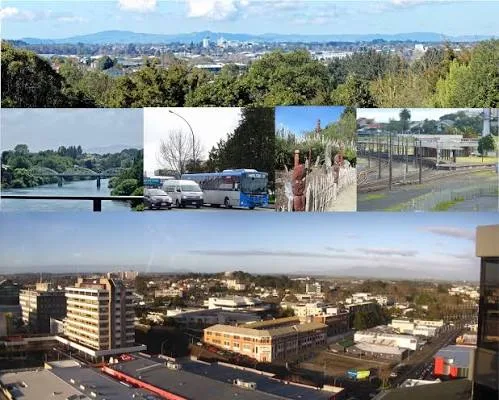
Hamilton has a strange relationship with the rest of New Zealand. Most cities are destinations. Hamilton is the place you pass through on the way to somewhere else.
Up the Waikato Expressway from Auckland? You’re in Hamilton. Heading to Tauranga or Rotorua? Through Hamilton. Driving south to Taupō, Wellington, or anywhere in the central North Island? Hamilton again. Coming from Taranaki on SH3? Hamilton. Coming back from Raglan after a weekend at the surf? Hamilton. The city sits on a junction of state highways that funnel a huge portion of North Island road traffic right past your driveway every day.
Most days, this is invisible. The roads work. The expressway moves. The roundabouts do their job. Life goes on.
Until something breaks.
When a campervan dies on the Hamilton section of the expressway at 3pm on a Friday in summer, the driver isn’t from Hamilton. They’re probably from Christchurch, Sydney, or Munich. They don’t know where the nearest mechanic is. They don’t know that there are three excellent panel beaters in Frankton and a handful of decent storage yards near Te Rapa. They’re scrolling on a stressed phone, calling whichever tow number loads first, and praying that whoever shows up speaks plainly enough that they understand what’s happening.
Meanwhile, somewhere in Chartwell, a local with a flat battery is calling the same operator, and ending up further back in the queue than they’d expect.
This is the Hamilton breakdown story, and it’s not like any other city’s. This guide is for Hamilton locals — and anyone who passes through here often enough that it might happen to them — who’d rather understand how this market actually works before they need it.
What Makes Hamilton’s Breakdown Market Different
Most NZ cities have a tow industry that serves their own population, plus a small share of out-of-towners. Hamilton’s tow industry serves something closer to a 50/50 mix on any given week. That sounds like a small detail. It changes almost everything.
Transit drivers behave differently from local drivers. They’re often tired (mid-journey on a long drive). They’re often distracted (kids, GPS, the unfamiliar feel of a hired campervan or boat trailer). They’re often pushing the vehicle harder than they would at home — overloaded for a holiday, climbing the gradients of SH1 around Bombay, then descending the Waikato Expressway into Hamilton at full speed for an hour or two before something gives. By the time they break down on the outskirts of Te Rapa or near the Tamahere exit, the vehicle has already been working at its limit for half a day.
The Waikato Expressway changed the dynamics. Before the expressway was built, drivers entered Hamilton gradually, through Huntly and Ngaruawahia, slowing as they came. Now they’re doing 110km/h on a motorway-grade road right up to the city’s edge, then dropping into urban streets. That speed transition is brutal on cooling systems, brakes, and inattentive drivers. The expressway is one of NZ’s best roads. It’s also one of the most likely places for a marginal vehicle to make it most of the way and then fail just as it reaches the city.
Hamilton serves an enormous rural hinterland. The Waikato is dairy country. Te Awamutu, Cambridge, Morrinsville, Matamata, Otorohanga, Te Kuiti — all of these towns send vehicles into Hamilton daily for work, medical appointments, retail, and freight. That means utes, stock trucks, tractors-on-roads, trailers laden with calves, machinery. The vehicle mix on Hamilton’s arterials is more varied than almost anywhere else in the country, and more of it is heavy or specialty than most cities deal with.
Holiday weekends multiply everything. Queen’s Birthday, Labour Weekend, the school holiday rotations — Hamilton’s roads carry traffic that no other city has to absorb. The first weekend of Fieldays at Mystery Creek every June is its own category: tens of thousands of out-of-region farmers and tradies streaming into the city in heavy utes, with their trailers, swapping vehicles between accommodation and the showgrounds. Some of those vehicles don’t make it home without help.
Fog is real. Hamilton sits in the Waikato basin, and on still autumn and winter mornings, the fog that settles can be genuinely dangerous. Visibility drops below fifty metres on the expressway and on rural arterials approaching the city. Breakdowns in heavy fog — and accidents caused by drivers who don’t slow enough for the conditions — are a winter Hamilton specialty. So is the hard morning frost, which kills batteries, freezes locks, and creates patches of black ice on bridges and shaded sections of road that drivers from warmer climates have never had to think about.
None of this makes Hamilton a bad place to drive. The roads are good. The geography is flat. The drivers, on average, are courteous. It just means that the tow industry here operates at a different scale and complexity than most outsiders realise, and the smart move for a Hamilton local is to understand that landscape rather than just stumble through it when something goes wrong.
The Six Hamilton Breakdown Scenarios That Cover Almost Everything
Most calls to Hamilton tow operators fall into one of these buckets. Knowing which one you’re in helps you describe the problem accurately and get the right truck dispatched first time.
- The transit breakdown. Someone passing through, vehicle dies on the expressway or just off it, driver unfamiliar with the area. Often a campervan, often a holiday-loaded family car, often a tradie’s ute on the way home from a job site in another region. Recovery is straightforward but the post-tow logistics get complicated — the driver may not know where they want the vehicle delivered.
- The local mechanical breakdown. Hamilton driver, Hamilton vehicle, something gave up. The Corolla that wouldn’t start in the Chartwell mall carpark. The Falcon that overheated on the Cobham Drive bridge. The Hilux with a dead clutch in the Te Rapa industrial area. These are the bread and butter of any tow operation and the response should be fast.
- The accident recovery. Minor prangs at roundabouts are a Hamilton classic — the city has a famously high density of roundabouts, and roundabouts are where inattentive drivers, frustrated drivers, and out-of-region drivers create predictable bumps and scrapes. Most don’t injure anyone but plenty leave vehicles undriveable. A tow operator with insurance company relationships saves real time and paperwork hassle on these.
- The rural-edge recovery. Stock truck broken down somewhere out past Tamahere. Old farm ute that finally gave up on the way back from a paddock in Whatawhata. Trailer detached on a back road near Matangi. These need operators with the right gear and the willingness to drive to locations a GPS sometimes struggles with.
- The Fieldays-week chaos. Every June, for a week, Hamilton’s tow operators are stretched. Out-of-region utes, heavily loaded trailers, vehicles parked in fields and refusing to start. Recoveries from Mystery Creek itself can involve mud, soft ground, and crowded site access. If you’re a local who breaks down during Fieldays week and you don’t have a Hamilton operator on speed dial, expect to wait.
- The fog-and-frost morning rush. Winter mornings, dense fog, hard frost, drivers heading into the city for work. Black ice on the Cobham Drive bridge, on Wairere Drive’s bridges, on shaded sections of arterials. Multi-vehicle nose-to-tails. Roadside breakdowns where batteries simply gave up overnight in the cold. Tow operators get hammered in the first hour after sunrise on the worst days.
The Waikato Expressway Effect
The Waikato Expressway is one of the best pieces of road infrastructure New Zealand has ever built. It’s also created a specific breakdown pattern that the city is still adapting to.
The speed transition catches drivers off guard. Coming off the expressway at the Hamilton exits and dropping into 50 or 60km/h zones, drivers underestimate the deceleration their vehicle needs. The cooling system that was fine at a steady 110 starts working hard. Brakes that were barely used for an hour are suddenly being asked to scrub off speed repeatedly. Tired drivers misjudge merges and overshoots.
Wildlife and debris. On the expressway sections, the wider verges and faster speeds mean wildlife strikes happen at higher impact, and debris (lost loads, blown tyre carcasses, occasionally something fallen from a heavy truck) becomes a real hazard. A blown tyre at 100km/h is a different recovery situation from the same blown tyre at 50.
The shoulder isn’t always usable. While the expressway has shoulders in most sections, they’re not the long-haul refuges that motorway shoulders provide in Europe or the US. Stopping there is safer than stopping on the live lanes, but it’s not somewhere to sit indefinitely. Get help moving toward you fast.
Live traffic information is genuinely useful. Before you drive — particularly before you drive in fog, in a heavy load, or in unfamiliar conditions — the NZTA live traffic dashboard at journeys.nzta.govt.nz shows incidents, road works, and congestion on SH1, SH3, and SH26 in real time. Five seconds of checking can save half an hour of frustration.
Get to a safe exit if you possibly can. A car that’s losing power on the expressway is in a different category from a car that has completely failed. If yours is still moving, your job is to get to an exit, an off-ramp, or a wide shoulder. Coast in neutral if you have to. The next named exit is almost always within five minutes; the next safe stopping spot might be sooner. Don’t stop in a live lane unless you have absolutely no choice.
What Wellington-Made Hill Towing Knowledge Doesn’t Help With — and What You Actually Need Here
Hamilton’s flat geography means a lot of the dramatic problems other cities deal with (steep streets, hill clutch deaths, cable-car-grade driveways) simply don’t apply. What Hamilton needs from a tow operator is a different set of skills, less about terrain and more about logistics, speed, and breadth.
Speed of response, especially during transit-heavy hours. Friday afternoons, Sunday evenings, holiday weekends — these are when Hamilton’s road network gets pushed hardest and when breakdowns multiply. A local operator who can dispatch a truck inside thirty minutes during peak periods is worth a great deal more than one who’d take ninety.
Coverage across the broader Waikato. Hamilton city proper is only part of the catchment. A good Towing Hamilton operator should cover Cambridge, Te Awamutu, Morrinsville, Huntly, Ngaruawahia, and out toward Raglan without it being a special-trip exercise. Locals who break down outside the city limits need to know whether their first-choice operator can reach them or not.
The right truck for the vehicle mix. Hamilton’s road traffic includes a higher-than-average share of heavy utes, stock trucks, light trucks, campervans, hired vehicles, and farm equipment. An operator that only owns standard tilt-trays will struggle with half of these. Tilt-trays handle most cars and small utes; flatbeds with longer decks handle larger vehicles; heavy recovery equipment handles trucks and stock vehicles; specialist gear handles machinery and ag equipment. Ask before you need to know.
Working with out-of-region insurers and mechanics. This is the bit that doesn’t get talked about. When a transit driver breaks down in Hamilton, the operator who tows them needs to coordinate with an insurer based in Auckland or Christchurch or Australia, and possibly deliver the vehicle to a workshop the driver can’t even pronounce. Hamilton operators who do this constantly are far better at it than operators from cities where every breakdown is a local one. As a local, you benefit from this same competence when something happens to you on a trip out of region.
Up-front pricing. A reputable operator will quote you a real number or a tight range over the phone, based on where you are, where the car needs to go, and what kind of vehicle it is. Operators who refuse to discuss price until they arrive are doing it for a reason — and that reason is that they want maximum leverage when you’re standing in the rain with nowhere else to call. Avoid.
They answer the phone. Hamilton’s tow market has plenty of operators with impressive websites and “24/7” promises that go to voicemail after 8pm. Test the number before you need it.
When to Tow, When to Call Roadside, When to Just Get a Lift
Not every Hamilton breakdown needs a tow truck. Knowing which is which saves you time and money.
Tow situation: Vehicle won’t start and won’t be quickly fixed roadside, transmission failure, accident damage, overheating with steam, suspected engine failure, anything that smells like burning metal. Anything where driving it further would make the damage worse. Anything on the expressway or a busy arterial where leaving it isn’t an option.
Roadside fix situation: Flat battery (jump-start), flat tyre with a roadworthy spare and the tools to swap it, run out of fuel, locked yourself out, electronic key battery dead. Many Hamilton tow operators also offer roadside assist as a separate, cheaper service. Ask on the call whether they can do a roadside attempt first.
Get-a-lift situation: Car is dead, you can’t fix it tonight, but it’s parked legally in a safe spot. Sometimes the right answer is to leave the car overnight, get home, and arrange the tow tomorrow in daylight when everyone’s less stressed. Tow yards charge by the day, not by the urgency.
Get help fast situation: Anything where you or another driver is hurt, anything blocking live traffic on the expressway or a busy arterial, anything involving a fluid leak that could be fuel. Call 111 first, the tow operator second.
The Hamilton Local’s Real Advantage
Here’s the part nobody actually says out loud. Hamilton’s tow operators are busy serving a transit population alongside locals — but locals have a structural advantage if they use it.
Pre-arranged relationships are faster. An operator who already has your details — your usual mechanic, your preferred panel beater, your insurer’s preferred repairer if you’ve had a previous claim — moves faster on a callout than one starting from zero. That’s not a sales pitch; it’s just operational reality.
Locals don’t need things explained. A transit driver needs the operator to figure out where the car should go, what arrangements to make with the rental company or insurer, where the driver will get a hire car or accommodation for the night. A local says “tow it to Frankton, my partner will pick me up” and the whole call takes ninety seconds.
Operators prioritise return customers. It’s not formal, and no operator will admit it openly, but in practice, when a queue is long, the locals with established relationships move up. That’s how relationship businesses work everywhere.
Local knowledge gets used. “I’m broken down on Wairere Drive near the Five Cross Roads turnoff” should not need explaining to a Hamilton operator. It does to an out-of-region dispatcher. Use the local advantage by working with a local operator.
Save the Number Today
The honest framing is this. Hamilton is a city that runs at higher pressure than its size suggests because the entire upper North Island uses it as a junction. That pressure shows up in the tow market. The locals who plan ahead — pick an operator, save the number, know what their insurance covers — get treated as locals when something goes wrong. The locals who don’t plan ahead end up in a queue with the transit drivers.
Pick now, not later. Find a Hamilton tow operator that covers the whole catchment, handles the mix of vehicles you actually see on Waikato roads, answers the phone at 2am, and gives you a real price on the first call. Save the number in your phone. Tell your partner. Tell whoever else might be driving your car or your kid’s car or your work ute.
Services like Towing Hamilton are built around exactly this profile — 24/7 dispatch across Hamilton city and the broader Waikato, the right equipment for the vehicle mix this region actually drives, and the operational habit of treating locals as locals. Whoever you ultimately choose, the rule is the same: in a junction city, local matters more than people realise. Be the driver who already knew that.
The breakdown itself is mostly out of your control. The hour after it isn’t. Who you call, how fast they come, what it costs, where the car ends up, how the insurance claim moves, whether you’re home in time for dinner — all of that gets decided by a five-minute decision you can make today, sitting somewhere comfortable, with a cup of tea.
Hamilton works hard. It earns its position at the centre of the North Island the same way locals do — by quietly being good at things no one notices until they stop. Your tow operator should be one of those quietly-good things. The kind you’re glad you chose, on the day you wish you’d never needed them.
Visit: wanbang express