Why Evidence Is Important in Winning Car Accident Cases
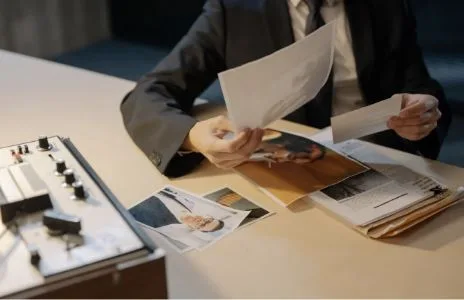
In the hours after a serious car accident in Houston, most people are thinking about hospitals and insurance calls. Few are thinking about evidence. Yet the evidence gathered in those first days often decides whether an injured person recovers what they are owed or walks away with far less. The firms that win these cases understand this better than anyone, and they treat the evidence hunt as the heart of the work.
Sutliff and Stout, a Houston firm that has recovered more than 1 billion dollars in verdicts and settlements over the years, has built its reputation on exactly this discipline. The founders explain how police reports and evidence to win in Houston come together in a recent video, walking through the records that turn a disputed claim into a clear one. The lesson is consistent across the cases they handle.
The side with the better evidence usually prevails, and the better evidence usually goes to the side that moved first to gather it.
The police report is only the beginning
Many people assume the police report settles the question of fault. It is an important document, created by a neutral officer who documented the scene, gathered statements, and noted the conditions. It carries weight, and it often shapes how an insurance company first views a claim. It also helps avoid any delay in car accident settlement. But it is a starting point, not the final word, and a serious case builds far beyond it.
The report reflects what the officer could observe and learn in a short time at a chaotic scene. It may miss details, misstate facts, or omit evidence that only emerges later. A driver who lied to the officer, a witness who was not interviewed, or a hazard that was not noted can all change the picture. The strongest cases treat the police report as a foundation and then build the full structure of evidence on top of it.
That structure includes physical evidence from the scene, witness accounts, camera footage, and the records that reveal what really happened. Each piece adds to the picture, and together they tell a story that a single document cannot. The work of assembling this evidence is what separates a thorough case from a thin one.
The evidence that disappears
The hard truth about car accident evidence is that much of it does not last. Skid marks fade within days. Debris gets swept away. Vehicles get repaired or scrapped, erasing the physical proof of how they were damaged. Camera footage from traffic cameras or nearby businesses gets overwritten on a cycle that can be as short as a few days. The evidence that could win a case can vanish while the injured person is still in the hospital.
This is why speed matters so much. A prompt investigation can capture the scene before it changes, secure footage before it is overwritten, and preserve the vehicles before they are repaired. A delay of even a week or two can cost a case evidence that cannot be recovered. The firms that win consistently are the ones that move quickly, sending investigators and preservation demands while the evidence still exists.
Witness memories fade too, and witnesses themselves can become hard to find. A person who saw the crash clearly on the day it happened may remember it hazily weeks later, or may have moved on entirely. Gathering witness accounts early, while they are fresh and the witnesses are reachable, preserves testimony that can prove decisive.
How modern evidence changes cases
Cars today carry data that did not exist a generation ago. Many vehicles record speed, braking, and other details in event data recorders. Smartphones log activity that can reveal distraction. Traffic and surveillance cameras capture crashes that once would have had no neutral witness. This modern evidence has transformed how car accident cases are built and proven.
The challenge is knowing this evidence exists and acting to preserve it before it is lost. Event data must be downloaded before a vehicle is repaired. Phone records must be requested through a legal process. Camera footage must be secured before it cycles out. A firm that understands the modern evidence landscape can build a case on proof that did not exist in earlier eras, but only by moving quickly to capture it.
This evidence often answers the questions that testimony alone cannot. When two drivers tell different stories, the data may show who was speeding, who braked, and who was distracted. The numbers do not change their account under pressure, and they can settle a dispute that would otherwise come down to one word against another.
Why the evidence advantage matters
In a car accident case, the side with the better evidence holds the advantage. An insurance company evaluating a claim weighs the proof, and strong evidence supports a strong recovery. A claim backed by clear evidence of fault, well-documented injuries, and solid proof of damages is far harder to dispute than one resting on a single report and a victim’s account.
This is the practical reason that evidence wins cases. It is not abstract. The injured person who has the police report, the scene documentation, the witness accounts, the camera footage, and the vehicle data is in a far stronger position than one who has only their own version of events. The firms that build these complete evidentiary pictures put their clients in the best position to recover fully.
The takeaway for accident victims
For anyone injured in a Houston car accident, the lesson is to think about evidence early, even amid the chaos. Document the scene if you are able. Gather witness information. Get the police report. And recognize that the deeper evidence, the camera footage, the vehicle data, the records, requires prompt action to preserve before it disappears. The case that seems straightforward can turn on evidence that is gone within days.
The firms that win car accident cases in Houston do so by mastering the evidence, gathering it quickly and building it into a clear account of what happened. For an injured person, understanding the central role of evidence is the first step toward a fair recovery, and acting promptly to preserve it is the best protection against the loss of proof that time and traffic steadily erase.