Why Tracked Lawn Mowers Are Reshaping Slope Maintenance
For decades, mowing steep embankments and uneven terrain came down to a difficult choice: send a crew member out with a string trimmer for hours of hot, dangerous work, or accept that some slopes simply would not get cut. Wheeled tractors slid dangerously on wet grass, ride-on mowers tipped on grades exceeding fifteen degrees, and hand-held equipment consumed labour hours no landscape maintenance company could recover in the bid. That equation has changed as tracked platforms designed specifically for slope mowing have matured into a category worth serious consideration. Grounds crews for solar farms, highway departments, and large estate managers are the earliest adopters, and their experience is now filtering down to commercial landscape contractors who face the same physics on smaller sites. This article explains why the shift is happening, what to look for in a machine, and where the technology genuinely earns its price.
The Physics That Makes Tracks Work on Slopes
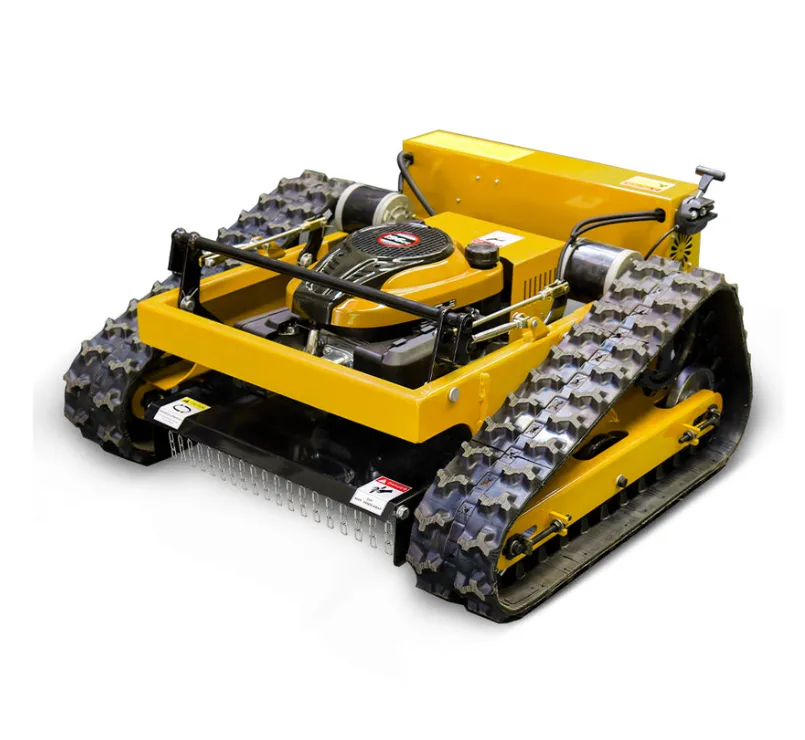
Wheeled mowers rely on friction at four small contact patches, and that friction disappears the moment grass moisture, mud, or gradient changes the equation. Tracks distribute weight across a long, wide footprint that maintains grip when wheels would spin, and the low centre of gravity typical of tracked designs pushes the tipping angle well beyond what any comparable wheeled machine can survive. The result is a platform that mows confidently on slopes reaching forty degrees or more, terrain that previously demanded manual labour or simply went uncut. A well-designed tracked lawn mower converts this physical advantage into predictable, safe productivity across terrain no ride-on can approach.
Ground Pressure and Turf Health
A secondary benefit that owners rarely notice on the sales sheet becomes obvious after a full season: tracked machines leave far less impact on the ground they cover. Ground pressure typically runs a quarter of what a comparable wheeled mower exerts, which means less soil compaction, healthier root systems, and better grass regrowth after each cut. On premium properties where turf quality is part of the value proposition, this alone can justify the machine over a longer horizon than fuel and labour numbers alone suggest. It also matters on sensitive sites like solar farm arrays where soil compaction can affect drainage patterns around foundations.
Remote Control Versus Ride-On Configurations
The tracked slope mower market splits into remote-operated units and ride-on machines. Remote units let the operator stand at the top of a slope and mow the face safely, removing rollover risk entirely because no one is on the machine. Ride-on versions offer higher productivity on flatter portions of a site and let the operator work continuously without repositioning. Solar farm and utility right-of-way work has driven remote-operated designs into serious volume, while estate maintenance and municipal parks work often favours the ride-on configuration. Match the design to the work rather than assuming either is universally better.
Where the Category Genuinely Pays Back
The break-even calculation for a tracked slope mower depends heavily on how much time your current process spends on hand trimming and how much of your bid volume you lose because you cannot service steep terrain. Contractors who trim solar farm arrays with hand-held equipment routinely pay three to four times more in labour than they would with a remote-operated machine, and they still miss deadlines when weather compresses the mowing window. Highway departments discover similar economics when comparing tracked machines against contract labour crews. Once the volume threshold is crossed, the payback often lands inside eighteen months, which is faster than most compact equipment purchases.
Safety Records and Insurance Impact
Slope mowing rollovers are one of the more common serious incidents in landscape and grounds maintenance work, and insurance carriers know it. Fleets that transition to remote-operated tracked mowers on their steepest work often see incident rates drop to zero on the affected job categories, which shifts insurance conversations from year-over-year premium increases to productive discussions about coverage improvements. Even setting aside human cost, the financial value of avoiding a single serious rollover claim can approach the machine’s purchase price on its own.
Fuel Consumption and Cutting Deck Design
Modern tracked mowers use hydraulically driven cutting decks that hold blade speed under load better than belt-driven designs, which translates into cleaner cuts in tall or wet grass without the bogging that plagues cheaper machines. Fuel consumption varies widely by engine size and hydraulic efficiency, but the metric worth measuring is fuel per acre rather than fuel per hour, because a machine that maintains higher ground speed in tough conditions burns less over the course of a season than a slower unit that seems more efficient at idle. Reputable manufacturers such as MMS INDUSTRIAL publish these operational metrics honestly, which lets buyers compare across brands rather than trust marketing photography.
Practical Buying Considerations
Track width, cutting deck size, and engine class dominate the spec comparison, but three less obvious factors often determine which machine still runs well after five seasons. First, ease of blade access affects daily maintenance discipline: if changing blades takes forty minutes, operators will skip inspections and let dull blades tear grass rather than cut it. Second, track tension adjustment mechanisms vary hugely in ease of use, and hard-to-adjust tracks lead to accelerated wear or slippage on the roughest terrain. Third, service and parts availability from your dealer determines how quickly a broken hydraulic line becomes a returned-to-service machine rather than a project delay.
Transport logistics also deserve attention. Tracked slope mowers are heavier than their wheeled equivalents, and moving them between sites requires a trailer and tow vehicle sized appropriately. Some operators use dedicated trailers with ramps optimised for track loading, which cuts loading time significantly and reduces wear on both the trailer surface and the tracks. If your work model involves frequent site changes rather than dedicated large properties, factor these logistics into the total cost picture before purchase.
Operator Training on Remote Systems
Remote-controlled tracked mowers demand a different skill set from traditional ride-ons. Operators must judge distance, angle, and cut pattern from outside the machine, which takes a full week or two of active use before productivity approaches the ride-on baseline. Investing in structured training rather than a hand-off-the-remote approach shortens this ramp significantly, and it prevents the beginner mistakes that lead to expensive damage during the first weeks of ownership.
The Shift Worth Watching
Tracked slope mowers have moved from specialist niche equipment into a category any grounds maintenance operation with challenging terrain should evaluate seriously. The safety improvement alone justifies the shift for many buyers, and the productivity gains on the specific work categories where slopes have historically consumed disproportionate labour hours often push the payback inside a season and a half. Match the configuration to the work, insist on operator training rather than trial-by-fire, and treat the purchase as a strategic move rather than a one-off equipment addition. Grounds crews making this transition today are quietly rewriting what a bid can profitably include, and the market is starting to notice.