Your Office Cleaning Checklist Is Probably Out of Date. Here’s Why.
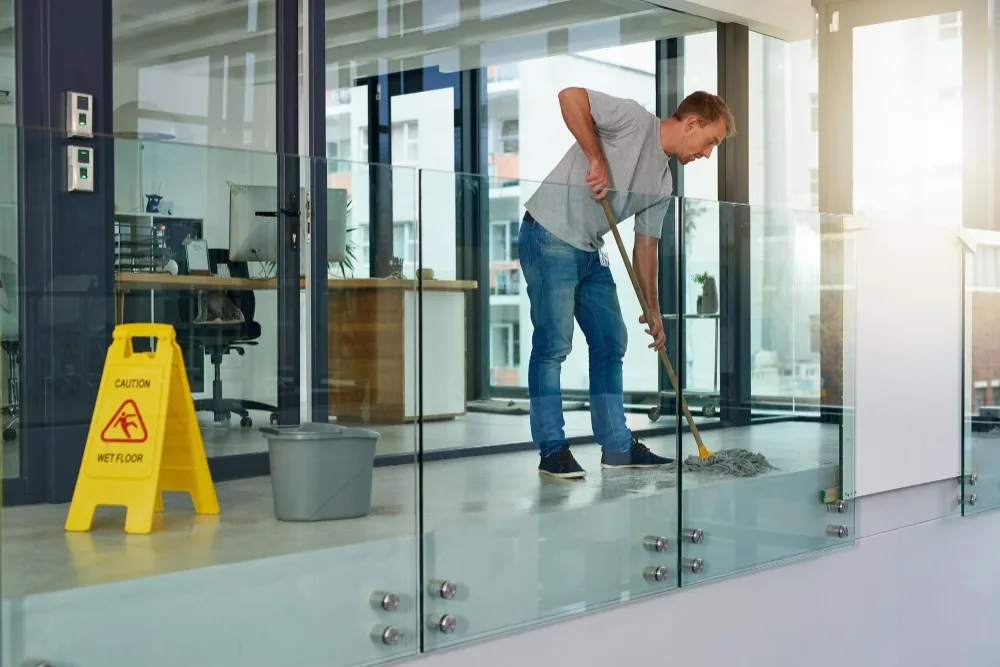
That checklist taped to the janitor’s closet door might be doing more harm than good. If it’s the same one you’ve used for years, it probably focuses on making things look tidy: empty trash cans, vacuumed floors, and wiped-down coffee counters. But today’s offices need more. They need to be healthy, not just look clean. Getting this wrong costs more than just a dusty shelf. It can slow down your whole business.
The focus has shifted from “looking clean” to being truly clean and safe for your health. This means focusing on disinfecting surfaces people touch a lot. It also means knowing how long chemicals need to sit to work and using the right cleaner for each surface. A modern office cleaning checklist is like a detailed game plan. It makes sure all the important health and safety jobs get done every time. Without an up-to-date plan, you’re probably paying for a service that only makes things look clean on the surface.
Quick answer: A good office cleaning checklist is now more than just a list for tidying up. It’s a smart tool to stop germs from spreading, make the air healthier to breathe, and help employees stay well. It focuses on surfaces people touch often, lists the right disinfectants and how long they need to work, and includes rules for cleaning all the different materials in your office.
What’s inside
- Why Old “Tidy-Up” Checklists Fail
- The Critical Difference Between Cleaning, Sanitizing, and Disinfecting
- How to Identify and Prioritize Your Office’s High-Touch Zones
- What to Ask About the Chemicals Used in Your Space
- How a Better Checklist Directly Impacts Productivity
- Frequently Asked Questions About Office Cleaning Protocols
What Is the Real Cost of a Superficially Clean Office?
The real cost isn’t the cleaning bill. It’s lost work time and good employees leaving.
An office that looks clean can still hurt your business. When cleaning plans only focus on dirt you can see, they miss the tiny germs that make people sick. Common colds, flu, and other viruses spread easily on shared surfaces, from the microwave handle to the copier buttons. This leads to more people calling in sick. When that happens, work gets interrupted and projects fall behind. For example, the Centers for Disease Control and Prevention Foundation estimates that influenza alone costs the U.S. economy billions annually in lost productivity and medical visits. But the hidden costs, like delayed projects and extra stress on coworkers, are often much bigger.
Even worse is “presenteeism.” That’s when sick employees come to work anyway but can’t get much done. They are physically there but mentally foggy and less productive, and they risk infecting others. This quiet problem is hard to measure, but it can really hurt a team’s performance. Focusing on a truly deep clean, especially on things people touch a lot, is an investment in keeping your team healthy and working well.
Beyond physical health, the state of your office sends a powerful message to your team. A clean and cared-for office shows your team that you care about their health and pay attention to the details. This can make employees happier, more involved, and more likely to stay with the company. When it’s hard to find good employees, a healthy workplace can make your company stand out and help you hire and keep the best people. Ignoring this can make it seem like the company doesn’t care, which can slowly damage the workplace atmosphere.
❝ Ask a potential cleaning company how they find a building’s “hot spots.” They should not give a generic list of “doorknobs and light switches.” They should explain how they’ll walk through your office with you to find the surfaces that many people touch, like remotes, cabinet handles, or buttons on shared machines. A generic plan gets generic results.
The solution is a cleaning plan based on what we now know about keeping a workplace healthy. This means having a system for disinfecting the surfaces people touch most. It also means using the right chemicals and leaving them on long enough to work. That time is called “dwell time,” the period a disinfectant must stay wet on a surface to be effective. This smart approach turns cleaning from a basic cost into a way to protect your most important asset: your people.
How Can You Tell If a Cleaning Protocol Is Effective?
You can tell if a cleaning plan is good by looking at how it defines cleaning, sanitizing, and disinfecting. You also need to check the products and methods they use for each step.
Many people use the words “cleaning,” “sanitizing,” and “disinfecting” to mean the same thing. But for professional cleaners, they are very different steps with different results. A good cleaning plan will clearly state when and where to use each method. Knowing these differences is the first step to judging the quality of a cleaning service.
- Cleaning is the physical removal of dirt, dust, and debris from a surface. It is a necessary first step, as you cannot effectively disinfect a dirty surface.
- Sanitizing reduces the number of bacteria on a surface to levels considered safe by public health standards. It does not claim to kill viruses.
- Disinfecting uses chemicals to kill germs, including both bacteria and viruses, on surfaces. This is the process that actively helps prevent the spread of illness.
An old checklist often stops at “cleaning.” A modern, health-focused plan points out exactly which surfaces need to be disinfected.
| Action | Primary Goal | What It Does | Typical Application |
| Cleaning | Remove visible soil | Uses soap or detergent and water to lift dirt. | Wiping down a dusty desk or sweeping a floor. |
| Sanitizing | Lower bacteria counts | Reduces germs to a safe level, but doesn’t kill all of them. | Food contact surfaces, breakroom counters. |
| Disinfecting | Kill pathogens | Eliminates or inactivates viruses and bacteria. | Doorknobs, light switches, elevator buttons. |
One big sign of a professional service is their use of EPA-registered disinfectants. These products have been tested to prove they kill the germs they claim to. The product label will have an EPA registration number, which proves it’s the real deal.
❝ The most important question you can ask a cleaning company is, “How long does your disinfectant need to sit on a surface, and how do your workers make sure it stays wet for that long?” Dwell time, or contact time, is the amount of time a disinfectant must stay wet on a surface to kill germs. If a technician sprays and immediately wipes, the product may not have had time to work. An expert will have a clear answer right away and a training plan to back it up.
Finally, ask to see the Safety Data Sheets (SDS) for the main chemicals used in your building. These documents are required by law. They give important information, like what’s in the product, any possible dangers, and how to handle it safely. An honest company will have these ready for you to see. This doesn’t just show you what products they use. It also shows they are serious about safety rules for their employees and yours.
Beyond the Basics: What Does a Truly Professional Cleaning Plan Address?
A professional plan is about more than a list of tasks. It uses systems to stop the spread of germs and protect your property.
The biggest risk with a bad cleaning service isn’t what they miss. It’s what they spread. When a cleaner uses the same cloth to wipe a toilet and then a kitchen counter, they are spreading germs everywhere. This is the most common mistake, and it turns cleaning into a health risk. A good cleaning plan is designed to stop this from happening with strict, organized methods.
The industry standard for this is a color-coded microfiber system. This is a simple but very important habit. Cloths and tools are color-coded for different areas to stop germs from spreading from one place to another. Systems can be a little different, but here is a common one:
- Red: For high-risk areas like toilets and urinals.
- Yellow: For lower-risk restroom surfaces like sinks, mirrors, and dispensers.
- Green: For food preparation areas such as breakroom counters and kitchenettes.
- Blue: For general office cleaning, including desks, windowsills, and conference tables.
This system ensures the cloth used in the restroom never touches a surface where an employee eats their lunch.
❝ Ask a potential cleaning company to explain their color-coding system for cloths and mops. If they don’t have a clear system, or if the workers can’t explain it, that’s a big red flag. It means they probably don’t have good training or safety rules.
Also, a good plan considers all the different materials in your office. You cannot use the same all-purpose cleaner on a granite reception desk, a hardwood conference table, and a stainless steel appliance without risking damage. A professional checklist says exactly which product is safe and works best for each surface. This protects the money you spent on furniture and fixtures. It stops them from being slowly ruined by the wrong chemicals. It also includes rules for vacuuming. For example, it might require vacuums with HEPA filters. These filters trap tiny dust particles to make the air cleaner, instead of just blowing them around.
How Does Indoor Air Quality Fit into a Modern Cleaning Plan?
A modern cleaning checklist addresses more than just surfaces; it actively manages the air your team breathes. Poor indoor air quality (IAQ) can lead to headaches, fatigue, and difficulty concentrating. According to the U.S. Environmental Protection Agency, indoor environments can have levels of pollutants that are two to five times higher than outdoor levels. Cleaning protocols are a primary factor in these numbers.
Two key cleaning activities directly influence IAQ: dusting and vacuuming. Ineffective dusting with a dry feather duster simply moves fine particles from a surface into the air, where they can be inhaled. A professional protocol requires using microfiber cloths that trap dust particles. Similarly, standard vacuums can be a major source of indoor air pollution. Many models lack adequate filtration, so they collect large debris but exhaust microscopic particles like dust mites, pollen, and bacteria back into the air.
A health-focused checklist specifies the equipment needed to prevent this. It will require vacuums equipped with multi-stage HEPA (High-Efficiency Particulate Air) filters. These filters are certified to capture 99.97% of airborne particles down to 0.3 microns in size, effectively removing them from the environment instead of recirculating them. Asking a potential vendor about their vacuum filtration system is a direct way to gauge their commitment to IAQ.
How Do You Measure the Success of a Cleaning Program?
The success of a cleaning program is not measured by a signed checklist but by verifiable outcomes. A truly professional service has systems for quality control that go beyond a supervisor’s visual inspection. These systems provide objective data and ensure consistency, which is crucial in an industry where, according to the Bureau of Labor Statistics, over 2 million people work as janitors and building cleaners in the U.S.
One of the most effective tools for verification is ATP (adenosine triphosphate) testing. ATP is an energy molecule found in all living cells, including bacteria, mold, and other microorganisms. An ATP meter is a handheld device that provides a numerical score of a surface’s cleanliness in seconds. While a surface may look clean, an ATP test can reveal if a microscopic bio-load remains. This isn’t a tool for daily use, but a reputable company will use it for periodic audits, training validation, and troubleshooting problem areas.
To evaluate a cleaning program, you should establish a formal communication and inspection process. This involves more than just calling when you see a problem. Schedule a brief, regular walkthrough with the cleaning provider’s supervisor. This creates a partnership focused on continuous improvement. Ask them about their quality assurance process. Do they have their own inspectors? How do they document and correct deficiencies? A provider who can clearly articulate their quality control system, and perhaps even show you an inspection report, is demonstrating a commitment to results, not just tasks.
Frequently Asked Questions About Office Cleaning Protocols
What key areas are missed on a typical office cleaning checklist? Beyond the obvious floors and desks, most checklists forget about vertical surfaces and fabrics. This includes fabric-covered cubicle walls, office chairs, and window blinds, which all trap dust and allergens. Also frequently overlooked are air vents, which can collect dust and affect air quality if not regularly wiped down.
What are the essential tasks for daily cleaning? Daily tasks should focus on high-traffic zones to keep the office healthy and looking good between deeper cleanings. This always includes disinfecting high-touch surfaces like doorknobs, light switches, and elevator buttons. It also covers emptying all trash and recycling bins, cleaning and restocking restrooms, and tidying the main lobby to maintain a professional first impression.
Is there a standard multi-step process for professional cleaning? Yes, good cleaning follows a set order to avoid spreading dirt. The process generally moves from high to low. Cleaners start by dusting high places like light fixtures so dust falls to the floor before vacuuming. The typical order is: 1. Tidy up and remove trash. 2. Dust high surfaces. 3. Wipe and disinfect surfaces. 4. Clean glass. 5. Clean restrooms. 6. Clean floors (vacuuming and mopping). 7. Final check.
Does “green cleaning” disinfect as well as traditional chemicals? Absolutely, as long as the right products are used. Many modern, eco-friendly disinfectants are registered with the EPA and are proven to kill viruses and bacteria. These products often use ingredients like hydrogen peroxide, citric acid, or thymol to achieve disinfection without the harsh odors or volatile organic compounds associated with older chemicals.
Is Your Checklist Ready for the Modern Office?
An outdated checklist treats cleaning as a simple chore. A modern, effective cleaning plan treats it as a critical component of your company’s health and safety infrastructure. The focus has permanently shifted from how an office looks to how it functions as a safe environment for your employees and visitors. This requires a systematic approach that an old “tidy up” list cannot provide.
Evaluating a cleaning protocol now means looking beyond the surface. It means understanding the difference between cleaning and disinfecting, demanding systems that prevent cross-contamination, and holding providers accountable for protecting indoor air quality. It means asking specific questions about chemical dwell times, vacuum filtration, and quality control measures.
Ultimately, a detailed, health-focused cleaning checklist is not an expense to be minimized. It is a strategic tool that helps protect your most valuable asset, your people. By investing in a cleaning program built on modern principles, you are supporting employee wellbeing, reducing productivity losses from illness, and demonstrating a commitment to operational excellence.
About the author Go Premier Cleaning provides commercial cleaning services for businesses. The company develops health-focused cleaning protocols for offices and other commercial facilities. Learn more at gopremiercleaning.com.