Titanium & High-Temp Alloys: Machining Specs That Matter
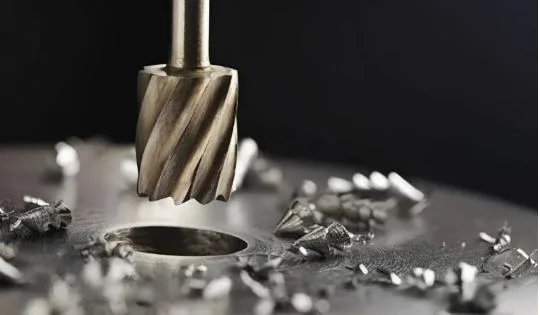
Precision machining of titanium alloys and nickel-based superalloys—the stuff that shows up in jet engines, surgical implants, and downhole drilling tools—is honestly one of the more punishing challenges in the shop. Not impossible. But unforgiving. The core problem isn’t just hardness, it’s a combination of low thermal conductivity, work-hardening behavior, and chemical reactivity with tooling that creates failure modes most general-purpose machining experience doesn’t prepare you for. And the gap between “we can machine this” and “we can machine this repeatably to spec” is wider than most procurement specs acknowledge. This article covers material selection logic, processing constraints, tolerance boundaries, and the economic breakpoints that actually matter when you’re deciding whether titanium or a nickel superalloy is the right call.
How Thermal Behavior Drives Traditional Machining Failure
The Heat Accumulation Challenge
Here’s the thing nobody says clearly enough. These alloys don’t conduct heat well. Titanium—grade 5, Ti-6Al-4V, whatever you want to call it—has thermal conductivity of roughly 6–7 W/m·K. Compare that to aluminum at around 150 W/m·K. So heat generated at the cutting zone stays at the cutting zone, it doesn’t dissipate into the workpiece or the chip. The result? Tool failure. Rapid, expensive tool failure. Speeds that work fine on 316L stainless will destroy carbide inserts on Ti-6Al-4V in minutes, give or take.
Work-Hardening as the Secondary Problem
Nickel superalloys—Inconel 718, Waspaloy, Hastelloy X—work-harden aggressively during cutting. Basically, the material gets harder as you machine it, which means every subsequent pass is hitting a harder surface than the last. And if you dwell—if the tool pauses or rubs rather than cutting clean—the surface hardens locally and the insert is, essentially, done. Not uncommon to see tool life drop by 60–70% on Inconel 718 compared to stainless, just from this effect alone.
Why Legacy Approaches Break Down
Traditional high-speed machining logic—faster speeds, higher feeds—doesn’t transfer. At all. These materials need lower cutting speeds (often 30–80 SFM for nickel alloys, sort of depending on the operation), higher feed rates to keep the chip thick and prevent rubbing, and aggressive coolant. The whole deal is basically inverted from what works on aluminum. Climb milling over conventional. Sharp tools, not worn ones. Frequent insert indexing. Non-negotiable, practically speaking.
Performance Specifications and Material Constraints
Cutting Parameter Ranges
Speeds and feeds aren’t suggestions here, they’re operational boundaries. Get outside them and you’re either work-hardening the surface or generating so much heat the tool welds to the workpiece. That happens. Actually—let me be more specific—titanium has a chemical affinity for carbide binders at high temperatures, so diffusion wear becomes the primary tool failure mode above roughly 900°F at the cutting zone.
For Ti-6Al-4V: cutting speeds typically 100–200 SFM with coated carbide, feeds around 0.003–0.006 inches per tooth in milling. For Inconel 718: 25–80 SFM depending on the operation, feeds 0.002–0.004 IPT. [Check this—these ranges shift significantly with insert geometry and coating type.] Ceramic inserts push Inconel speeds to 600–1,000 SFM but only in interrupted-cut-free roughing. Use them wrong and they shatter. Simple as that.
Material Suitability Matrix
Different alloys in this family present genuinely different problems. Here’s basically what you’re dealing with:
- Ti-6Al-4V (Grade 5, AMS 4928): The workhorse. Good strength-to-weight, decent corrosion resistance, machinable if you’re disciplined about it. Work-hardening moderate. Thermal conductivity roughly 6.7 W/m·K. The medical implant stuff.
- Ti-3Al-2.5V (Grade 9): Softer, more formable, better for tubing applications. Machines somewhat easier than Grade 5 but still not what you’d call forgiving.
- Inconel 718 (AMS 5662): Nickel-chromium superalloy, precipitation-hardened. The one everyone complains about. Hardness up to 44 HRC in aged condition. Extremely high work-hardening rate. Creep resistance to about 1,300°F.
- Waspaloy (AMS 5704): Higher service temps than 718, roughly up to 1,800°F. Even harder to machine. Requires solution-annealed condition for best machinability—don’t try aged stock if you don’t have to.
- Hastelloy X (AMS 5754): Better oxidation resistance than 718, used in combustion applications. Machines somewhat better than Waspaloy, honestly, but still punishing on tooling.
| Material | Cutting Speed Range | Hardness (Typical) | Thermal Conductivity | Primary Challenge |
| Ti-6Al-4V | 100–200 SFM | 30–36 HRC | ~6.7 W/m·K | Tool affinity, heat |
| Ti-3Al-2.5V | 150–250 SFM | 22–28 HRC | ~7.5 W/m·K | Work-hardening |
| Inconel 718 | 25–80 SFM | 36–44 HRC | ~11.4 W/m·K | Severe work-hardening |
| Waspaloy | 20–60 SFM | 38–46 HRC | ~10.8 W/m·K | High hot hardness |
| Hastelloy X | 30–70 SFM | 28–35 HRC | ~9.1 W/m·K | Oxidation, built-up edge |
Coolant and Environment Influences
Coolant isn’t optional here—it’s structural to the process. High-pressure coolant (roughly 500–1,500 PSI, give or take) directed precisely at the cutting zone is standard for both titanium and nickel alloys. Why? Chip evacuation. The chips from these materials are stringy, tough, and they love to re-cut. Chip re-cutting is basically catastrophic in nickel alloys because every recirculated chip is now a harder particle grinding against your freshly machined surface… you can see where that goes.
MQL (minimum quantity lubrication) has limited effectiveness on these materials. Flood coolant works. Cryogenic machining—liquid nitrogen or CO₂—is increasingly used on titanium for aerospace applications and can improve tool life 2–4x. Expensive setup, though.
Geometric Constraints
Wall thickness below roughly 0.060 inches on titanium becomes problematic. The material deflects, and deflection on a low-conductivity alloy under sustained cutting loads creates chatter marks that are basically impossible to remove without additional operations. Thin-walled titanium parts—the kind you see in structural aerospace brackets—need careful fixturing, often soft jaws and multiple setups. Aspect ratios above 6:1 on features machined into nickel superalloys require very careful process planning. Not impossible. Just requires planning.
Design Parameters for Production Viability
DFM Guidelines for These Alloys
Design for manufacturability on titanium and nickel superalloys means thinking about heat as a design constraint, not just a machining variable. Internal radii should be generous—minimum 0.030 inches, preferably larger. Abrupt changes in section create stress concentrations and also create places where cutting tools dwell. Dwell, as mentioned, is the enemy on work-hardening materials.
Thread forms in Inconel 718 are a special problem. Standard thread milling works but tool life is short. Thread grinding is often better for precision threads in hardened nickel alloys. And electrochemical machining (ECM) is worth considering for complex internal forms where conventional tooling struggles.
Tolerance Management
Holding ±0.001 inches on titanium is achievable. Holding ±0.0005 inches—five tenths, five microns, 0.0005, whatever notation you prefer—requires temperature-controlled environments, thermal stabilization of the part before final passes, and inspection that accounts for the material’s spring-back behavior. Titanium has a modulus of elasticity of roughly 16 million PSI (versus 30 million for steel), so elastic deflection under cutting forces is higher for a given cross-section. Parts spring back more. You need to account for that in your final passes.
Nickel alloy parts that’ve been aged to peak hardness are somewhat more dimensionally stable during machining but much harder to cut. Solution-annealed stock machines easier, then gets aged after machining—but then you have distortion from the aging cycle to deal with. Choose your poison.
Economic Thresholds
Material cost alone for aerospace-grade Ti-6Al-4V runs $15–$35 per pound. Inconel 718 bar stock, $25–$60 per pound depending on certification requirements and quantity. These aren’t numbers to hide from. Scrap is catastrophically expensive. A single failed part on a complex turbine component in Waspaloy can represent $500–$2,000 in material alone, before machining hours. This is why process validation—first-article inspection to AS9102, basically—isn’t optional in aerospace supply chains. It’s the economic hedge against running scrap.
Applications Across Aerospace, Medical, and Oil & Gas
Aerospace Structures and Rotating Components
Titanium dominates structural airframe components—bulkheads, wing spars, fastener systems—where strength-to-weight is the primary driver. Nickel superalloys handle the hot section: turbine discs, blades, combustion liners, anything operating above roughly 1,000°F. Compliance here is typically AMS specifications for material, AS9100 for quality systems, and NADCAP for special process approvals. The machining shops supplying Tier 1 aerospace need all three, essentially. Non-negotiable.
Medical Implants and Instruments
Ti-6Al-4V ELI (Extra Low Interstitial, ASTM F136) is the implant-grade material. Lower oxygen and iron content than standard Grade 5. Better ductility, better fatigue performance in cyclic loading. Machining requirements are similar to standard Grade 5 but surface finish specifications are much tighter—Ra 16 µin or better on articulating surfaces, sometimes Ra 8 µin for spinal implants. ISO 13485 quality management applies throughout. Surface contamination from tooling is a genuine concern; iron contamination from steel tooling can compromise biocompatibility.
Downhole and Energy Applications
High-temperature alloys like Inconel 625 and Hastelloy C-276 appear in sour gas environments (hydrogen sulfide, CO₂, chloride-bearing fluids) where conventional steels corrode too quickly. NACE MR0175/ISO 15156 governs material selection in these environments. Hardness limits matter—above roughly 22 HRC in certain sour environments, stress corrosion cracking risk increases substantially, so heat treatment control directly impacts corrosion performance. Worth remembering.
| Industry | Critical Parameter | Typical Material | Compliance Standard |
| Aerospace structures | Strength-to-weight, fatigue | Ti-6Al-4V (AMS 4928) | AS9100, AMS specs |
| Turbine hot section | High-temp strength (>1,000°F) | Inconel 718, Waspaloy | AMS 5662, NADCAP |
| Medical implants | Biocompatibility, surface finish | Ti-6Al-4V ELI (ASTM F136) | ISO 13485 |
| Oil & gas downhole | Corrosion in H₂S/CO₂ | Inconel 625, Hastelloy C-276 | NACE MR0175 |
| Nuclear/power generation | Creep resistance, oxidation | Hastelloy X, Nimonic alloys | ASME codes |
Process Limitations and Alternative Methods
Hard Geometric Limits
Deep holes—L/D ratios above 10:1—in nickel superalloys are essentially beyond conventional drilling economics. Tool life collapses. EDM (electrical discharge machining) or ECM become the practical alternatives. Small features below 0.020 inches in titanium require micro-machining with very high spindle speeds and tiny, fragile tools. Burr formation is severe and burr removal on complex titanium parts is its own process step, not a quick deburr pass.
Where This Process Doesn’t Work
If you’re running high volumes—thousands of identical parts—the tooling cost on nickel superalloys may make near-net-shape processes (investment casting, metal injection molding, additive manufacturing for preforms) more economical than machining from billet. Machining from billet is essentially a high-mix, lower-volume proposition for these materials. The scrap rate on production runs with inexperienced setups is also genuinely painful.
Alternative Approaches
Electrochemical machining handles complex internal geometries in nickel alloys with zero work-hardening effect—the material removal is electrochemical, not mechanical. Abrasive waterjet cuts titanium without heat but leaves a rough surface requiring secondary finishing. Additive manufacturing of titanium (EBM, SLM) is increasingly viable for complex geometries, with post-print machining on critical surfaces only, reducing overall material removal.
Conclusion
Machining titanium and high-temperature nickel alloys successfully is, fundamentally, about managing heat and surface integrity simultaneously—and accepting that standard machining intuition doesn’t transfer directly. Cutting parameters, coolant delivery, tool selection, and fixturing all interact differently here than on conventional materials. The economic stakes—expensive raw materials, demanding certification requirements, thin scrap tolerance—mean process planning errors are costly in a way that aluminum parts just aren’t. Start with the material in the correct metallurgical condition. Get the cutting parameters right before running production. And validate surface integrity, not just dimensional conformance, before first article sign-off.