The Evolution of Modern Climate Control: How Precision HVAC Services are Redefining Home Performance
The infrastructure of a modern home relies on several invisible systems, but none impact daily quality of life as significantly as the HVAC network. As residential architecture evolves to become more airtight and energy-efficient, the role of heating, ventilation, and air conditioning has shifted from simple temperature regulation to a complex science of indoor environmental management. Maintaining a consistent thermal envelope requires a sophisticated understanding of thermodynamics, airflow dynamics, and mechanical longevity. For homeowners, the “service” of HVAC is no longer just a luxury of comfort; it is a critical investment in the building’s structural health and the inhabitants’ respiratory well-being. This shift necessitates a professional approach that treats every installation as a custom engineering project.
The Intersection of Thermodynamics and Residential Longevity
A common misconception in residential climate control is that “bigger is better.” When an HVAC system is oversized for a property, it suffers from short-cycling—turning on and off rapidly without ever completing a full dehumidification cycle. This creates a host of secondary issues, including localized humidity spikes that can lead to structural mold growth or warped millwork. Conversely, an undersized system runs continuously, accelerating mechanical wear and driving utility costs to unsustainable levels.
Modern precision services focus on the Manual J load calculation, a scientific method of determining the exact BTU requirements of a space based on square footage, insulation values, window orientation, and local climate data. By prioritizing these metrics, a professional hvac Company in Dayton ensures that the mechanical load is perfectly balanced with the building’s needs. This technical diligence prevents the premature failure of compressors and heat exchangers, extending the lifespan of the unit by years. Furthermore, a balanced system maintains a more stable internal pressure, reducing the amount of unconditioned, unfiltered air that leaks in from crawlspaces or attics.
Beyond Temperature: The Critical Role of Indoor Air Quality
While most homeowners interact with their thermostat primarily to adjust degrees, the ventilation aspect of HVAC is becoming the primary focus for health-conscious individuals. The modern home is essentially a sealed box. While this is excellent for energy conservation, it traps volatile organic compounds (VOCs), pet dander, and carbon dioxide within the living space. High-performance HVAC systems now integrate sophisticated filtration and purification technologies that go far beyond the standard fiberglass filter.
HEPA filtration, UV-C light sterilization, and energy recovery ventilators (ERVs) are becoming standard components of a comprehensive climate service. ERVs are particularly vital because they allow for the exchange of stale indoor air with fresh outdoor air while pre-conditioning the incoming stream using the thermal energy of the outgoing air. This process maintains high indoor air quality without forcing the furnace or air conditioner to work overtime to compensate for the temperature of the fresh air. When implemented by Paradise Heating and Cooling, these systems transform a home into a controlled environment where the air is actively scrubbed of allergens and pathogens, providing a tangible benefit to those with chronic respiratory conditions.
The Digital Shift in Mechanical Maintenance and Diagnostics
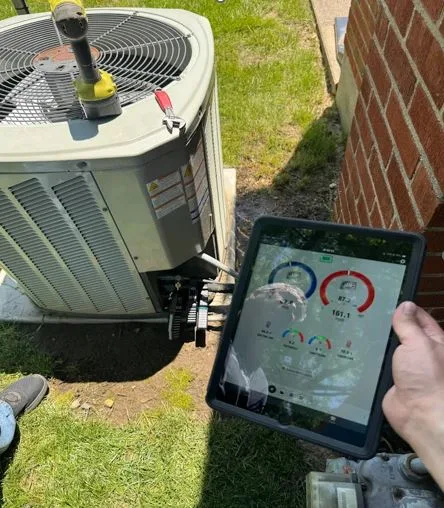
The days of purely mechanical troubleshooting are fading. We have entered the era of the “connected” HVAC system. Modern units are equipped with a suite of sensors that monitor refrigerant pressure, airflow velocity, and electrical draw in real-time. This data-driven approach allows for predictive maintenance rather than reactive repairs. Instead of waiting for a total system failure during a record-breaking heatwave, smart diagnostic tools can alert a technician to a slight deviation in motor performance or a minor refrigerant leak weeks before it becomes a critical issue.
Inverter-driven technology is another significant leap forward. Traditional compressors are either 100% on or 100% off. Inverter technology allows the system to modulate its output, running at 30%, 50%, or 80% capacity depending on the immediate demand. This mimics the cruise control on a vehicle, maintaining a steady “speed” rather than constantly accelerating and braking. The result is a nearly silent operation and a significant reduction in energy consumption. Understanding the nuances of these digital components requires technicians who are as comfortable with a tablet and diagnostic software as they are with a manifold gauge set.
Optimizing Efficiency Through Zoning and Smart Distribution
One of the most frequent complaints in multi-story homes is the temperature variance between floors. Heat naturally rises, often leaving second-floor bedrooms uncomfortably warm while the basement remains refrigerated. Traditional single-zone systems struggle to address this without over-conditioning certain areas. Zoning systems solve this by using a series of motorized dampers within the ductwork, controlled by independent thermostats in different areas of the home.
Zoning allows for surgical precision in climate control. If the home office is in use during the day but the guest bedrooms are empty, the system can redirect airflow to the active space, reducing energy waste. This level of control requires a deep understanding of static pressure. If too many dampers close at once, the pressure inside the ducts can rise to levels that damage the blower motor. Professional installers use bypass dampers or variable-speed motors to mitigate this risk, ensuring that the system remains within safe operating parameters regardless of how many zones are active. This is not just a feature; it is a sophisticated mechanical choreography that balances comfort with equipment safety.
Strategic Planning for Seasonal Transitions
The transition between heating and cooling seasons is the most vulnerable time for mechanical equipment. A furnace that has sat dormant for six months may have accumulated dust on the burners or developed a crack in the heat exchanger that went unnoticed in the spring. Likewise, an air conditioner that has been idle all winter might have a capacitor that failed during a freeze or a condensate line blocked by debris.
A professional maintenance protocol is not a “check-up” in the casual sense; it is a comprehensive recalibration of the system. This includes cleaning the evaporator and condenser coils to ensure optimal heat transfer, checking the integrity of electrical connections to prevent fire hazards, and verifying that the refrigerant charge is exact. A deviation of even a few ounces of refrigerant can drop a system’s efficiency by 10% or more. By treating these seasonal transitions as critical maintenance windows, homeowners can avoid the “emergency” service calls that inevitably occur during the first true cold snap or heat spike of the year.
The Future of Residential Energy Independence
As the push for electrification grows, the heat pump is taking center stage in the climate control conversation. Modern cold-climate heat pumps are capable of extracting heat from outdoor air even when temperatures drop well below freezing. This eliminates the need for fossil fuel combustion in the home, reducing the carbon footprint and eliminating the risk of carbon monoxide leaks. When paired with solar arrays or battery storage, these systems move homeowners closer to true energy independence.
The complexity of these systems means that the “service” of HVAC has evolved into a consultative role. Professionals must now help homeowners navigate the various tax credits, rebates, and long-term ROI calculations associated with high-efficiency upgrades. It is a holistic approach that looks at the home as a single, integrated machine where the windows, insulation, and HVAC system all work in concert. Investing in this level of expertise ensures that the home remains a sanctuary of health and comfort, regardless of the volatility of the weather outside. Focusing on these high-level mechanical standards is the only way to guarantee that a home’s most expensive appliance delivers the performance and longevity expected in the modern age.