How Algaecide Helps Control Pool Algae and Keep Water Clear
Pool algae can show up faster than many homeowners expect. Warm weather, sunlight, low chlorine, poor circulation, heavy rain, and organic debris can all turn clear water cloudy or green. Sometimes algae starts as a light film on steps or corners. Other times it spreads across walls, the waterline, or the whole pool.
Algaecide can help control algae, but it should not be treated as a shortcut that replaces cleaning, chlorine, or filtration. Clear pool water depends on several habits working together: balanced chemistry, brushing, debris removal, strong circulation, and regular testing.
The goal is not just to kill algae once. The better goal is to make the pool harder for algae to return to, especially during hot weather and heavy swim days.
What Algaecide Does in Pool Water
How Algaecide Targets Algae Growth
Pool algaecide is designed to disrupt algae growth and make it harder for algae to spread. Different formulas work in different ways. Some target algae cells directly, while others support the larger treatment routine so chlorine and filtration can do their jobs more effectively.
Algaecide is not the same as chlorine. Chlorine sanitizes and oxidizes contaminants, while algaecide is usually used to help prevent or control algae. It also does not remove dead algae, leaves, pollen, or dirt by itself. That material still needs to be brushed, filtered, vacuumed, or cleaned out.
This is why homeowners should think of algaecide as a support product, not the whole solution.
Prevention Usually Works Better Than Rescue Treatment
Algaecide is often most useful before algae becomes a major bloom. During warm, sunny, or high-use periods, routine use according to the label may help reduce surprise algae problems.
Once algae has taken over, the cleanup usually needs more than one step. The pool may need brushing, chlorine treatment, long filtration, filter cleaning, and retesting. Algaecide can still help, but it works best when the pool owner also corrects the conditions that allowed algae to grow.
Algaecide Works Best With Chlorine, Brushing, and Filtration
Algaecide should be part of a full pool care routine. Chlorine helps sanitize and oxidize contaminants. Algaecide helps control algae. Brushing loosens algae from surfaces. Filtration removes particles, dead algae, and cloudy residue from the water.
If algae is stuck to walls, steps, corners, or the waterline, chemicals may not reach it as well. Brushing exposes more of the algae to treatment. After that, the filter needs time to remove what has been loosened.
Before using algaecide, check pH and chlorine. If pH is high or sanitizer is low, algae can be harder to control. Testing first prevents random chemical use and helps the treatment work more predictably.
Choosing the Right Type of Algaecide
Match the Formula to the Algae Problem
Not all algae problems are the same. Green algae is common and is often easier to treat when caught early. Mustard or yellow algae can be more stubborn and may return if the pool is not brushed and treated carefully. Black algae can cling tightly to rough surfaces and may need stronger brushing and more targeted treatment.
The product label matters. Some algaecides are designed for prevention, while others are meant for more active algae control. Treating every algae problem with the same product can waste time and may not solve the issue.
Check for Foaming, Metals, and Surface Compatibility
Before buying algaecide, check whether the formula is non-foaming, copper-based or non-copper, and compatible with the pool surface. Vinyl, fiberglass, plaster, tile, and saltwater pools may have different product considerations.
Some algaecides can cause foaming, staining, or water clarity problems if used incorrectly. If the algae type is unclear or the pool surface is sensitive, it is safer to ask a pool professional than to keep adding products.
When and How to Use Algaecide Safely
Test pool water before treatment, especially pH and chlorine. Remove visible debris, brush algae-prone areas, and make sure the pump is running. Add algaecide only according to the product label. Do not guess, and do not mix chemicals.
Homeowners often search for pool algaecide dosage because they want a simple answer, but the correct amount depends on pool size, algae condition, product strength, and whether the use is preventive or corrective. A small maintenance dose and a treatment dose are not the same thing.
Keep swimmers out until the product has circulated and the label says the pool is safe to use again. Warm weather, heavy rain, low chlorine, and pool parties are good times to pay closer attention to algae prevention.
Let Cleaning and Circulation Support the Treatment
After adding algaecide, give the pool time to circulate. Moving water helps distribute the product and carry loosened particles toward the filter. If the filter is dirty or the pump is weak, the water may stay cloudy even after treatment.
This is also the time to keep brushing and checking trouble spots. Steps, ladders, shaded corners, and the waterline often collect buildup first. If dead algae or fine debris settles on the floor, remove it instead of letting it sit.
Physical cleanup should continue after treatment because dead algae and loosened residue still need to leave the pool. Skimming, brushing, vacuuming, and filter care all make the treatment more effective. A clear pool usually comes from several small steps working together, not one chemical added once.
Using a Beatbot Robotic Pool Cleaner Cleaner to Support Algae Control
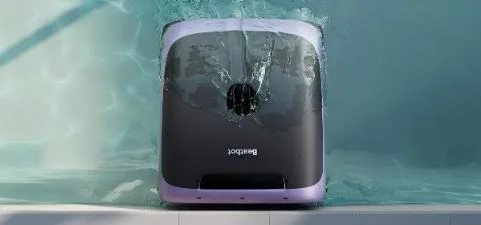
A pool cleaning robot can support algae control by removing debris and helping clean areas where buildup often begins. A robotic cleaner can help with physical cleanup after brushing and treatment by collecting loosened debris, fine dirt, leaves, and visible buildup from the floor, walls, waterline, and, depending on the model, surface areas. For larger or busy pools, higher-coverage models may help maintain a more consistent cleaning routine, while simpler pools can use a cleaner matched to pool size and debris level. A realistic example is simple: after brushing algae-prone areas and applying the right treatment, the cleaner helps collect loosened debris while the owner keeps filtration running and retests the water. The cleaner supports physical cleaning, but it does not replace chlorine, algaecide, filtration, water testing, or safe chemical handling.
| Pool Care Step | What It Does | Why It Helps Control Algae |
| Test pH and chlorine | Shows current water balance | Helps avoid guessing before treatment |
| Brush walls and steps | Loosens algae from surfaces | Makes treatment more effective |
| Skim leaves and debris | Removes organic material | Reduces what chlorine must fight |
| Add algaecide by label | Supports algae control | Helps prevent or slow regrowth |
| Run filtration | Removes particles and dead algae | Helps clear cloudy water |
| Clean the filter | Restores proper flow | Improves circulation and recovery |
Common Algaecide Mistakes to Avoid
One common mistake is using algaecide instead of fixing low chlorine, poor circulation, or high pH. If the basic water balance is off, algae may return even after treatment.
Another mistake is adding algaecide without brushing visible algae first. Algae attached to surfaces can be harder to control, especially in corners, ladders, steps, and textured areas.
Homeowners should also avoid treating every algae problem with the same formula, overdosing, turning off the pump too soon, or swimming before the product has circulated and the label allows re-entry. The filter also matters. Dead algae and fine particles still need to be removed after treatment.
Keeping Pool Water Clear After Algae Treatment
Algaecide can help control pool algae, but clear water depends on consistent care. Test pH and chlorine, skim debris, brush the waterline and corners, run filtration long enough, and clean or backwash the filter when needed.
Algae is easier to prevent than to remove. During warm weather, after storms, or after heavy swim days, small maintenance steps make a big difference.
A steady routine keeps pool water clearer and makes algae less likely to take over. When cleaning, chemistry, filtration, and prevention work together, the pool is easier to manage and more enjoyable through the swimming season.