Flow Wrapping Machines:Fast,Flexible Product Wrapping
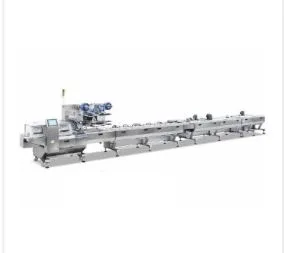
Walk down any snack aisle and most of what you see — candy bars, cookies, baked goods, even hardware items — is likely wrapped using a flow wrapping machine. Also known as horizontal form-fill-seal (HFFS) machines, flow wrappers are among the most widely used packaging equipment across food, industrial, and consumer goods manufacturing because of how quickly and flexibly they handle a wide range of product shapes.
What a Flow Wrapping Machine Does
A flow wrapper takes a roll of flexible film and wraps it tightly around a product as it moves continuously along the machine. The general process includes:
- Film feeding – A roll of film is unwound and fed over the product
- Forming – The film is shaped around the product using a forming plate or collar
- Longitudinal sealing – The film is sealed along the length of the package, typically underneath the product
- Cross-sealing and cutting – The film is sealed at both ends of the product and cut to separate individual packages
The result is a tightly wrapped, pillow-shaped package — often referred to as a “flow pack” — that moves off the machine ready for cartoning or case packing.
Types of Flow Wrapping Machines
Horizontal Flow Wrappers The most common type, where products are fed into the machine horizontally on a conveyor and wrapped as they pass through. Suited to items like bars, baked goods, and soap.
Vertical Flow Wrappers Less common than horizontal models, these wrap product as it drops vertically through the machine, often used for loose or bulk items like produce or bagged snacks.
Servo-Driven Flow Wrappers Modern flow wrappers increasingly use servo motors instead of mechanical cams to control film movement and sealing. This allows faster changeovers, more precise sealing, and easier adjustment for different product sizes without extensive mechanical retooling.
What Makes Flow Wrapping Different From Other Packaging Methods
Unlike cartoning or case packing, flow wrapping typically serves as the primary package for a product — not an outer container. It’s a common choice when:
- The product needs a lightweight, low-material package
- Visual appeal matters, since clear or printed film shows the product directly
- Products come in varied or irregular shapes that don’t easily fit rigid boxes
- High-speed wrapping is needed for individually wrapped items, such as candy or snack bars
Key Factors That Affect Performance
Film Type Flow wrappers can run a range of films — polypropylene, polyethylene, laminates, or biodegradable materials — each with different sealing temperatures and stretch characteristics. Choosing a film compatible with both the product and the sealing system avoids leaks or inconsistent seals.
Product Shape and Size Range Some flow wrappers are built for a narrow size range, while others accommodate a wider variety of product dimensions with adjustable forming plates. Businesses running multiple product sizes benefit from machines designed for quick mechanical or servo-driven adjustments.
Sealing Method Most flow wrappers use heat sealing, though some products — particularly those sensitive to heat — may require alternative sealing methods. Confirming compatibility between the sealing method and both the film and product is essential to avoid damage or weak seals.
Speed Requirements Flow wrappers are rated in packages per minute, with high-speed models handling several hundred packages per minute for small, uniform products. Matching machine speed to actual production needs — rather than buying based on maximum available speed — helps control costs.
Common Applications
- Food – Candy bars, cookies, baked goods, fresh produce, frozen items
- Personal care – Soap bars, wet wipes packets, individual cosmetic samples
- Industrial and hardware – Small parts, tools, or components requiring lightweight protective wrapping
- Pharmaceuticals – Wrapping outer cartons or bundles for tamper evidence
What to Consider Before Buying
Changeover Time Product lines that run multiple SKUs benefit significantly from flow wrappers designed for fast changeovers, since manual adjustment of forming plates and sealing settings can otherwise consume significant production time.
Integration With Upstream Feeding Flow wrappers depend on a steady, well-timed supply of product entering the machine. Confirming compatibility with existing infeed systems — or budgeting for one — prevents bottlenecks once the wrapper is installed.
Packaging Aesthetics Since flow-wrapped packages are often the primary consumer-facing package, print registration, seal appearance, and film clarity all affect the final look on shelf. It’s worth reviewing sample output before committing to a machine and film combination.
Maintenance Access Sealing jaws, forming plates, and film tensioning systems require periodic cleaning and adjustment. Machines with accessible service points reduce downtime, particularly important for high-speed lines running continuously.
Final Thoughts
Flow wrapping machine offer a fast, flexible way to package a wide variety of products with minimal material use, but getting the right fit depends on matching film type, sealing method, and speed to the actual product being wrapped. Requesting a trial run with the real product and film, confirming changeover procedures, and checking integration with existing infeed equipment are practical steps before finalizing a purchase.