Fiber FTTH Optical Drop Cable: Complete Buyer’s Guide
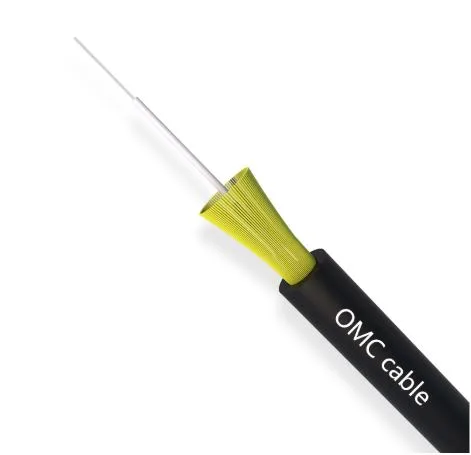
Every fiber internet connection depends on one final, often overlooked component to actually reach a home or business: the Fiber FTTH Optical Drop Cable. While most attention goes to the backbone and distribution networks, this last-mile cable is what physically connects the broader fiber network to an individual customer, and its performance directly affects the quality and reliability of the final connection.
What a Fiber FTTH Optical Drop Cable Is
A Fiber FTTH Optical Drop Cable connects a fiber distribution point — typically a pole, pedestal, or building entry terminal — to the customer’s premises, usually ending at an optical network terminal (ONT) inside the home. Unlike trunk or distribution cables carrying dozens or hundreds of fibers over long distances, a Fiber FTTH Optical Drop Cable typically carries just one or two fibers over a much shorter span, built specifically for ease of handling during last-mile installation.
Key Characteristics of Fiber FTTH Optical Drop Cable
Bend-Insensitive Fiber A Fiber FTTH Optical Drop Cable commonly uses bend-insensitive single-mode fiber, allowing it to maintain signal quality even when routed around tight corners, through walls, or along building exteriors — conditions common during residential and commercial last-mile installation.
Compact, Lightweight Build Because installation often involves routing along exterior walls, through conduits, or directly into a building, a Fiber FTTH Optical Drop Cable is designed to be thinner and more flexible than distribution-level cable, simplifying handling in tight spaces.
Figure-8 or Round Construction Many versions of Fiber FTTH Optical Drop Cable use a figure-8 design, integrating a steel or fiberglass strength member alongside the fiber-carrying section, allowing the cable to be self-supporting for aerial installation between a pole and a building. Round designs without this integrated support are more common for underground or duct-based installations.
Weatherproof Jacketing Outdoor-rated Fiber FTTH Optical Drop Cable typically uses UV-resistant, weatherproof jacket material to withstand years of sun exposure, temperature swings, and moisture in outdoor environments.
Common Types of Fiber FTTH Optical Drop Cable
Aerial Drop Cable Built for overhead installation between a utility pole and a building, typically using the self-supporting figure-8 design to handle wind load and installation tension.
Duct or Underground Drop Cable Designed for underground conduit installation, often featuring rodent-resistant jacketing and moisture protection suited to direct-bury or duct environments.
Indoor/Outdoor Drop Cable Built to transition from outdoor conditions directly into an indoor environment without requiring a splice at the building entry point, simplifying residential installations.
Flat Drop Cable A flatter profile version of Fiber FTTH Optical Drop Cable, designed for easier routing along walls, window frames, or door edges during the final stretch to an indoor ONT.
Why Fiber FTTH Optical Drop Cable Matters in Network Performance
Even a well-designed fiber network can suffer noticeable performance issues if the final drop cable segment is poorly matched to installation conditions. Excessive bending, inadequate weatherproofing, or insufficient tensile strength on aerial runs can all introduce signal loss or premature cable failure — problems that are especially costly to diagnose and fix once buried or mounted in place.
Key Factors to Consider When Choosing Fiber FTTH Optical Drop Cable
Fiber Count Most residential Fiber FTTH Optical Drop Cable carries a single fiber, though duplex options exist for specific network designs requiring redundancy. Matching fiber count to actual network architecture avoids unnecessary cost or future capacity shortfalls.
Installation Environment Aerial, underground, and building-entry installations each call for different cable construction, so confirming the specific Fiber FTTH Optical Drop Cable type matches deployment conditions is essential before large-scale rollout.
Bend Radius Performance Given the frequent handling and tight routing involved in last-mile installation, checking minimum bend radius and insertion loss performance under bending stress helps avoid signal degradation after installation.
Tensile Strength Rating Aerial installations must withstand wind load, ice accumulation, and installation tension, making tensile strength rating relative to span length a critical spec to review before large deployments.
Compliance and Testing Standards Reliable suppliers provide documentation confirming compliance with recognized standards, such as Telcordia GR-20 for outdoor fiber cable performance, along with attenuation and insertion loss test data specific to the product.
Questions Worth Asking a Supplier
- What is the minimum bend radius and insertion loss performance under bending for this Fiber FTTH Optical Drop Cable?
- What tensile strength rating does the cable carry, and what span length is it rated for?
- Is this specific cable rated for my installation environment — aerial, duct, or direct bury?
- What industry standards and certifications does this product meet?
- What warranty coverage applies to outdoor installations?
Final Thoughts
A Fiber FTTH Optical Drop Cable might represent the shortest segment of an entire fiber network, but it operates under some of the toughest installation and environmental conditions in the system. Choosing the right construction type, confirming bend and tensile performance, and reviewing compliance documentation all help ensure long-term reliability at the exact point where the network reaches the customer.