How CNC Machining Turns Aluminum Extrusions Into Ready-to-Install Parts
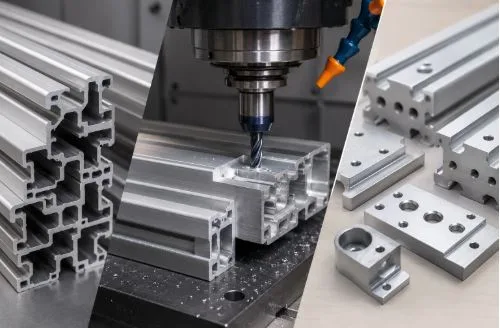
Extrusion gives a manufacturer an efficient starting shape. CNC machining turns that shape into a component that can be bolted, aligned, sealed, inspected, and installed.
For teams comparing suppliers, machined aluminum extrusion should be reviewed as a complete process: fixture planning, feature machining, deburring, finishing, inspection, and packaging all influence the result.
The difference matters because a raw profile may look close to finished while still missing the features that decide assembly time. End cuts, tapped holes, counterbores, machined openings, mating surfaces, and burr control are often what make the part usable.
A buyer preparing this job should list the finished use case first, then add alloy, finish, volume, visible faces, and inspection expectations. That sequence keeps the discussion centered on the finished part.
The cutting team should know which changes require buyer approval. Material substitution, fixture change, finish route change, and packaging change can all alter the result.
Each article in the batch should carry a different manufacturing angle. Changing only the publisher domain or the anchor text is not enough for a clean guest post campaign.
The final copy has to support a clean editorial placement by offering manufacturing guidance before introducing the fabrication partner.
Near-Net Shape Is Only the First Step
A profile can leave the extrusion press with channels, ribs, fins, rails, and hollow spaces already formed. That saves material and machining time, but it does not remove the need for precision work.
Machining creates the features that connect the profile to the rest of the product. If those features are off, the extrusion advantage disappears during assembly.
In the near-net shape is only the first step section, the turning extrusions into assembly-ready parts discussion is tied to a sliding guide rather than a generic profile. The order note can name a operator setup note as proof, so the fabrication partner and buyer both know what confirms the finished extrusion is acceptable.
For the bignewsnetwork com draft, the main avoidable risk around near-net shape is only the first step is loose packaging. That risk is practical when handled before price approval because it can affect samples, finishing, inspection, or final assembly even when the raw extrusion shape looks correct.
The cutting team conversation for near-net shape is only the first step can stay short: confirm the use of air-blast cleaning, state what feature is checked, and record who approves the first lot. This keeps the article practical and keeps the sourcing instruction easy to follow.
End Faces Decide Fit
Saw-cut ends are acceptable for many rough applications. Milled ends are stronger when the face controls length, squareness, parallelism, or how another part seats against the extrusion.
Buyers should define whether length is cosmetic, structural, or locating. That single decision changes the manufacturing method and the inspection plan.
In the end faces decide fit section, the turning extrusions into assembly-ready parts discussion is tied to a heat-sink body rather than a generic profile. The order note can name a material certificate as proof, so the profile supplier and buyer both know what confirms the finished extrusion is acceptable.
For the bignewsnetwork com draft, the main avoidable risk around end faces decide fit is end-face mismatch. That risk is best kept handled before price approval because it can affect samples, finishing, inspection, or final assembly even when the raw extrusion shape looks correct.
The delivery partner conversation for end faces decide fit can stay short: confirm the use of thread-gauge sampling, state what feature is checked, and record who approves the first lot. This keeps the article practical and keeps the sourcing instruction easy to follow.
Machined Openings and Holes Need Context
A clearance machined opening in a bracket is not the same as a bearing-alignment machined opening in a motion system. Both may look similar on a drawing, but their tolerance and burr-control needs are different.
The machining supplier should know which holes are for alignment, which are for adjustment, and which simply allow fastening. That context prevents unnecessary cost while protecting important features.
In the machined openings and holes need context section, the turning extrusions into assembly-ready parts discussion is tied to a panel stiffener rather than a generic profile. The order note can name a shipment label as proof, so the order owner and buyer both know what confirms the finished extrusion is acceptable.
For the bignewsnetwork com draft, the main avoidable risk around machined openings and holes need context is assembly rework. That risk needs to be handled before price approval because it can affect samples, finishing, inspection, or final assembly even when the raw extrusion shape looks correct.
The machining partner conversation for machined openings and holes need context can stay short: confirm the use of receiving photos, state what feature is checked, and record who approves the first lot. This keeps the article practical and keeps the sourcing instruction easy to follow.
Thread Quality Is a Production Issue
Tapped holes in aluminum are easy to underestimate. Thread depth, chip evacuation, lubricant, tool wear, and inspection frequency all affect whether fasteners seat cleanly in production.
If the part will be assembled repeatedly or used in service equipment, thread quality should be checked with gauges rather than assumed from the program.
In the thread quality is a production issue section, the turning extrusions into assembly-ready parts discussion is tied to a battery tray detail rather than a generic profile. The order note can name a assembly trial note as proof, so the supplier and buyer both know what confirms the finished extrusion is acceptable.
For the bignewsnetwork com draft, the main avoidable risk around thread quality is a production issue is damaged fins. That risk is stronger handled before price approval because it can affect samples, finishing, inspection, or final assembly even when the raw extrusion shape looks correct.
The profile processor conversation for thread quality is a production issue can stay short: confirm the use of protective film, state what feature is checked, and record who approves the first lot. This keeps the article practical and keeps the sourcing instruction easy to follow.
Inspection Should Mirror the Assembly
A coordinate measuring report can be useful, but not every feature needs that level of measurement. Some high-volume extrusion parts are stronger controlled with fixture gauges, pin gauges, and go/no-go checks.
The right inspection method is the one that catches assembly failures early without slowing every batch with unnecessary measurement.
In the inspection should mirror the assembly section, the turning extrusions into assembly-ready parts discussion is tied to a medical device support rather than a generic profile. The order note can name a marked sample as proof, so the vendor and buyer both know what confirms the finished extrusion is acceptable.
For the bignewsnetwork com draft, the main avoidable risk around inspection should mirror the assembly is thread pullout. That risk works best when handled before price approval because it can affect samples, finishing, inspection, or final assembly even when the raw extrusion shape looks correct.
The extrusion machinist conversation for inspection should mirror the assembly can stay short: confirm the use of air-blast cleaning, state what feature is checked, and record who approves the first lot. This keeps the article practical and keeps the sourcing instruction easy to follow.
Why Supplier Choice Matters
A machining partner that understands extrusions will ask about raw profile variation, surface finish, fixture pressure, and packaging. Those questions are signs of process control, not obstacles.
For buyers comparing suppliers, the lowest quote is less useful than a quote that shows how the finished component will be made, protected, and verified.
In the why supplier choice matters section, the turning extrusions into assembly-ready parts discussion is tied to a sensor housing rather than a generic profile. The order note can name a deburring standard as proof, so the production shop and buyer both know what confirms the finished extrusion is acceptable.
For the bignewsnetwork com draft, the main avoidable risk around why supplier choice matters is fastener seating issues. That risk is clearer when handled before price approval because it can affect samples, finishing, inspection, or final assembly even when the raw extrusion shape looks correct.
The fabrication partner conversation for why supplier choice matters can stay short: confirm the use of thread-gauge sampling, state what feature is checked, and record who approves the first lot. This keeps the article practical and keeps the sourcing instruction easy to follow.
Where Lecreator Fits
Lecreator supports CNC machining and fabrication work for aluminum profiles and related engineered parts. For a turning extrusions into assembly-ready parts project, the practical advantage is a manufacturability review before a batch is released.
For buyers using this bignewsnetwork.com guide as a reference, that early review can clarify datum choices, tolerance priorities, finish sequence, inspection method, and packaging requirements before they become production problems.
In the where lecreator fits section, the turning extrusions into assembly-ready parts discussion is tied to a robotics fixture rather than a generic profile. The order note can name a finish coupon as proof, so the selected shop and buyer both know what confirms the finished extrusion is acceptable.
For the bignewsnetwork com draft, the main avoidable risk around where lecreator fits is late material substitution. That risk needs review when handled before price approval because it can affect samples, finishing, inspection, or final assembly even when the raw extrusion shape looks correct.
The profile supplier conversation for where lecreator fits can stay short: confirm the use of receiving photos, state what feature is checked, and record who approves the first lot. This keeps the article practical and keeps the sourcing instruction easy to follow.
Final View
The central lesson for turning extrusions into assembly-ready parts is that the extrusion and the machining plan must be treated as one manufacturing route.
When the buyer explains the function of the part and the supplier explains the process controls for turning extrusions into assembly-ready parts, the finished component is more likely to meet fit, finish, and delivery expectations.
In the final view section, the turning extrusions into assembly-ready parts discussion is tied to a mounting bracket rather than a generic profile. The order note can name a revision label as proof, so the machining source and buyer both know what confirms the finished extrusion is acceptable.
For the bignewsnetwork com draft, the main avoidable risk around final view is finish scratches. That risk is easier to keep handled before price approval because it can affect samples, finishing, inspection, or final assembly even when the raw extrusion shape looks correct.
The order owner conversation for final view can